Tim Pool Net Worth 2026: Inside Timcast IRL & The West Virginia Media Compound

Key Takeaways
- Estimated net worth of $15–$30 million as of 2026
- First gained prominence livestreaming the 2011 Occupy Wall Street protests
- Host of Timcast IRL, one of the largest independent political podcasts in the United States
- 4.5M+ combined YouTube subscribers across the Timcast Media channel network
- Owns a multi-million-dollar West Virginia production compound
- Cast Brew Coffee and other branded ventures complement the media business
Tim Pool — political commentator, livestreaming pioneer, host of Timcast IRL (one of the largest independent political podcasts in the United States), CEO of Timcast Media, owner of a media compound in West Virginia, and former Vice/Fusion journalist who first came to prominence livestreaming the 2011 Occupy Wall Street protests — has built one of the higher-revenue independent political media operations on YouTube and Rumble. Combining YouTube ad revenue across multiple channels with millions of subscribers, podcast advertising, brand partnerships, member-only content via paid platforms, and equity in the Timcast Media operation, Tim Pool’s net worth is estimated at $15 million to $30 million as of 2026.
Pool’s career arc is one of the more unusual in independent political media. He started as a livestreamer with a phone covering protests, became a Vice and Fusion correspondent, ran one of the most-watched independent YouTube news operations during the 2016-2020 period, and built Timcast Media into a multi-channel, multi-host operation with a physical production studio compound that reportedly cost millions to build out.
Net worth at a glance
| Metric | Estimate |
|---|---|
| Estimated net worth (2026) | $15M – $30M |
| Primary podcast | Timcast IRL (since 2020) |
| YouTube subscribers (combined Tim Pool channels) | 4.5M+ |
| Total YouTube views (lifetime) | 2 billion+ across channels |
| Company | Timcast Media (privately held) |
| Production headquarters | West Virginia (Timcast media compound) |
| Past employers | Vice Media, Fusion (2014-2017) |
| Notable historical event | Occupy Wall Street livestreaming (2011) |
| Hometown | Chicago, Illinois |
Note: this article is independent editorial research. We are not affiliated with Tim Pool or Timcast Media. Net worth ranges are best-effort estimates derived from publicly visible audience metrics, typical podcast and YouTube monetization economics, and reasonable real estate and business asset assumptions; only Tim and his accountant know the exact figure.
How Tim Pool built his net worth
Pool’s wealth is the product of being early to multiple distinct media formats — livestreaming protests, longform political YouTube, multi-host podcast networks — at exactly the moments when each format was about to scale. The arc has four phases.
Phase 1: Livestreaming Occupy Wall Street (2011–2013)
Born in 1986 in Chicago, Pool attended high school in Chicago but did not complete college. He came to public attention in 2011 when he began livestreaming the Occupy Wall Street protests in Manhattan from his iPhone, using a free Ustream account. His livestreams attracted hundreds of thousands of concurrent viewers at peak moments — extraordinary numbers for what was effectively a single-operator citizen journalism setup. The Occupy coverage put him on the map of major media outlets.
Phase 2: Vice and Fusion (2014–2017)
Pool joined Vice Media and Fusion (the millennial-targeted news venture co-owned by Univision and Disney) in 2014. He worked as a video journalist and live news producer, covering protests, civil unrest, and live events globally. The Vice and Fusion years gave him professional production experience, exposure to mainstream broadcast workflows, and modest but real income (typical journalism salaries in the high five to low six figures). He left both organizations by 2017, citing editorial disagreements and a desire for independence.
Phase 3: Independent YouTube growth (2017–2020)
Pool launched his independent YouTube operation in 2017, initially under the Tim Pool channel and later expanding to Tim Cast (longform/podcast content) and Subverse (a separate news-focused channel). His content shifted toward political commentary on culture-war topics, free speech, social media censorship, and current political events.
The audience scaled rapidly. By 2019, his combined YouTube subscriber count had crossed 1 million; by 2020, it was several million. The 2020 election cycle drove enormous additional growth. YouTube ad revenue at his scale — given the high-CPM US political-news demographic — plausibly reached $2M-$5M per year at peak.
Phase 4: Timcast IRL and the West Virginia studio (2020–present)
In late 2020, Pool launched Timcast IRL — a nightly, multi-host roundtable podcast format with rotating co-hosts and a guest each evening. The show was distributed on YouTube and as an audio podcast and quickly became one of the most-watched independent political shows in the United States. Live nightly viewership routinely reached 50,000-150,000 concurrent on YouTube during peak political moments.
To house the operation, Pool reportedly purchased a substantial property in West Virginia — a “media compound” that includes production studios, housing for staff and rotating co-hosts, and a security footprint. The build-out has been the subject of various media reports and is widely understood to have cost in the multi-million-dollar range.
Beyond YouTube ads, Timcast Media monetizes through:
- Podcast advertising (audio ad inventory)
- The Timcast website and member-only content
- Cast Brew Coffee (Pool’s coffee brand)
- Various merchandise lines
- Sponsorships and brand integrations
By 2024-2026, the combined Timcast Media operation plausibly generates $8M-$18M in annual gross revenue across all lines.
Career timeline
| Year | Milestone |
|---|---|
| 1986 | Born in Chicago, Illinois |
| 2011 (Sept) | Begins livestreaming Occupy Wall Street; reaches hundreds of thousands of concurrent viewers |
| 2012 | Continues protest livestreaming; expands coverage to other movements |
| 2014 | Joins Vice Media and Fusion as video journalist |
| 2017 | Leaves Vice and Fusion; launches independent YouTube operation |
| 2018–2019 | Builds independent political YouTube audience |
| 2020 | Launches Timcast IRL nightly podcast format |
| 2021 | Reportedly purchases West Virginia property for production compound |
| 2022 | Launches Cast Brew Coffee brand |
| 2023 | Continues expanding multi-host podcast roster and live event programming |
| 2024–2026 | Timcast Media operates as multi-channel, multi-host independent media company |
Net worth estimate breakdown
YouTube ad revenue
4.5M+ combined YouTube subscribers across the Tim Pool channel network with billions of cumulative views generates substantial ad revenue. At political-news RPMs of $4-$15 per thousand views (highly variable based on advertiser appetite for political content) and several million views per week, annual YouTube ad revenue is plausibly $2M-$6M.
Podcast advertising
Audio podcast ad inventory across Timcast IRL and other Timcast Media shows plausibly generates $1.5M-$4M per year, with a US-centric, politically engaged audience that supports premium CPMs.
Member content and direct subscriptions
The Timcast website’s member-only content tier plausibly generates $1M-$3M annually depending on conversion and pricing.
Cast Brew Coffee and merchandise
The coffee brand and various merchandise lines plausibly contribute $500K-$2M annually, with healthy margins on physical product but real fulfillment and marketing costs.
Brand partnerships
Direct sponsorship deals beyond standard host-read podcast ads plausibly add another $500K-$1.5M per year.
Real estate
The West Virginia media compound is the most significant single hard asset on the personal balance sheet, with an estimated value in the $4M-$8M range based on land acquisition costs, the construction footprint, and equipment investment. Some of this is business asset rather than personal wealth, but a meaningful portion sits on Pool’s balance sheet.
Investments and savings
After roughly six years of multi-million-dollar annual income from the independent YouTube and podcast operation, accumulated investments and cash plausibly $3M-$8M.
Adding the buckets and applying realistic discounts for taxes paid, team and production costs (the multi-host nightly format requires meaningful payroll), and the ongoing capital intensity of the West Virginia compound produces the $15M-$30M range.
Common misconceptions
“He owns a $50 million compound”
Reports of the West Virginia property value vary widely, with some social media commentary suggesting nine-figure investments. Realistic estimates of the property’s combined land, construction, and equipment costs are in the low-to-mid eight figures, and total enterprise value of Timcast Media is meaningfully smaller than some online speculation suggests.
“He must be worth $100 million”
Some celebrity-net-worth aggregator sites quote Pool at figures north of $50M. Realistic estimates land in the $15M-$30M range. The independent political media space has produced some very wealthy creators (Joe Rogan, Ben Shapiro), but Pool’s revenue scale, while substantial, is meaningfully below those outliers.
“He started out conservative”
Pool’s positioning has shifted meaningfully across his career. The Occupy Wall Street and early Vice years had him aligned with broadly progressive causes. His independent YouTube content from 2017 onward has shifted increasingly toward right-leaning cultural-war positions, and he is now widely categorized as a right-wing political commentator. The trajectory has been a deliberate part of his content strategy and has tracked with where his audience growth came from.
“His content is just YouTube clickbait”
The production quality and consistency of Timcast IRL — nightly, two-to-three hour multi-host shows with regular guests, professional staff, and a dedicated production facility — represents a meaningful media operation, regardless of whether one agrees with the editorial perspective.
Comparison to similar political commentators
| Creator | Estimated Net Worth | Profile |
|---|---|---|
| Tim Pool | $15M – $30M | Timcast Media, YouTube, West Virginia compound |
| Hasan Piker | $20M – $35M | Twitch political streamer, ex-TYT |
| Steven Crowder | $15M – $25M | Mug Club, conservative commentary |
| Ben Shapiro | $50M+ | Daily Wire equity, podcast, books, films |
| Glenn Greenwald | $8M – $20M | Substack, Rumble System Update, books |
| David Pakman | $5M – $10M | Independent political YouTube/podcast |
Pool sits in the upper-middle tier of independent political commentators. His net worth is comparable to Hasan Piker on the opposite side of the political spectrum and to Steven Crowder. He trails Ben Shapiro because Shapiro’s wealth is anchored in equity in a multi-vertical media company (Daily Wire), not just personal-creator economics.
Frequently asked questions
What is Tim Pool’s net worth in 2026?
Combining YouTube ad revenue across his channel network, podcast advertising, member-only content, Cast Brew Coffee, the value of the West Virginia studio property, and accumulated investments, Tim Pool’s net worth is estimated at $15 million to $30 million.
What is Timcast IRL?
Timcast IRL is the nightly multi-host political roundtable podcast Pool launched in 2020. It is distributed live on YouTube with audio podcast versions, and routinely reaches 50,000-150,000 concurrent live viewers during peak political moments.
How big is Tim Pool’s audience?
4.5+ million combined YouTube subscribers across the Tim Pool channels, plus millions of audio podcast downloads per month. Total cross-platform reach is in the multi-million range.
Where is the Timcast studio located?
In West Virginia, on a property Pool reportedly purchased and built out as a production compound. The exact location has been kept relatively private for security reasons.
Did Tim Pool really livestream Occupy Wall Street?
Yes. He gained initial public attention in 2011 by livestreaming the Occupy Wall Street protests in Manhattan from his iPhone, with peak concurrent viewership in the hundreds of thousands. The livestreaming work led to his subsequent positions at Vice Media and Fusion.
What is Cast Brew Coffee?
Cast Brew Coffee is the direct-to-consumer coffee brand Pool launched as part of the Timcast Media business portfolio. It functions both as a product line and as a way to convert audience attention into recurring physical-product revenue.
Is Tim Pool a Republican or Democrat?
His positioning has shifted substantially across his career, from broadly progressive in the early 2010s to broadly right-leaning by the early 2020s. He has described himself in various ways across that span and is now generally categorized as a right-wing political commentator.
Where did Tim Pool grow up?
Chicago, Illinois.
Does Tim Pool have a college degree?
No. He left high school in Chicago and did not complete a college degree, instead launching directly into citizen journalism via livestreaming in his early twenties.
Why does Tim Pool always wear a beanie?
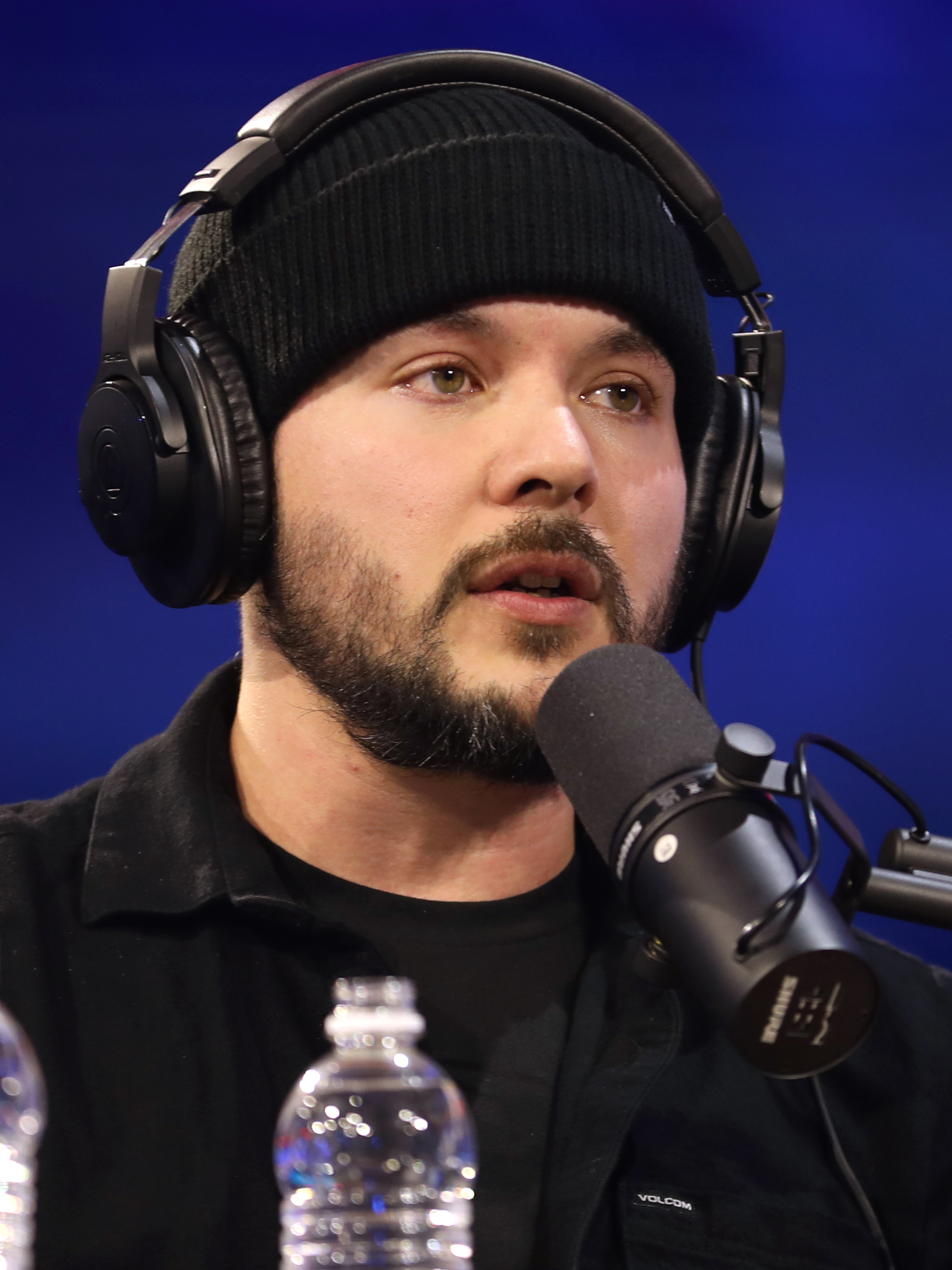
The black beanie has become his trademark visual signature on YouTube and podcasts. He has discussed in interviews that it began as a practical choice and evolved into part of his personal brand.
Who are the regular Timcast IRL co-hosts?
The format rotates several regular co-hosts including Ian Crossland and various other commentators alongside Pool, plus a featured guest each evening. The multi-host structure is one of the format’s distinguishing features and is part of why the show requires the studio infrastructure that Timcast Media has built out.
Did Tim Pool ever face Russian payment allegations?
In September 2024, the US Department of Justice unsealed an indictment of two RT (Russian state media) employees for funneling nearly $10 million through a US media company to several right-wing creators including Tim Pool, Dave Rubin, and Benny Johnson. The named creators have stated they were unaware of the alleged Russian source of the funds. The allegations were widely covered and have been a topic of subsequent reporting and commentary, though Pool himself has not been charged with any wrongdoing.
How does Tim Pool’s revenue compare to a traditional cable news network?
Timcast Media’s annual gross revenue at its current scale is roughly comparable to a small cable news show’s production budget, though the operating model is fundamentally different. The Timcast operation is privately held and Pool retains substantial equity, which is the structural reason his personal wealth scales differently than a traditional cable news host’s salary alone would.
Does Tim Pool host other formats beyond IRL?
Yes. The Tim Pool channel network includes news commentary, reaction content, multi-day livestream coverage of major events, and various standalone formats. The IRL nightly podcast is the flagship but represents one piece of a broader content production schedule across the Timcast Media operation.
Sources & references
- Wikipedia — Tim Pool
- Tim Pool YouTube — YouTube channels
- Timcast IRL — official podcast distribution channels
- The New York Times — coverage of independent political YouTube creators
- Vice Media — Tim Pool reporting archive (2014-2017)
- Fusion / Univision — Tim Pool reporter archive (2014-2017)
- Cast Brew Coffee — official product website
Last updated: April 2026. Net worth estimates are based on publicly visible audience metrics, typical podcast and YouTube monetization economics, and reasonable real estate and business asset assumptions. Figures will be revised when new disclosures occur.



Responses