Tom Bilyeu Net Worth 2026: Quest Nutrition B Exit & Impact Theory Founder

Tom Bilyeu — co-founder and former CEO of Quest Nutrition (sold to The Simply Good Foods Company in August 2019 for approximately $1 billion), founder and host of the Impact Theory podcast, and CEO of Impact Theory the media company — is one of the rare figures in the creator economy whose wealth was built by a real consumer-products operating exit before he ever became a podcast personality. Combining his Quest co-founder proceeds, the ongoing Impact Theory media business, and a multi-year run of public-markets investing through his “Investing for the Apocalypse” framework, Tom Bilyeu’s net worth is estimated at $300 million to $500 million as of 2026.
The high end of that range is driven entirely by the Quest Nutrition exit. Public estimates put Bilyeu’s personal share of the $1 billion sale in the $200M–$400M range after taxes and three-way founder split with Mike Osborn and Ron Penna. Without that exit, Bilyeu would be a successful podcaster and self-help author worth $20M–$40M like his peers. With it, he is in a different league.
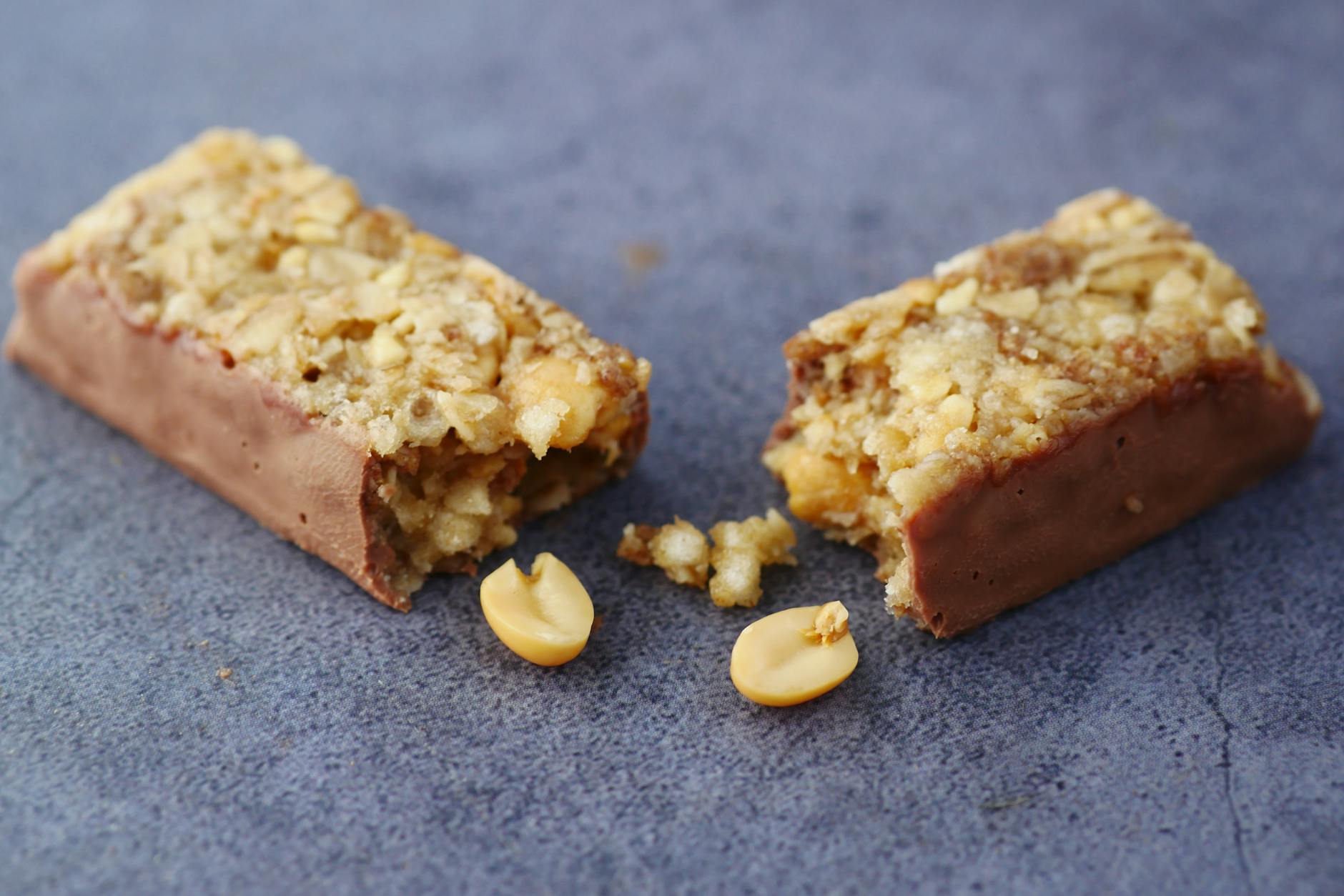
Net worth at a glance
| Metric | Estimate |
|---|---|
| Estimated net worth (2026) | $300M – $500M |
| Quest Nutrition sale price (Aug 2019) | ~$1 billion |
| Quest Nutrition acquirer | The Simply Good Foods Company (Atkins parent) |
| Co-founders | Mike Osborn, Ron Penna, Tom Bilyeu |
| Quest peak annual revenue | ~$500M |
| Current company | Impact Theory (media + content) |
| Impact Theory podcast launched | 2016 |
| YouTube subscribers | 5M+ (Impact Theory channel) |
| Headquarters | Los Angeles, California |
Note: this article is independent editorial research. We are not affiliated with Tom Bilyeu, Impact Theory, or any of his portfolio companies. Net worth ranges are best-effort estimates derived from publicly disclosed M&A data, equity-split assumptions, and reasonable post-exit asset assumptions; only Tom and his immediate family know the exact figure.
How Tom Bilyeu built his net worth
Bilyeu’s wealth has two distinct chapters that almost no one in the modern creator economy has actually combined: a real consumer-products operating exit, and a major personal-brand media business. The arc has three phases.
Phase 1: Pre-Quest tech failure (2002–2010)
Bilyeu was born in Tacoma, Washington in 1976 and graduated from the University of Southern California with a degree in film. Through the 2000s, he and Mike Osborn ran a small B2B technology services company that — by Bilyeu’s own account in many interviews — never reached the kind of scale they wanted. He spent years sleeping on a cheap mattress on the floor of a small office, working long hours, and feeling unfulfilled despite eventually generating low-seven-figure revenue. The story he tells is of choosing financial security over meaning, and finding both unsatisfying.
Phase 2: Quest Nutrition (2010–2019)
In 2010, Bilyeu, Osborn, and Ron Penna co-founded Quest Nutrition. Penna’s wife had developed serious health issues and they had been experimenting with a low-carb, high-protein bar formulation that didn’t taste like the cardboard-textured products that dominated the protein bar category at the time. The original Quest Bar — high protein, low net carbs, palatable enough to eat regularly — became a sleeper hit in the bodybuilding and fitness communities, then crossed over into mainstream health food.
Quest’s growth trajectory was remarkable:
- 2010: founded; first products sold through bodybuilding.com
- 2014: ranked #2 on the Inc. 500 list of fastest-growing private companies in the United States, with reported three-year growth of 57,000%+
- 2015–2016: expanded into mainstream retail (Target, Costco, Walmart), launched additional product lines (chips, cookies, peanut butter cups)
- 2017–2018: revenue plateaued and the business faced operational challenges; Bilyeu had already stepped back from day-to-day operations to focus on Impact Theory
- August 2019: VMG Partners and other investors agreed to sell Quest to The Simply Good Foods Company (the publicly traded parent of Atkins Nutritionals) for approximately $1 billion in cash
The exact founder-stake economics at exit have not been individually disclosed. By the late stages, the founders had taken outside investment from VMG Partners and held diluted positions, but as the original equity holders they retained meaningful ownership. Bilyeu’s personal proceeds are widely estimated in the $200M–$400M range after taxes. He has spoken publicly in multiple interviews about the magnitude of the exit being “life-changing” and “Tom never has to work again” type money, which is consistent with a nine-figure outcome.
Phase 3: Impact Theory (2016–present)
Bilyeu founded Impact Theory in 2016 — a year before stepping back from Quest operations — explicitly because he had decided that running a CPG company was not how he wanted to spend the rest of his career. His thesis was that culture was more powerful than commerce, and that the highest-leverage thing he could do post-Quest was build a media company that promotes empowering ideas to a generation of young people.
The Impact Theory podcast, launched in 2016, became one of the larger interview podcasts in the personal-development category, with a YouTube channel that has grown to 5M+ subscribers. Guests have included Jordan Peterson, David Goggins, Jocko Willink, Naval Ravikant, Andrew Huberman, and dozens of others. Bilyeu has also produced solo “Impact Theory University” content — long-form lectures and frameworks — that monetizes through his courses and membership.
Impact Theory has expanded beyond podcasting into:
- Impact Theory University — paid online courses on mindset, business, and high performance
- Impact Theory NFT projects — including the Founders Key NFT collection in 2021–2022 (which had mixed financial outcomes during the broader NFT downturn)
- Impact Theory comics and IP — Bilyeu has invested heavily in original IP creation, including a comics imprint and animation development
- Brand partnerships and ad sales on the podcast and YouTube channels
Impact Theory is privately held and Bilyeu has not disclosed revenue. Based on the size of the audience and the number of monetization layers, the company plausibly generates $10M–$30M in annual revenue, with Bilyeu reinvesting much of the cash flow into the IP and creative projects rather than extracting it as personal income.
Career timeline
| Year | Milestone |
|---|---|
| 1976 | Born in Tacoma, Washington |
| 1990s | Graduates from University of Southern California, BA in film |
| 2002–2010 | Co-runs B2B technology services company with Mike Osborn |
| 2010 | Co-founds Quest Nutrition with Mike Osborn and Ron Penna; serves as President |
| 2014 | Quest ranked #2 on Inc. 500 fastest-growing private companies list |
| 2015–2016 | Quest expands into Costco, Target, Walmart, mass retail |
| 2016 | Founds Impact Theory; launches Impact Theory podcast and YouTube channel |
| 2017 | Steps back from day-to-day Quest operations to focus on Impact Theory full-time |
| 2019 (Aug) | Quest Nutrition sold to The Simply Good Foods Company for ~$1 billion |
| 2020–2022 | Impact Theory expands into IP creation, NFTs (Founders Key collection), original animation projects |
| 2023–2024 | Becomes a major commentator on AI, crypto, and macroeconomic trends; “Investing for the Apocalypse” framework |
| 2025–2026 | Continues hosting Impact Theory; expands long-form content franchise; deepens public market investing thesis |
Net worth estimate breakdown
Quest Nutrition exit proceeds
The August 2019 sale to The Simply Good Foods Company was for approximately $1 billion in cash. Founders had taken outside investment from VMG Partners by that point, so the three founders did not split the entire $1B equally. After dilution, taxes (long-term capital gains on the federal level plus California state tax), and the three-way founder split, Bilyeu’s individual after-tax proceeds are widely estimated at $200M–$400M. The wide spread reflects unknowns about the exact pre-money cap table at exit.
Impact Theory equity
Impact Theory is privately held by Bilyeu and his wife Lisa. While the company is asset-light and not yet a venture-style growth business, its enterprise value to a strategic acquirer (someone like a podcast network, a media holding company, or a coaching platform) is plausibly $30M–$80M based on revenue multiples in the 3-5x range for a media business with this audience footprint and IP portfolio.
Liquid investments and public markets
Post-exit, Bilyeu has been openly active as a public-markets investor and has discussed his portfolio extensively on his show. He has held meaningful positions in technology stocks, gold-related assets, crypto (Bitcoin, Ethereum), and various inflation-hedging instruments under the “Investing for the Apocalypse” framework he’s developed. A reasonable estimate for liquid investments is $80M–$150M, depending on how aggressively or conservatively the post-Quest proceeds have been deployed.
Real estate
Bilyeu owns property in the Los Angeles area, including a Hollywood Hills home that has been featured in his content. Real estate equity is plausibly $5M–$15M.
Adding these buckets and applying realistic discounts produces the $300M–$500M range. The lower end assumes higher dilution at the Quest exit, more conservative public-markets positioning, and modest Impact Theory enterprise value; the upper end assumes the founder share of Quest was closer to the higher figures circulated in trade press and that public-markets returns since 2019 have been favorable.
The Quest Nutrition founder economics, in detail
Understanding the wealth creation event requires understanding what actually happened in Quest’s cap table.
Quest was bootstrapped in its earliest years and the three founders held the entire equity. As the business scaled into mass retail and required working capital, they took on growth equity from VMG Partners (a consumer products-focused private equity firm). VMG’s investment is reported in trade press to have been a meaningful minority stake, with the founders retaining majority ownership but ceding board governance and strategic control to a degree.
By the time of the 2019 sale to Simply Good Foods, the cap table included VMG, the three founders, and various employee equity grants. A reasonable estimate is that the founders collectively held 50%–70% of the equity at exit, with VMG holding the remainder of the institutional capital and employees holding a small allocation. Splitting the founder portion roughly equally three ways and applying federal long-term capital gains plus California taxes (combined effective rate ~33% for the highest brackets in 2019) yields a per-founder after-tax outcome in the $150M–$300M range.
This is consistent with Bilyeu’s own framing of the outcome as “generational wealth” and “the freedom to never have to work for money again.”
Common misconceptions
“He sold Quest for $1 billion personally”
The $1 billion was the enterprise value of Quest paid by Simply Good Foods. It was split among the three co-founders, VMG Partners (who had invested growth equity), and a smaller employee equity pool. Bilyeu’s personal pre-tax share was a meaningful fraction of the total but not the whole thing.
“He’s worth $1 billion”
Some celebrity-net-worth aggregator sites quote Bilyeu at $1B+. That figure does not reconcile with the Quest cap-table math. Even at the most aggressive assumptions about founder share retention and public-markets gains since 2019, his net worth is unlikely to have crossed the billion-dollar threshold yet. He is firmly in the upper nine-figure range.
“Impact Theory is the main business”
Impact Theory is Bilyeu’s full-time occupation and his cultural legacy project, but it is not the source of most of his wealth. Quest is. Impact Theory generates real revenue and would itself be a successful media business for someone starting from scratch, but it is meaningfully smaller than the Quest exit in financial terms.
“He got rich from NFTs”
Bilyeu was a vocal proponent of NFTs in 2021–2022 and Impact Theory launched the Founders Key NFT collection. The collection had real initial sales but, like most NFT projects, has since traded at a fraction of its original mint price. NFTs were not a meaningful net contributor to his wealth and may have been a small drag.
Comparison to similar entrepreneur-podcasters
| Creator | Estimated Net Worth | Profile |
|---|---|---|
| Tom Bilyeu | $300M – $500M | Quest Nutrition exit ($1B), Impact Theory media |
| Tim Ferriss | $100M+ | Books, podcast, early-stage angel investing (Uber, Shopify) |
| Lewis Howes | $15M – $25M | School of Greatness podcast, books, events |
| Mark Cuban | $5.7B+ | Broadcast.com sale, Mavericks, Shark Tank, Cost Plus Drugs |
| Patrick Bet-David | $200M+ | PHP Agency exit, Valuetainment media |
| Andrew Schulz | $30M – $50M | Standup, Flagrant podcast, comedy specials |
Bilyeu sits in a small group of creator-entrepreneurs whose media business sits on top of a real prior operating exit. He is most directly comparable to Patrick Bet-David, who similarly cashed out an insurance/financial-services business before building Valuetainment.
Frequently asked questions
What is Tom Bilyeu’s net worth in 2026?
Combining his Quest Nutrition exit proceeds (sale to Simply Good Foods for ~$1B in August 2019), the value of his Impact Theory media business, and his post-exit investment portfolio, Tom Bilyeu’s net worth is estimated at $300 million to $500 million.
How much did Tom Bilyeu make from Quest Nutrition?
The total sale price was approximately $1 billion. After dilution from outside investors (notably VMG Partners), the three-way founder split, and taxes, Bilyeu’s individual after-tax proceeds are estimated at $200 million to $400 million. The exact figure has not been individually disclosed.
Who acquired Quest Nutrition?
The Simply Good Foods Company — the publicly traded parent of Atkins Nutritionals — acquired Quest in August 2019 for approximately $1 billion in cash.
Who co-founded Quest Nutrition with Tom Bilyeu?
Mike Osborn (Bilyeu’s longtime business partner) and Ron Penna. Penna’s wife developed serious health issues, which inspired the original product formulation.
What is Impact Theory?
Impact Theory is the media company Tom Bilyeu founded in 2016, anchored by the Impact Theory podcast and YouTube channel. The company has since expanded into online courses, IP creation (comics, animation), NFTs, and brand partnerships.
How big is the Impact Theory podcast?
The Impact Theory YouTube channel has more than 5 million subscribers, and the podcast has been a top-charting personal development show since 2017. Guests have included Jordan Peterson, David Goggins, Andrew Huberman, Naval Ravikant, and many others.
Does Tom Bilyeu still work at Quest?
No. He stepped back from day-to-day Quest operations in 2017 to focus full-time on Impact Theory and was no longer in an operating role by the time the company was sold to Simply Good Foods in August 2019.
Where does Tom Bilyeu live?
Los Angeles, California. He has been based in the LA area for his entire entrepreneurial career.
What is “Investing for the Apocalypse”?
It is the framework Bilyeu has been articulating on his show for several years — a portfolio approach designed to perform well across multiple macroeconomic scenarios including high inflation, deflation, and currency debasement. It blends technology equity exposure, gold and other hard assets, crypto (Bitcoin and Ethereum), and various hedges. It is investment commentary, not personalized financial advice.
Is Tom Bilyeu a billionaire?
Not based on publicly available information. He is firmly in the upper nine-figure range and Forbes has not yet listed him on its billionaires ranking. Whether he eventually crosses the threshold depends on Impact Theory’s trajectory and the performance of his post-exit investment portfolio.
Sources & references
- Wikipedia — Quest Nutrition
- The Simply Good Foods Company — Form 8-K filing on Quest acquisition (August 2019)
- Inc. 500 — 2014 list, ranked Quest Nutrition #2 fastest-growing private company
- VMG Partners — portfolio disclosures regarding Quest investment
- Yur Exit — Quest Nutrition $1B exit case study
- Impact Theory — impacttheory.com
- How I Invest Podcast — From Broke & Sleeping on the Floor to a $1 Billion Exit with Tom Bilyeu
- Noah Kagan — Tom Bilyeu Net Worth & Income Breakdown
Last updated: April 2026. Net worth estimates are based on publicly disclosed M&A data, reasonable cap-table assumptions, and post-exit asset patterns. Figures will be revised when new disclosures occur.



Responses