Ben Horowitz Net Worth: How the a16z Co-Founder Built a -3 Billion Fortune

Investing · Venture Capital · Author
Key Takeaways
- Estimated net worth in the $2–3 billion range as of 2025–2026, anchored by his co-founding equity in Andreessen Horowitz, the 2007 Hewlett-Packard acquisition of Opsware for $1.6 billion, and ongoing carried-interest distributions from a16z fund vintages
- Co-founder of Andreessen Horowitz (a16z) alongside Marc Andreessen in 2009 — one of the most economically influential venture capital firms of the modern era, with a portfolio that includes Airbnb, Twitter, Groupon, Foursquare, and dozens of other consequential technology investments
- Born Benjamin Abraham Horowitz on 13 January 1966 in London, England; earned a BA in Computer Science from Columbia University in 1988 and an MS in Computer Science from UCLA in 1990
- Author of The Hard Thing About Hard Things: Building a Business When There Are No Easy Answers (2014) and What You Do Is Who You Are: How to Create Your Business Culture (2019) — two of the more substantive contemporary business and management books
- Built the broader operating-and-investing career across roles at Silicon Graphics, Netscape (1995–1998), AOL (1998–2002), Loudcloud (1999–2002 co-founder/CEO), Opsware (2002–2007 co-founder/CEO), and HP Software (2007–2008) before co-founding a16z; ranked No. 33 on Forbes’ 2025 Midas List of Top Tech Investors

Who Is Ben Horowitz?
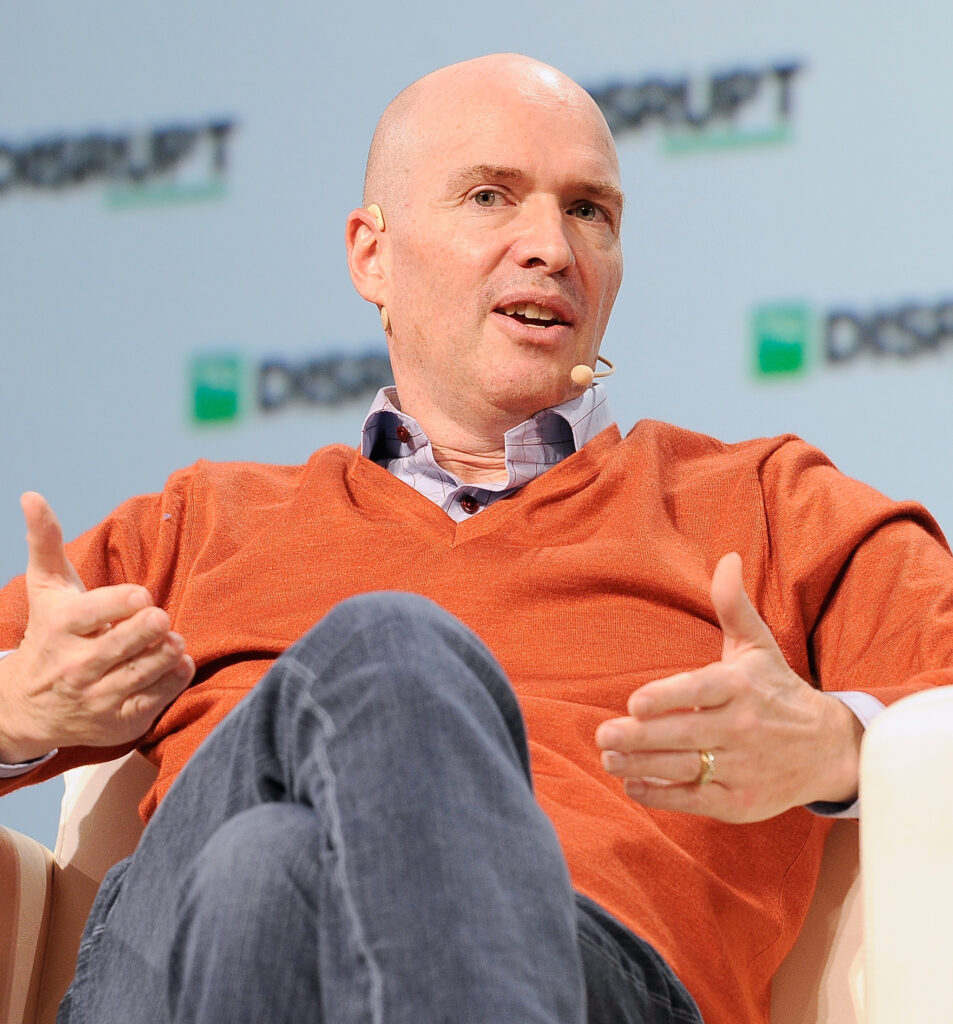
Ben Horowitz is one of the most economically and culturally consequential individual venture investors and operating-business builders of the modern technology era. Through his co-founding of Andreessen Horowitz (a16z) alongside Marc Andreessen in 2009 — one of the most economically influential venture capital firms of the modern era — and the broader career arc that includes the 1999 founding of Loudcloud, the 2002 transformation into Opsware, the 2007 sale to Hewlett-Packard for $1.6 billion, and the parallel author work that has produced two of the more substantive contemporary business and management books, he has built one of the cleaner contemporary worked examples of how a technology operator can scale into a substantial venture-investing career anchored by both substantive operating credentials and substantive author-and-management thought-leadership.
Born Benjamin Abraham Horowitz on 13 January 1966 in London, England, Horowitz subsequently grew up primarily in Berkeley, California, where his father, Marxist-turned-conservative writer David Horowitz, anchored the family’s intellectual environment. He earned a BA in Computer Science from Columbia University in 1988 and an MS in Computer Science from UCLA in 1990. The combination of substantive computer-science training across two top-tier institutions provided the foundational technical credentials that subsequently underpinned the broader operating and investing career.
What distinguishes Horowitz is the combination of substantive operating credentials accumulated across more than fifteen years of senior operating roles at Silicon Graphics, Netscape, AOL, Loudcloud, and Opsware before the 2009 founding of a16z, distinctive long-form writing voice articulated through more than a decade of ben’s blog posts and the two published books, and the operational discipline of building both substantive operating businesses and one of the most economically influential venture capital firms of the contemporary era. Most venture investors at his economic tier either remain pure capital allocators or pivot into more institutional roles. Horowitz has consistently combined direct deal-making, substantive long-form public commentary, and the kind of substantive author-and-investor cross-discipline work that few other venture investors of his generation have replicated at comparable depth.
Today, Horowitz continues to operate as a co-founder and general partner at Andreessen Horowitz, contribute to the broader a16z portfolio across multiple investment categories (including the substantial recent expansion into crypto and AI), and contribute to the broader public commentary through speaking, writing, and adjacent work. He has been transparent about both the operating mechanics of running a substantial venture-investing career and the personal commitments — particularly around his marriage to Felicia Wiley since 1988, his three children, and the broader integration of family life with the substantial operational responsibilities of co-founding and leading a16z.
Career and Rise to Fame
Horowitz’s professional career began at Silicon Graphics in 1990 following his UCLA graduation, where he worked as an engineer during the company’s mid-1990s peak as one of the most economically influential graphics-and-computing companies of that era. The early-career engineering experience at Silicon Graphics provided substantive technical credentials that subsequently informed both his transition to Netscape and the broader operating-and-investing career.
The 1995 transition to Netscape was the chapter that defined the next phase of Horowitz’s career. As a product manager at Netscape — during the period when Netscape was one of the most economically and culturally consequential technology companies of the mid-1990s — Horowitz worked alongside Marc Andreessen and developed the substantive working relationship that subsequently became the foundation of the long-term operating-and-investing partnership that has anchored his career across more than three decades. The Netscape period provided substantive product-management credentials and the deep working relationship with Andreessen that subsequently became foundational to everything that followed.
The 1998 transition to AOL — following AOL’s acquisition of Netscape — extended the operating credentials with substantial enterprise-software and consumer-internet experience. As Vice President of the eCommerce Division at AOL from 1998 to 2002, Horowitz built the operational credentials that subsequently informed the founding of Loudcloud.
The 1999 co-founding of Loudcloud with Marc Andreessen was the chapter that defined the next phase of Horowitz’s career as an operator. The company — initially focused on cloud-computing infrastructure during the late-1990s and early-2000s dot-com era — successfully went public in 2001 despite the broader market collapse, and was subsequently transformed into Opsware in 2002 after divesting the underlying cloud-services business.
The 2002–2007 Opsware period was the chapter that produced the substantive operating-credentials liquidity event that subsequently anchored the broader career. Opsware — focused on enterprise data-center automation software — scaled across the early-and-mid 2000s and was acquired by Hewlett-Packard in 2007 for $1.6 billion. The acquisition produced substantial wealth-creation effects for Horowitz alongside the substantive operating credentials that subsequently informed the founding of a16z.
The 2009 co-founding of Andreessen Horowitz with Marc Andreessen was the chapter that defined the rest of Horowitz’s career as an investor. The firm — which has scaled across multiple successive fund vintages into one of the most economically influential venture capital firms of the modern era — has produced returns from a portfolio that includes Airbnb, Twitter, Groupon, Foursquare, ThirdLove, and dozens of other consequential technology investments across the consumer, enterprise, fintech, crypto, and AI categories.
The 2014 publication of The Hard Thing About Hard Things: Building a Business When There Are No Easy Answers represented the broader synthesis of Horowitz’s operating thinking. The book — based on the substantive operational experience accumulated across the Loudcloud and Opsware years — articulated the broader management-and-operating philosophy that has subsequently become foundational to a generation of technology operators. The 2019 publication of What You Do Is Who You Are: How to Create Your Business Culture extended the operating-philosophy work into the broader culture-building category.
The 2025 placement at No. 33 on Forbes’ Midas List of Top Tech Investors formalized the cumulative venture-investing track record across more than fifteen years at a16z. Horowitz has continued to lead the firm alongside Andreessen and has been substantially involved in the firm’s substantial recent expansion into crypto, AI, and adjacent categories.
How Ben Horowitz Makes Money
Horowitz’s wealth flows from four primary categories: cumulative carried-interest distributions from Andreessen Horowitz fund vintages across more than fifteen years at the firm, cumulative proceeds from the 2007 Hewlett-Packard acquisition of Opsware, public investment positions accumulated across the broader career, and the underlying author and adjacent income that compounds across the multi-decade career.
a16z carried interest: The largest single component of Horowitz’s wealth is the cumulative carried-interest distributions from Andreessen Horowitz fund vintages across his more-than-fifteen-year tenure as co-founder and general partner. With portfolio investments in Airbnb, Twitter, Groupon, Foursquare, ThirdLove, and dozens of other consequential technology companies, the cumulative carried-interest position across multiple a16z fund vintages represents the foundational asset base of the broader wealth profile. Standard venture economics across his fund vintages would have produced personal carried-interest distributions well into the multi-billion-dollar range across the operating life of the underlying investments.
Opsware acquisition proceeds: The 2007 Hewlett-Packard acquisition of Opsware for $1.6 billion produced substantial after-tax proceeds for Horowitz alongside his Loudcloud and Opsware co-founder Marc Andreessen and other early shareholders. The cumulative proceeds — combined with subsequent investment growth across the post-acquisition period — represent another meaningful contribution to the broader wealth profile alongside the a16z economics.
Public investment positions: Across the operating life of the broader career, Horowitz has built substantial public investment positions across technology equities, public companies that grew out of the original a16z portfolio (including Airbnb and Twitter at various periods), and adjacent asset classes. The specific composition of his current portfolio has not been comprehensively disclosed, but the broader pattern across post-major-exit venture investors supports the assumption of meaningful diversification across multiple asset classes.
Book and adjacent author economics: The 2014 Hard Thing About Hard Things and 2019 What You Do Is Who You Are publications produce ongoing royalties across multiple editions, formats, and international rights. The cumulative publishing economics — combined with the broader speaking-and-advisory work that has emerged alongside the books — represent another meaningful contribution to the broader wealth profile alongside the venture-investing returns.
Ben Horowitz’s Net Worth
Estimating Horowitz’s net worth involves substantial methodology disagreement across publicly available sources. Different outlets place the figure variously around $2 billion, $2.5 billion, and $3 billion as of 2025–2026, with the range reflecting how the underlying a16z carried-interest position is valued alongside public investment, real estate, and adjacent assets.
The lower end of credible recent estimates — around $2 billion — likely reflects a calculation that focuses primarily on the after-tax cumulative carried-interest distributions from a16z fund vintages combined with the Opsware acquisition proceeds, without fully accounting for the underlying value of any retained public-equity positions or adjacent investment positions that have compounded across the post-Opsware period.
Mid-range estimates — around $2.5 billion — reflect a more balanced calculation that incorporates the cumulative a16z carried-interest distributions, the Opsware acquisition proceeds, ongoing public investment position growth across the post-acquisition technology equities, and a reasonable estimate of real estate and adjacent assets. This level is consistent with what venture co-founders with comparable tenure and portfolio participation typically retain.
The upper end — $3 billion or higher — reflects estimates that more aggressively incorporate the underlying value of any retained Airbnb, Twitter, and adjacent positions, the standalone enterprise value of the broader investment portfolio, and any meaningful accumulated investment positions that have compounded across the multi-decade period. Forbes’ designation as a billionaire validates the upper-end framing, although the precise placement within the multi-billion-dollar range varies across sources and methodologies.
The honest answer, as with most private venture-co-founder profiles, is that the precise number depends on private financial details that have not been disclosed. What can be said with confidence is that Horowitz’s career has produced one of the more substantial individual-investor wealth-creation positions in the modern history of venture investing, with cumulative wealth comfortably into the multi-billion-dollar range and a structural position that continues to compound across the ongoing a16z operations.
Investments and Business Philosophy
Horowitz’s investment philosophy is informed by his combination of substantive technical-and-operational credentials, the discipline of running Loudcloud and Opsware through multiple market cycles including the dot-com collapse, and the long-tenure venture-investing work he has completed across more than fifteen years at Andreessen Horowitz. He has emphasized publicly the importance of substantive operator credentials inside venture firms, durable founder-and-market analysis, the structural advantages of platform-style venture firms with substantive operating support for portfolio companies, and the long-horizon orientation required to compound a venture career across more than fifteen years.
Inside Andreessen Horowitz, the philosophy emphasizes substantive operating support for portfolio companies, durable founder relationships, and the kind of platform-style venture infrastructure that compounds across multiple fund vintages. The firm has scaled across multiple successive fund vintages and has continued to expand into adjacent categories (crypto, AI, biotech, defense) — producing one of the more substantive contemporary worked examples of how venture firms can scale into platform-style operating businesses.
The deeper professional philosophy is the case for combining substantive operating credentials with disciplined long-tenure venture investing and the kind of substantive author-and-management-thought-leadership work that produces both market visibility and durable industry relationships. Horowitz’s career — London-born, Berkeley-raised computer-science student turned Silicon Graphics engineer turned Netscape product manager turned AOL VP turned Loudcloud and Opsware co-founder turned Andreessen Horowitz general partner and bestselling author — represents one of the cleaner contemporary worked examples of how patient operating-and-investing compounding scales into category-defining position.
Lifestyle and Spending
Horowitz’s lifestyle, by his own description and substantial public reporting, has been shaped by the longstanding marriage to Felicia Wiley since 1988, the operational rhythm of running Andreessen Horowitz alongside continued author and adjacent work, and the broader family commitments that have anchored both the active-investing period and the parallel writing work. He has lived primarily in California across the duration of his career and has been transparent about the substantive personal commitments that anchor his private life.
Where he spends meaningfully is on real estate, philanthropic disbursements (including substantial donations to political causes — Wikipedia notes Horowitz donated approximately $3 million to MAGA Inc. in the first half of 2025), and the broader family-and-philanthropic commitments that have anchored his work alongside the operating businesses. The pattern across his lifestyle decisions is consistent with someone who treats wealth as a long-term family-and-philanthropy compounding game rather than a public-celebrity showcase.
His public commentary on lifestyle has been deliberately measured. He has spoken publicly about substantive operating-and-investing decisions, family commitments, and philanthropic priorities in a way that is consistent with someone who treats wealth as a long-term compounding game rather than a short-term lifestyle showcase.
What Can We Learn from Ben Horowitz?
- Operator credentials compound investing capability. Horowitz’s combination of more than fifteen years of senior operating roles at Silicon Graphics, Netscape, AOL, Loudcloud, and Opsware before founding a16z provided substantive operator credentials that subsequently informed the venture-investing work. Operator credentials inside venture firms compound investing capability across years.
- Long-term partnerships compound. Horowitz’s working partnership with Marc Andreessen — beginning at Netscape in 1995 and continuing across Loudcloud, Opsware, and Andreessen Horowitz — represents substantive worked example of how long-term partnerships compound across multiple operating-and-investing cycles. Most successful technology careers are anchored by long-term partnerships that few other founders sustain at comparable depth.
- Survive volatile cycles. Horowitz’s leadership of Loudcloud through the dot-com collapse — and the subsequent transformation into Opsware — represents substantive worked example of how operating leaders survive volatile market cycles. The willingness to navigate substantive market downturns produces durable career capital that smoother career arcs typically cannot match.
- Translate operating experience into writing. The 2014 Hard Thing About Hard Things and 2019 What You Do Is Who You Are publications represent substantive worked example of how operators can translate operating experience into long-form writing. Translating operating experience into substantive author work compounds cultural-and-economic reach beyond the underlying operating businesses.
- Build platform-style venture firms. Andreessen Horowitz’s expansion into substantial operating-support infrastructure for portfolio companies — including marketing, recruiting, regulatory, and adjacent functions — represents substantive worked example of how venture firms can scale into platform-style operating businesses. Most venture firms remain at the pure-capital-allocation tier; Horowitz and Andreessen’s worked example is one of the more useful contemporary worked examples.
- Long-tenure compounds. Horowitz’s more-than-fifteen-year tenure as a16z co-founder represents substantive worked example of how patient long-tenure venture work produces durable returns. Most venture investors fail to sustain comparable tenure at comparable scale; Horowitz’s worked example is one of the more useful contemporary contrarian cases.
Frequently Asked Questions
What is Ben Horowitz’s estimated net worth?
Ben Horowitz’s net worth is estimated to be between $2 billion and $3 billion as of 2025–2026, anchored by his co-founding equity in Andreessen Horowitz, the 2007 Hewlett-Packard acquisition of Opsware for $1.6 billion, and ongoing carried-interest distributions from a16z fund vintages alongside public investment positions across the broader portfolio.
What is Andreessen Horowitz?
Andreessen Horowitz (a16z) is the venture capital firm Horowitz co-founded with Marc Andreessen in 2009. The firm has scaled across multiple successive fund vintages into one of the most economically influential venture capital firms of the modern era, with a portfolio that includes Airbnb, Twitter, Groupon, Foursquare, ThirdLove, and dozens of other consequential technology investments.
What was Opsware?
Opsware was the enterprise data-center automation software company Horowitz co-founded with Marc Andreessen, originally as Loudcloud in 1999 and transformed into Opsware in 2002 after divesting the underlying cloud-services business. Hewlett-Packard acquired Opsware in 2007 for $1.6 billion.
What books has Ben Horowitz written?
Ben Horowitz has written The Hard Thing About Hard Things: Building a Business When There Are No Easy Answers (2014) and What You Do Is Who You Are: How to Create Your Business Culture (2019). Both books have become foundational management-and-operating texts in the contemporary technology industry.
Where is Ben Horowitz from?
Ben Horowitz was born Benjamin Abraham Horowitz on 13 January 1966 in London, England. He grew up primarily in Berkeley, California, earned a BA in Computer Science from Columbia University in 1988, and an MS in Computer Science from UCLA in 1990. He has been married to Felicia Wiley since 1988 and has three children.
The Impact of Operator-Led Platform Venture Capital
The argument that venture capital benefits from substantive operator credentials inside the firm — particularly when combined with platform-style operating support for portfolio companies — has been advanced by relatively few investors at Horowitz’s level of consistency and operational depth. The cumulative effect of his work, across Andreessen Horowitz and the parallel author-and-management writing, has been to redefine what serious operator-led platform venture capital can produce both economically and culturally at industry scale.
The downstream effect on the broader venture industry is visible. The number of substantial venture firms that have explicitly adopted operator-led platform-style approaches — and that have built substantive operating-support infrastructure for portfolio companies rather than remaining at the pure-capital-allocation tier — has continued to grow across recent years, and many of the most operationally serious contemporary venture firms cite Horowitz and Andreessen’s a16z model as part of their early thinking about the relationship between operator credentials and platform-style venture infrastructure.
What makes the impact durable is that the underlying economics of operator-led platform venture capital continue to favor investors who can sustain operating-support infrastructure across multiple market cycles. As venture-capital markets continue to evolve and as the underlying competitive dynamics in early-stage investing continue to favor substantive operating support, the relative position of operator-led platform venture firms tends to compound rather than decay. Horowitz’s career — London-born, Berkeley-raised computer-science student turned Silicon Graphics engineer turned Netscape product manager turned AOL VP turned Loudcloud and Opsware co-founder turned Andreessen Horowitz co-founder and bestselling author — is one of the cleaner contemporary worked examples of how patient operator-and-investor compounding combined with disciplined platform-firm building scales into category-defining position.


Responses