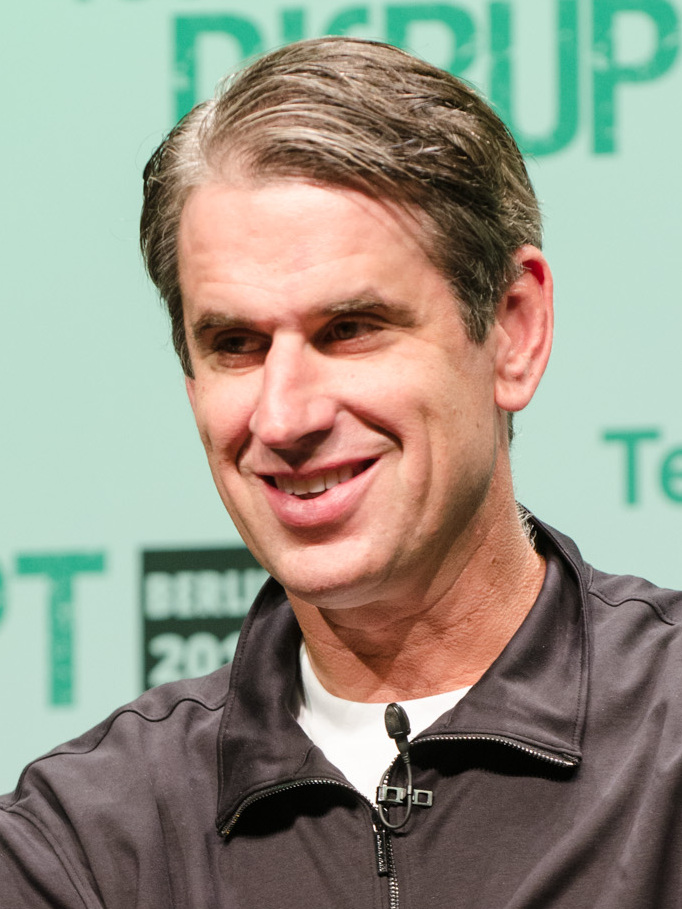
Bill Gurley Net Worth: How the Benchmark Partner’s Uber Bet Built a Multi-Billion Fortune

Investing · Venture Capital · Benchmark
Key Takeaways
- Estimated net worth in the $600 million to $4.5 billion range as of 2025–2026, with the wide spread reflecting how the underlying Benchmark Capital cumulative carried-interest position from Uber, Zillow, OpenTable, GrubHub, and Stitch Fix is valued by different sources
- General partner at Benchmark Capital from 1999 until April 2020, when he stepped back from active partnership without joining the next fund
- Born John William Gurley on 10 May 1966 in Dickinson, Texas; earned a Bachelor of Science from the University of Florida in 1989 and an MBA from the University of Texas in 1993
- Author of Runnin’ Down a Dream: How to Thrive in a Career You Actually Love (released February 2026) and the influential long-running venture capital blog Above the Crowd, alongside ranking at No. 24 on Forbes’ 2022 Midas List of Top Tech Investors
- Built the broader venture career across more than two decades after early-career roles as a design engineer at Compaq, technical marketing at AMD, and a three-year tenure as a research analyst at CS First Boston, with a partner role at Hummer Winblad Venture Partners preceding the Benchmark joining

Who Is Bill Gurley?
Bill Gurley is one of the most economically and culturally consequential individual venture investors of the modern technology era. Through his more-than-two-decade tenure as a general partner at Benchmark Capital — beginning in 1999 and continuing until his April 2020 step-back from active partnership — he has been the central figure in some of the most economically successful venture investments in the modern history of consumer-and-enterprise technology, including Uber, Zillow, OpenTable, GrubHub, Stitch Fix, and Nextdoor. His broader career — Dickinson, Texas native turned University of Florida engineering student turned Compaq design engineer turned AMD technical marketing professional turned CS First Boston research analyst turned Hummer Winblad Venture Partners partner turned Benchmark Capital general partner — has scaled into one of the more durable individual venture-investing track records of the contemporary era.
Born John William Gurley on 10 May 1966 in Dickinson, Texas, Gurley grew up in a substantive Texas family environment that subsequently anchored both his personal identity and the geographic stability that has continued across his career. He earned a Bachelor of Science from the University of Florida in 1989 — where he played college basketball — and subsequently completed an MBA at the University of Texas in 1993. The combination of substantive technical training, athletic experience, and graduate business education provided the foundational credentials that subsequently underpinned the broader investment career.
What distinguishes Gurley is the combination of substantive technical-and-engineering credentials accumulated across his early-career roles at Compaq and AMD, distinctive analytical-and-writing voice articulated through more than two decades of Above the Crowd blog posts and adjacent commentary, and the operational discipline of building one of the most economically successful venture careers in the history of Benchmark Capital. Most venture investors at his economic tier either remain pure capital allocators or pivot into more institutional roles. Gurley has consistently combined direct deal-making, substantive long-form public commentary, and the kind of substantive author-and-investor cross-discipline work that few other venture investors of his generation have replicated.
Today, Gurley operates primarily from Austin, Texas — having relocated from the Bay Area — where he focuses on personal projects, the recently-published Runnin’ Down a Dream book, and adjacent advisory work. He has been transparent about both the operating mechanics of running a substantial venture-investing career and the personal commitments — particularly around family life with his wife and three children, the geographic move to Austin, and the broader transition out of active partnership — that have shaped the post-2020 phase of his career.
Career and Rise to Fame
Gurley’s professional career began as a design engineer at Compaq Computer following his 1989 graduation from the University of Florida, where he played college basketball. The early-career engineering experience at Compaq — during the period when Compaq was one of the most consequential PC manufacturers of the late 1980s — provided substantive technical credentials that subsequently informed both his transition into technical marketing at AMD and the broader investment career.
The transition from technical engineering to financial-services research at CS First Boston was the chapter that defined the next phase of Gurley’s career. Across approximately three years as a research analyst, he covered semiconductor and adjacent technology categories, building the substantive analytical credentials that subsequently became foundational to his transition into venture investing. The combination of substantive engineering training and quantitative research-analyst discipline produced one of the more substantive cross-discipline backgrounds in the contemporary venture-capital category.
The transition into venture capital came via Hummer Winblad Venture Partners, where Gurley joined as a partner before subsequently moving to Benchmark Capital in 1999. The 1999 joining of Benchmark was the chapter that defined the rest of Gurley’s career as an investor. As a general partner at Benchmark — one of the most economically successful Silicon Valley venture firms across the past two decades — Gurley participated in some of the most consequential consumer-and-enterprise technology investments of the modern era.
The cumulative Benchmark portfolio across Gurley’s tenure includes Uber, Zillow, OpenTable, GrubHub, Stitch Fix, Nextdoor, HackerOne, Linden Lab, LiveOps, Sailthru, Scale Computing, Vudu, JAMDAT Mobile, Avamar Technologies, Demandforce, Employease, The Knot, Shopping.com, Business.com, Clicker.com, Brighter, DogVacay, Good Eggs, and Vessel. The portfolio represents one of the more economically successful single-investor track records in the modern history of venture investing — with the Uber position alone producing returns that anchored the broader Benchmark fund vintages and producing substantial carried-interest distributions across the operating life of the underlying investment.
Across the same period, Gurley produced substantive long-form public commentary through the Above the Crowd blog, which became one of the most-read individual venture-capital publications of the contemporary era. The blog’s distinctive analytical voice, cross-disciplinary perspective, and willingness to take substantive positions on contested industry topics produced cumulative cultural influence that extended well beyond the underlying portfolio performance.
The 2016 designation as VC of the Year at TechCrunch’s annual Crunchies awards formalized Gurley’s cultural position as one of the most publicly recognized venture investors of the era. The 2022 placement at No. 24 on Forbes’ Midas List of Top Tech Investors further validated the underlying investment track record and cumulative cultural visibility.
The April 2020 step-back from active partnership at Benchmark was the chapter that closed the active operating phase of Gurley’s career. Gurley did not join the next Benchmark fund — a substantive transition that signaled the broader shift from active partnership into the post-active-partnership phase. The decision was substantive and widely-discussed across the broader venture industry, with Gurley subsequently focusing on personal projects and the broader transition into the post-2020 career phase.
The February 2026 publication of Runnin’ Down a Dream: How to Thrive in a Career You Actually Love represented the broader synthesis of Gurley’s thinking on career-and-vocation. The book — based on years of substantive personal experimentation, extensive author research, and the cumulative operating experience across more than three decades — articulates the broader career-design philosophy that has anchored Gurley’s post-Benchmark work.
How Bill Gurley Makes Money
Gurley’s wealth flows from four primary categories: cumulative carried-interest distributions from Benchmark Capital fund vintages across his more-than-two-decade tenure, public investment positions accumulated since the original Benchmark exits, the underlying real estate and adjacent assets that have compounded across the broader career, and the more recent book and adjacent author economics from Runnin’ Down a Dream.
Benchmark Capital cumulative carried interest: The largest single component of Gurley’s wealth is the cumulative carried-interest distributions from Benchmark Capital fund vintages across his 1999–2020 tenure. With Uber alone producing returns that anchored multiple Benchmark fund vintages — and adjacent investments in Zillow, OpenTable, GrubHub, Stitch Fix, and others producing further substantial returns — the cumulative carried-interest position across Gurley’s Benchmark tenure represents the foundational asset base of his current wealth profile. Standard venture economics across his fund vintages would have produced personal carried-interest distributions well into the multiple-hundreds-of-millions across the operating life of the underlying investments.
Public investment positions: Across the operating life of the broader career, Gurley has built substantial public investment positions across technology equities, public companies that grew out of the original Benchmark portfolio (including Uber, Zillow, GrubHub, Stitch Fix, and OpenTable as part of Booking Holdings), and adjacent asset classes. The specific composition of his current portfolio has not been comprehensively disclosed, but the broader pattern across post-major-exit venture investors supports the assumption of meaningful diversification across multiple asset classes.
Real estate and physical assets: Gurley operates from Austin, Texas, where he relocated in part for the broader quality-of-life and cost-of-living considerations that have anchored the post-Bay Area phase of his career. The combination of operating real estate, lifestyle assets, and adjacent positions represents another meaningful component of the broader wealth profile alongside the venture-investing returns.
Book and adjacent author economics: The February 2026 publication of Runnin’ Down a Dream produces ongoing royalties across hardcover, paperback, audiobook, and international rights. The cumulative publishing economics — combined with the broader speaking-and-advisory work that has emerged alongside the book — represent another meaningful contribution to the broader wealth profile in the post-2020 phase of the career.
Bill Gurley’s Net Worth
Estimating Gurley’s net worth involves substantial methodology disagreement across publicly available sources. Different outlets place the figure variously around $600 million, $1 billion, and $4.5 billion as of 2025–2026, with the wide range reflecting how the underlying Benchmark Capital cumulative carried-interest position is valued alongside public investment, real estate, and adjacent assets.
The lower end of credible recent estimates — around $600 million (Finty’s reported figure) — likely reflects a calculation that focuses primarily on the after-tax cumulative carried-interest distributions from Benchmark fund vintages without fully accounting for the underlying value of any retained public-equity positions, real estate holdings, or adjacent investments that have compounded across the post-Benchmark period.
Mid-range estimates — around $1 billion — reflect a more balanced calculation that incorporates the cumulative Benchmark carried-interest distributions, ongoing public investment position growth across the post-acquisition technology equities, and a reasonable estimate of real estate and adjacent assets. This level is consistent with what former Benchmark general partners with comparable tenure and portfolio participation typically retain.
The upper end — $4.5 billion or higher — reflects estimates that more aggressively incorporate the underlying value of any retained Uber-related positions, the standalone enterprise value of the broader investment portfolio, and any meaningful accumulated investment positions that have compounded across the post-2020 period. The Forbes designation as a billionaire validates the upper-end framing, although the precise placement within the multi-billion-dollar range varies across sources and methodologies.
The honest answer, as with most private former-venture-partner profiles, is that the precise number depends on private financial details that have not been disclosed. What can be said with confidence is that Gurley’s career has produced one of the more substantial individual-investor wealth-creation positions in the modern history of venture investing, with cumulative wealth comfortably into the multiple-hundreds-of-millions and at the upper end into the multi-billions, with a structural position that has remained durable across the post-2020 step-back from active partnership.
Investments and Business Philosophy
Gurley’s investment philosophy is informed by his combination of substantive technical-and-engineering credentials, the analytical discipline of his three-year CS First Boston research-analyst tenure, and the long-tenure venture-investing work he completed across more than two decades at Benchmark Capital. He has emphasized publicly the importance of substantive analytical work, durable network-effect business models, the structural advantages of marketplaces with strong unit economics, and the long-horizon orientation required to compound a venture career across more than two decades.
Inside Benchmark, the philosophy emphasized rigorous founder-and-market analysis, durable business models, and the kind of patient capital deployment that compounds across multiple cycles in early-stage technology investing. The combination of the Uber, Zillow, OpenTable, GrubHub, Stitch Fix, and Nextdoor positions all reflected substantive long-term conviction sustained through volatility cycles that produced the cumulative returns that subsequently anchored the broader fund track record.
The deeper professional philosophy is the case for combining substantive analytical credentials with disciplined deal-making and the kind of public-commentary discipline that produces both market visibility and durable industry relationships. Gurley’s career — Dickinson, Texas native turned University of Florida engineering student turned Compaq engineer turned AMD marketer turned CS First Boston research analyst turned Hummer Winblad partner turned Benchmark general partner — represents one of the cleaner contemporary worked examples of how patient analytical compounding combined with disciplined long-tenure venture work scales into category-defining position across more than two decades.
Lifestyle and Spending
Gurley’s lifestyle, by his own description and substantial public reporting, has been shaped by the post-2020 relocation from the Bay Area to Austin, Texas, the broader transition from active partnership at Benchmark, and the family commitments that have anchored both the active-investing period and the subsequent step-back. He continues to live primarily in Austin with his wife and three children.
Where he spends meaningfully is on substantive philanthropic disbursements — including support for his alma mater, the University of Texas, and adjacent educational causes — alongside the operating infrastructure that supports both the post-Benchmark career and the personal projects he has emphasized in the post-2020 period. The pattern across his lifestyle decisions is consistent with someone who treats wealth as a long-term family-and-philanthropy compounding game rather than a public-celebrity showcase.
His public commentary on lifestyle has been deliberately measured and unusually self-aware for a venture investor at his economic tier. He has spoken publicly about specific career-design choices — including the rationale behind the 2020 step-back from active partnership, the geographic relocation to Austin, and the broader transition into the post-active-partnership phase — in a way that is consistent with someone who treats wealth as a long-term compounding game rather than a short-term lifestyle showcase.
What Can We Learn from Bill Gurley?
- Cross-discipline credentials compound. Gurley’s combination of engineering experience at Compaq, marketing experience at AMD, research-analyst experience at CS First Boston, and venture experience at Hummer Winblad and Benchmark produced one of the more substantive cross-discipline backgrounds in the contemporary venture-capital category. Cross-discipline credentials compound analytical capability across years.
- Long-tenure compounds. Gurley’s more-than-two-decade tenure at Benchmark Capital — sustained across multiple market cycles and through both bull and bear phases of the broader technology market — represents substantive worked example of how patient long-tenure venture work produces durable returns in ways that shorter-tenure approaches typically cannot match.
- Public commentary builds durable visibility. The Above the Crowd blog’s distinctive analytical voice, sustained across more than two decades, produced cumulative cultural visibility that extended well beyond the underlying portfolio performance. Public commentary backed by substantive analytical work compounds industry relationships across years.
- Step-back when conditions warrant. The April 2020 step-back from active partnership represents a substantive worked example of the kinds of career-design decisions that long-tenure venture investors make. The willingness to transition out of active partnership when conditions warrant — without joining the next fund — is one of the more underrated career-design variables in modern venture investing.
- Geographic stability matters. Gurley’s relocation to Austin and the broader geographic stability he has maintained across the post-Bay Area period represents substantive worked example of how geographic-design choices compound across decades. Most venture investors underweight the importance of geographic decisions; Gurley’s relocation provides a useful contemporary worked example.
- Translate operating experience into writing. The February 2026 publication of Runnin’ Down a Dream represents the formalization of Gurley’s career-and-vocation thinking into book form. Translating substantive operating experience into long-form writing extends economic-and-cultural reach beyond the underlying operating businesses.
Frequently Asked Questions
What is Bill Gurley’s estimated net worth?
Bill Gurley’s net worth is estimated to be between $600 million and $4.5 billion as of 2025–2026, with substantial methodology disagreement across publicly available sources. The wide range reflects how the underlying Benchmark Capital cumulative carried-interest position from Uber, Zillow, OpenTable, GrubHub, Stitch Fix, and Nextdoor is valued alongside public investment, real estate, and adjacent assets.
What companies has Bill Gurley invested in?
Gurley’s Benchmark Capital portfolio across his 1999–2020 tenure includes Uber, Zillow, OpenTable, GrubHub, Stitch Fix, Nextdoor, HackerOne, Linden Lab, LiveOps, Sailthru, Scale Computing, Vudu, JAMDAT Mobile, Avamar Technologies, Demandforce, Employease, The Knot, Shopping.com, Business.com, Clicker.com, Brighter, DogVacay, Good Eggs, and Vessel.
When did Bill Gurley leave Benchmark?
Gurley stepped back from active partnership at Benchmark Capital in April 2020, choosing not to join the next Benchmark fund. The decision was substantive and widely-discussed across the broader venture industry, with Gurley subsequently focusing on personal projects, the recently-published Runnin’ Down a Dream book, and adjacent advisory work.
What is Above the Crowd?
Above the Crowd is the long-running venture capital blog Gurley has published across more than two decades, featuring substantive long-form analysis of venture-capital topics, technology business models, and industry dynamics. The blog has become one of the most-read individual venture-capital publications of the contemporary era.
Where is Bill Gurley from?
Bill Gurley was born John William Gurley on 10 May 1966 in Dickinson, Texas. He earned a Bachelor of Science from the University of Florida in 1989, where he played college basketball, and an MBA from the University of Texas in 1993. He currently lives in Austin, Texas with his wife and three children.
The Impact of Long-Tenure Cross-Discipline Venture Investing
The argument that venture investing benefits from substantive cross-discipline credentials — combining engineering, technical-marketing, financial-analyst, and venture-partnership experience — and from the kind of long-tenure work that compounds across multiple market cycles has been advanced by relatively few investors at Gurley’s level of consistency and operational depth. The cumulative effect of his work, across Benchmark Capital and the parallel Above the Crowd blog, has been to redefine what serious long-tenure venture investing can produce both economically and culturally at industry scale.
The downstream effect on the broader venture industry is visible. The number of substantial venture investors who have explicitly adopted long-tenure investing approaches — and who have built substantive public-commentary practices alongside their deal-making rather than relying purely on private dealflow — has continued to grow across recent years, and many of the most operationally serious contemporary venture investors cite Gurley’s career as part of their early thinking about the relationship between substantive cross-discipline credentials, long-tenure deal-making, and durable public-commentary work.
What makes the impact durable is that the underlying economics of long-tenure cross-discipline venture investing continue to favor investors who can sustain analytical discipline across multiple market cycles. As venture-capital markets continue to evolve and as the underlying competitive dynamics in early-stage investing continue to favor substantive analytical work, the relative position of long-tenure cross-discipline venture investors tends to compound rather than decay. Gurley’s career — Dickinson, Texas native turned University of Florida engineering student turned Compaq engineer turned AMD marketer turned CS First Boston research analyst turned Hummer Winblad partner turned Benchmark general partner turned author — is one of the cleaner contemporary worked examples of how patient cross-discipline compounding combined with disciplined long-tenure venture work scales into category-defining position.
Responses