Description
Ben shu fen wei qi ge bu fen, Fen wei bai se si kao mao, Hong se si kao mao, Hei se si kao mao, Huang se si kao mao, Lü se si kao mao he lan se si kao mao.
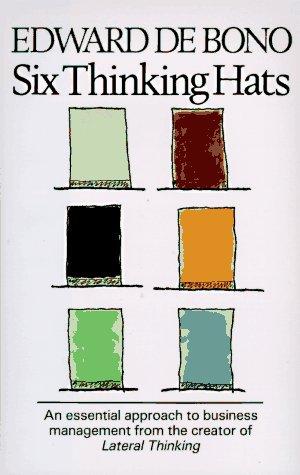
Ben shu fen wei qi ge bu fen, Fen wei bai se si kao mao, Hong se si kao mao, Hei se si kao mao, Huang se si kao mao, Lü se si kao mao he lan se si kao mao.
| Author | Edward de Bono |
|---|
Aggregated insights from reviews and discussions across the web.
Edward de Bono's 'The Power of Focused Thinking' (1981) receives limited but generally positive reception online, though it appears to be one of his less widely reviewed works compared to titles like 'Six Thinking Hats' or 'Lateral Thinking.' Based on available reviews and discussions of de Bono's broader body of work, readers appreciate his practical approach to teaching thinking as a learnable skill rather than an innate ability. His methodology emphasizes structured thinking techniques and the use of specific tools to improve decision-making and problem-solving.
However, de Bono's work consistently faces criticism for his heavy reliance on acronyms and invented terminology, which many readers find artificial and burdensome. Reviewers across his books note that while his core concepts have merit, the execution can feel repetitive and overly simplistic. Some readers question whether the elaborate frameworks add genuine value or create unnecessary cognitive overhead. The reception tends to be polarized—those who embrace his systematic approach find it transformative, while skeptics view it as unnecessarily complicated common sense dressed up in jargon.



Reviews
There are no reviews yet.