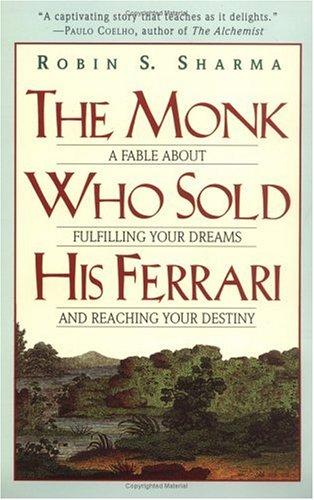
The Monk Who Sold His Ferrari

By Robin S. Sharma (1996)

Specs

Categories: , Tag:

Description

Includes a bonus excerpt of Robin Sharma’s upcoming The Secret Letters of the Monk Who Sold His Ferrari.

With more than four million copies sold in fifty-one languages, The Monk Who Sold His Ferrari launched a bestselling series and continues to help people from every walk of life live with far greater success, happiness and meaning in these times of dramatic uncertainty.

The Monk Who Sold His Ferrari celebrates the story of Julian Mantle, a successful but misguided lawyer whose physical a


Additional information

Author

Robin S. Sharma

Reviews

There are no reviews yet.

Be the first to review “The Monk Who Sold His Ferrari”

Your email address will not be published. Required fields are marked *

Summary

What the internet says

Aggregated insights from reviews and discussions across the web.

Overall reception: Mixed reception

The Monk Who Sold His Ferrari by Robin Sharma receives polarized reception online, with a 3.89/5 rating on Goodreads from over 176,000 ratings. Supporters praise it as a life-changing introduction to self-help concepts, particularly appreciating its accessible presentation of Eastern philosophy, meditation techniques, and work-life balance principles. Many readers describe it as transformative, especially those new to personal development literature, noting its simple step-by-step approach to living with greater purpose and balance. However, the book faces substantial criticism for its writing quality and delivery method. Critics consistently point out the overly simplistic dialogue format, where one character (John) asks naive questions while the other (Julian) delivers long monologues without meaningful interaction. Reviewers frequently note that the book presents nothing new—recycling well-known concepts from Hindu and Buddhist philosophy, positive thinking literature, and basic wellness advice (meditation, exercise, vegetarianism) without adding original insights. The fable structure is criticized as poorly executed, with one reviewer describing it as 'an essay written in the form of fiction' and another noting the protagonist's friend accepts all teachings without question, making the narrative feel unrealistic and condescending.

What readers loved

  • Accessible introduction to Eastern philosophy and self-help concepts for beginners
  • Simple, easy-to-read format that doesn't use overly complex spiritual terminology
  • Practical techniques presented including meditation, goal-setting, and time management
  • Inspiring message about work-life balance and living with purpose
  • Step-by-step approach to personal transformation that readers find actionable
  • Memorable title and concept that draws readers in
  • Addresses important themes like mindfulness, gratitude, and living in the present moment

Common critiques

  • Extremely poor writing quality with awkward dialogue tags and excessive adjectives
  • Presents no original ideas—recycles clichéd concepts from existing Eastern and Western philosophy
  • Weak narrative structure with minimal character development and unrealistic interactions
  • Condescending tone where the 'student' character asks overly simplistic questions
  • Author quotes himself within the book in chapter summaries, repeating content just read
  • Oversimplified presentation that insults reader intelligence with childish analogies (sumo wrestlers, pink wire cables, diamonds)
  • Preachy delivery through one-sided monologues rather than genuine dialogue
Last updated April 28, 2026 Summary based on publicly available reviews. May not reflect every reader's experience.