A Deep Dive Into the World of Travel and Hospitality


When most people hear the phrase travel and hospitality, they picture hotels, airlines, and maybe a fancy restaurant. While that’s not wrong, it barely scratches the surface. The real essence of this industry is the art of creating memorable experiences. It’s a massive, living ecosystem where every single detail—from a guest’s first Google search to their final wave goodbye—weaves together into a larger story of connection and discovery.
What Exactly Is the Travel and Hospitality Industry?
At its core, the travel and hospitality industry is a sprawling network of businesses all geared towards serving people who are away from home. But it’s so much more than just putting a roof over someone’s head or getting them from Point A to Point B.
Think of it like a grand theatre production. The booking platform is the ticket office, the airline is the transport to the venue, the hotel is the lavish set, and the tour guide is the lead actor. Every single role is crucial for a flawless performance. The ultimate goal isn't just to provide a service; it's to curate an experience that sticks with you long after the journey is over.
This ecosystem is incredibly diverse. It’s where business strategy, cultural exchange, and human psychology all collide, creating a fascinating field for professionals and curious learners alike. Understanding how these pieces fit together is the key to appreciating its true complexity and impact.
The Core Components of the Ecosystem
To really get a handle on the scale of travel and hospitality, it helps to break it down into its main pillars. Each one plays a unique role, but they're all deeply interconnected, shaping the traveller’s journey from start to finish.
- Accommodation: This is everything from five-star luxury resorts and boutique hotels to budget-friendly hostels and private homes. A huge and growing part of this is the private rental market. A good place to start is understanding: What is a short-term rental?
- Food and Beverage: This pillar covers the entire culinary landscape—restaurants, bars, cafés, catering services, and even food tours. It's often the most direct way a traveller experiences a new culture.
- Transportation: This is the logistical backbone of the industry. Airlines, cruise lines, railways, and car rental agencies are what make movement between destinations possible.
- Attractions and Entertainment: These are the things that give a destination its unique character. We’re talking theme parks, museums, historical landmarks, national parks, and guided tours.
A Thriving and Evolving Landscape
This industry never stands still. It’s constantly reacting and adapting to new technologies, economic shifts, and the ever-changing tastes of travellers. Just look at the Netherlands, which saw a record-breaking 20.3 million international tourists in 2023, blowing past pre-pandemic numbers.
This boom contributed to a total tourist spend of €111.2 billion, showcasing not only the sector's incredible economic resilience but also its power to draw visitors to both famous cities and hidden gems. You can dive deeper into the latest Dutch tourism trends on gowithguide.com.
This constant evolution means that success in travel and hospitality today demands more than just a friendly smile. It requires a sharp understanding of technology, a real commitment to sustainability, and an almost sixth sense for what modern travellers truly want.
As we dive deeper into this field, we’ll see how all these elements—the guest experience, technology, sustainability, and innovative business models—all come together. This guide will give you a comprehensive map of this vibrant industry, equipping you with the knowledge to navigate it with confidence.
How to Engineer an Unforgettable Guest Experience
The real soul of the travel and hospitality industry isn’t found in high thread counts or fancy welcome drinks. It’s forged in the moments that create a genuine emotional connection with a guest.
To get there, you have to move beyond simple service transactions. It means deliberately engineering an experience where every single interaction, big or small, feels personal and completely effortless. This isn’t about luck; it’s a discipline known as service design.
Think of a service design blueprint as the architectural plan for a guest's entire journey. It maps out every single touchpoint, from the moment they first see an Instagram ad to the feedback email they get after checking out. The brands that lead the pack don't leave these moments to chance. They design them to anticipate needs, solve problems before they escalate, and create unexpected moments of delight.
This is what transforms a standard hotel stay into a story worth telling. It’s the difference between a place that just gives you a room and one that makes you feel truly looked after.
Mapping the Guest Journey from Start to Finish
To build an exceptional experience, you first have to understand that it happens in distinct phases. A guest's relationship with a brand isn't a single event but a continuous flow. Each touchpoint influences their perception of the whole. We can break this journey down into three core stages: from initial curiosity to lasting memory.
This infographic paints a clear picture of the hospitality ecosystem, showing how a guest moves from discovery, to the experience itself, and finally, to the memory they carry with them.
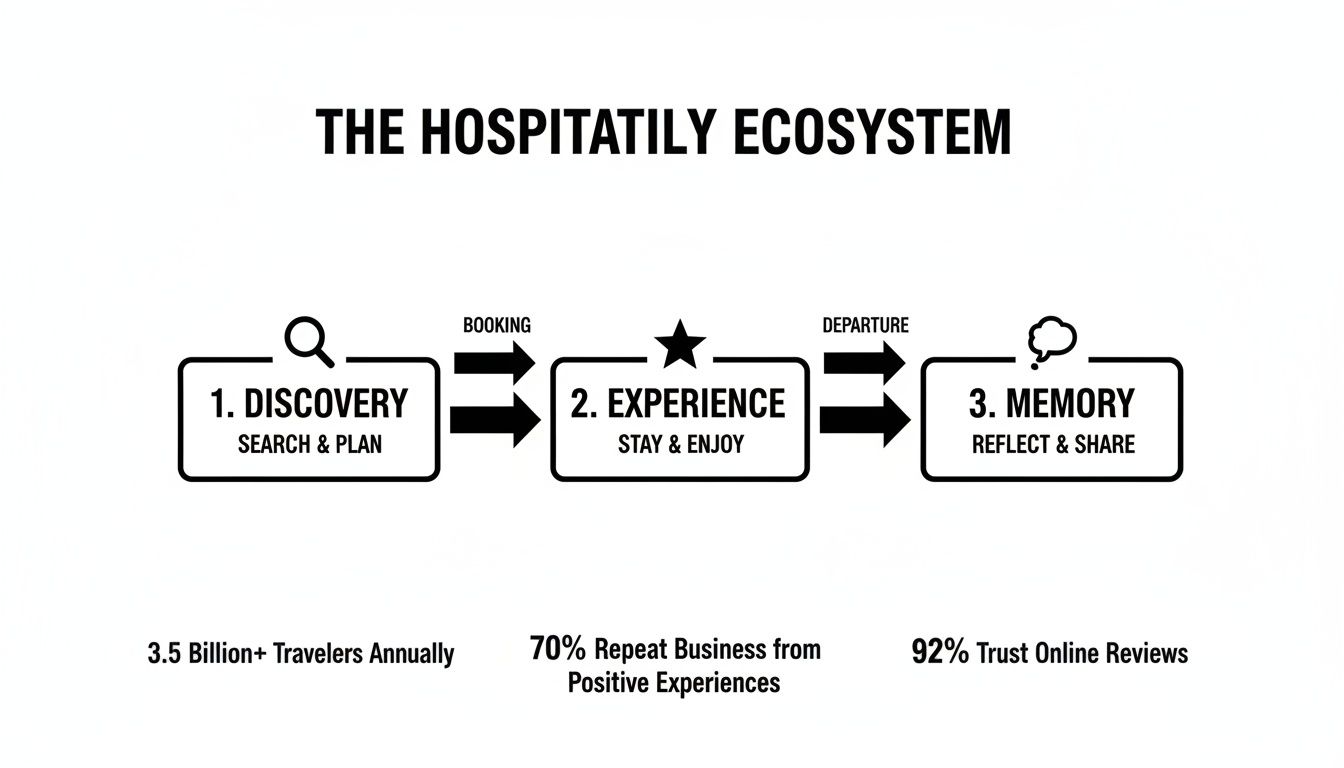
This flow makes one thing crystal clear: the guest experience starts long before they walk through the door and continues long after they've left. That’s why a consistent strategy across every single stage is so vital.
Managing this journey successfully requires a major shift in perspective. Instead of seeing separate departments—marketing, operations, guest services—the best organisations see a single, unified system dedicated entirely to the guest. It’s about creating a seamless narrative where every chapter feels connected to the last. This unified view is often what separates good service from truly great hospitality.
The ultimate goal is to make guests feel seen and understood at every step. This is achieved not through grand gestures, but through a series of small, well-executed details that show you're paying attention.
Take a boutique hotel, for instance. They might notice a guest mentioned a gluten allergy during the online booking process. Upon arrival, that guest could find a curated list of local restaurants with excellent gluten-free options waiting in their room. It's a small, proactive gesture, but it shows a level of care that builds loyalty on the spot.
Pillars of an Exceptional Experience
While the specific tactics can vary wildly, the principles behind world-class service are universal. They are always built on a foundation of empathy, personalisation, and empowerment. By focusing on these key areas, any hospitality business can elevate its guest experience from ordinary to unforgettable.
- Anticipatory Service: This is the art of meeting a need before the guest even has to ask. It’s about using data, observation, and intuition to predict what someone might want—from pre-stocking their favourite minibar snack to offering an umbrella just as it starts to rain.
- Hyper-Personalisation: This goes way beyond just using a guest's name in an email. It means tailoring the experience to their unique, individual preferences. Technology plays a massive role here, allowing hotels to remember a returning guest’s preferred room temperature or their favourite newspaper. You can learn more about how the best five-star hotels in the world have mastered this art.
- Seamless Problem Resolution: Things will go wrong. It's inevitable. The defining moment is how an organisation responds. Empowering your frontline staff to resolve issues quickly and effectively—without needing to hunt down a manager for minor compensations like a complimentary breakfast—can turn a negative situation into a powerful, loyalty-building one.
The Technology Revolutionising Guest Journeys
Technology is no longer just a nice-to-have in the travel and hospitality world; it's the central nervous system powering the entire modern guest experience. It has shifted from a back-office tool for efficiency to the very heart of how travellers discover, book, and enjoy their journeys. The focus has moved beyond simple convenience to creating a seamless, intuitive, and deeply personal stay.
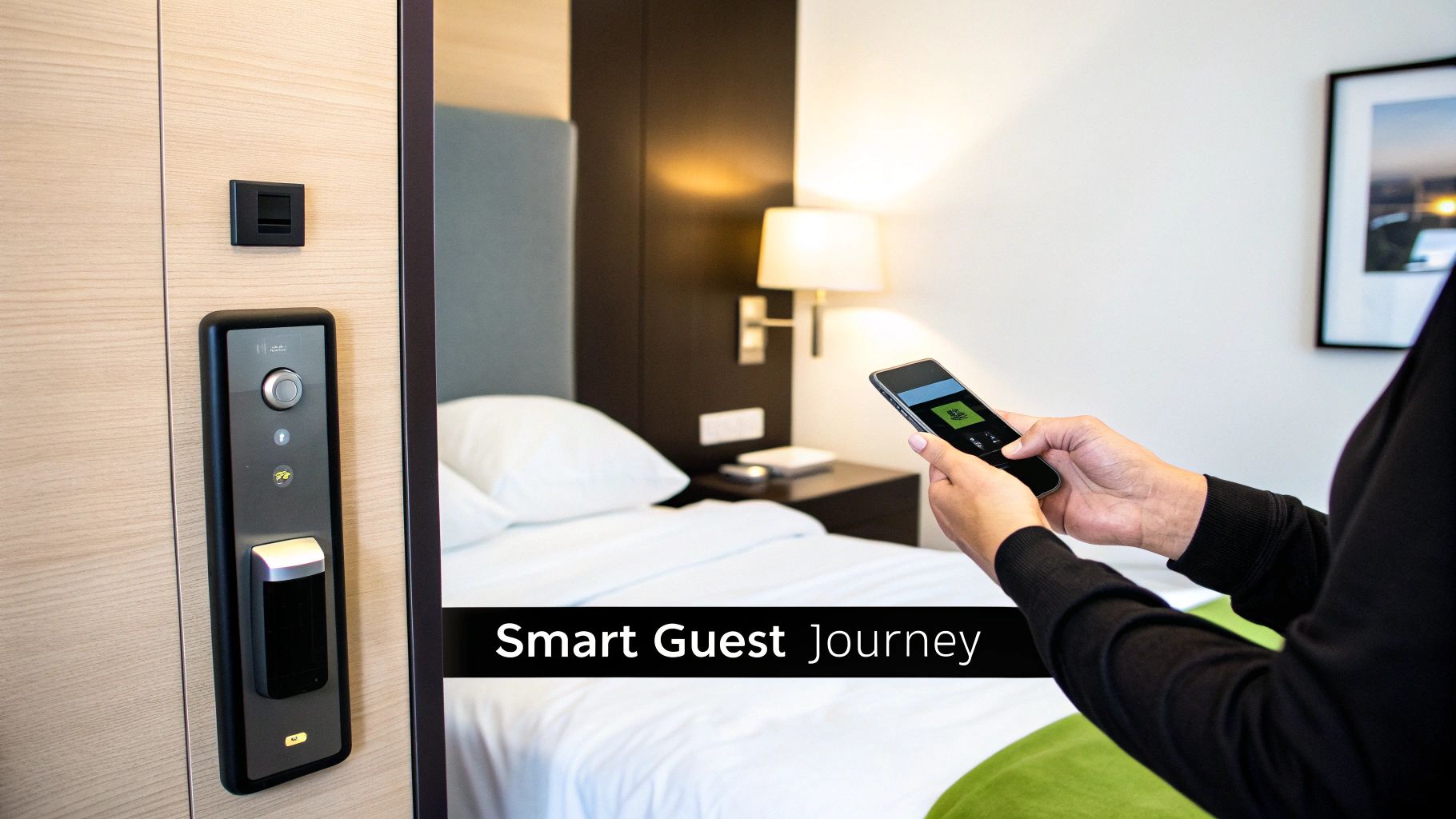
This evolution is driven by powerful tools working in concert. Artificial intelligence (AI) can now predict what a guest might need before they even ask, while the Internet of Things (IoT) connects devices to create ‘smart rooms’ that adapt to individual tastes. These aren't just flashy gimmicks; they are direct responses to what guests now expect: effortless control and real convenience.
The Rise of Contactless Convenience
One of the most profound changes we’ve seen is the explosion of contactless technology. What started as a niche feature has rapidly become a baseline expectation for travellers everywhere.
This tech puts the power squarely in the guest's hands, usually through their smartphone. The whole idea is to smooth out the friction points we once accepted as normal, like queueing at reception after a long-haul flight. It's about giving people back their time.
Some of the most common examples in action include:
- Mobile Check-In and Check-Out: Guests can bypass the front desk completely, making for a much smoother arrival and departure.
- Digital Keys: Your phone becomes your room key, getting rid of the hassle of losing or deactivating a plastic keycard.
- In-App Ordering: Room service, spa treatments, or extra pillows can be requested with a few taps on a mobile device.
These tools do more than just make life easier for guests. They also free up staff from routine admin, letting them focus on more meaningful, high-value interactions that truly elevate the experience for everyone.
Creating Intelligent Environments With AI and IoT
Beyond simple contactless interactions, AI and IoT are working behind the scenes to make the guest's environment more responsive and personal. Don't think of a smart room as a collection of gadgets, but as a space that actively anticipates and caters to your comfort.
For instance, IoT sensors can adjust the room temperature and lighting based on a guest's pre-set preferences or even their real-time behaviour. When you leave the room, the system can automatically dim the lights and adjust the thermostat to save energy, then reset everything to your liking moments before you return. It’s a powerful blend of personalisation and operational smarts.
The real magic of this technology lies in its ability to analyse huge amounts of data to deliver proactive service. AI algorithms can spot patterns in guest behaviour to suggest tailored experiences, from a specific type of restaurant to a local tour they might love.
This data-driven approach shifts service from being reactive to predictive. Instead of waiting for a guest to report a problem or make a request, organisations can see needs coming and address them ahead of time. This is what creates that feeling of effortless, intuitive service that defines modern luxury. And as the world becomes more connected, travellers are also looking for the best eSIM for international travel options to ensure their journey is as seamless as their stay.
To better understand how these innovations are reshaping the industry, let's break down some of the key trends.
Key Technology Trends in Travel and Hospitality
| Technology Trend | Primary Application | Impact on Guest Experience | Impact on Business Operations |
|---|---|---|---|
| Artificial Intelligence (AI) | Personalised recommendations, chatbots, dynamic pricing | Tailored suggestions, 24/7 support, relevant offers | Increased revenue, optimised pricing, improved efficiency |
| Internet of Things (IoT) | Smart rooms, predictive maintenance, asset tracking | Customised room settings, faster issue resolution | Reduced energy costs, fewer equipment failures, better inventory management |
| Contactless Technology | Mobile check-in, digital keys, QR code menus | Faster service, enhanced safety, greater convenience | Streamlined front desk operations, reduced staff workload |
| Big Data Analytics | Customer segmentation, demand forecasting, sentiment analysis | More relevant marketing, improved service quality | Data-driven decision-making, higher marketing ROI |
| Virtual & Augmented Reality (VR/AR) | Virtual hotel tours, interactive maps, in-room entertainment | Immersive booking experience, enhanced destination discovery | Differentiated marketing, increased booking conversions |
These trends aren't working in isolation; they often overlap and build on each other to create a completely new kind of guest journey.
The Data That Drives Decisions
Ultimately, the engine powering this entire technological shift is data analytics. Every booking, preference, and interaction generates a trove of valuable information. The leading hospitality brands are those learning to harness this data to fine-tune nearly every aspect of their operations.
Data helps answer mission-critical questions that were once left to guesswork:
- Dynamic Pricing: When is the perfect moment to adjust room rates to maximise both occupancy and revenue, based on real-time demand, local events, and competitor moves?
- Marketing Personalisation: Which specific offers or messages will actually connect with different guest segments and drive them to book?
- Operational Efficiency: Where are the bottlenecks in our service? How can we allocate staff and resources more effectively to boost guest satisfaction scores?
By bringing together data from booking engines, loyalty programmes, and on-property systems, a 360-degree view of each traveller emerges. This allows brands to move beyond clumsy demographic targeting and start engaging with guests as individuals. The result is a smoother journey and, more importantly, deeper and more lasting loyalty. This strategic use of information is what separates the leaders from the laggards.
Building a Sustainable and Resilient Future
In the world of travel and hospitality, two ideas have gone from the marketing brochure to the boardroom: sustainability and resilience. These aren't just feel-good buzzwords anymore; they represent a deep, operational shift in how the industry thinks, grows, and protects itself. It’s no longer about just "doing less harm" — it's about actively creating a positive, lasting footprint on the environment and the communities we visit.
This isn't about small tweaks. It’s a fundamental rethinking of everything from resource consumption and supply chains to the very relationship the industry has with its destinations. The aim is to build a model that’s not only good for the planet but is also tough enough to handle whatever comes next.
Putting Responsible Tourism into Practice
So how do these big ideas translate into action? That's where responsible tourism comes in. It’s the umbrella term for several powerful movements that are reshaping what guests expect and how businesses operate.
We’re seeing three key approaches gain serious traction:
- Ecotourism: This is about connecting travel with conservation. Think of a Costa Rican lodge powered by solar panels, where a portion of your stay funds local rainforest preservation projects. It’s travel that directly supports the natural areas it celebrates.
- Community-Based Tourism: Here, local residents are in the driver's seat, owning and managing the entire tourism experience. This model ensures that money stays local, cultures are preserved authentically, and communities are empowered rather than exploited.
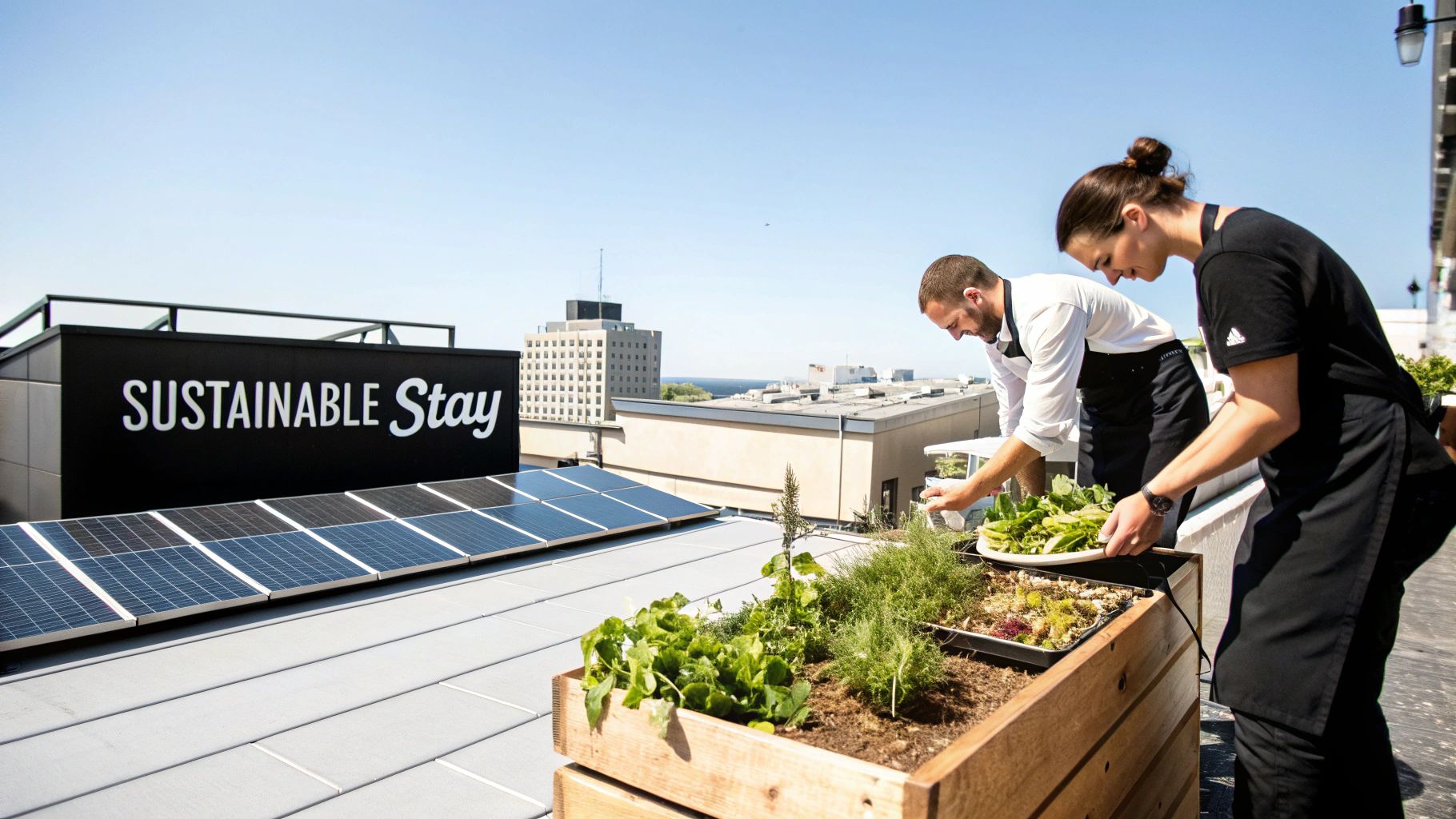
- Circular Economy Principles: This is the simple but profound idea of designing waste out of the system. In a hotel, this could mean composting kitchen scraps for a rooftop garden, sourcing food from nearby farms to slash transport emissions, or furnishing rooms with locally made, upcycled pieces.
Embracing the Circular Model
The circular economy is a game-changer for hospitality, an industry that has long run on a linear "take-make-dispose" model. By closing these loops, businesses can slash their environmental impact while often saving money and creating a better story for their guests.
For instance, a hotel might partner with local artisans to transform old linens into new products sold in the gift shop. Others are installing advanced filtration systems to recycle greywater for landscaping. Suddenly, waste isn't a liability; it's a resource. It's proof that sustainability is just smart business.
The most successful sustainable initiatives are those that become a core part of the brand’s story. When guests see a rooftop garden supplying the hotel restaurant or learn how the business supports a local school, sustainability becomes a tangible, memorable part of their stay.
This is resonating with travellers more than ever. Take Dutch travellers, for example: a huge 75% are now planning their own independent trips, ditching traditional agencies. They're looking for authentic, personalised experiences, and that includes seeking out stays with a smaller carbon footprint.
Building Resilience for a Changing World
If the last few years have taught us anything, it’s that resilience isn't optional. The industry got a crash course in the need for more agile, adaptable, and diversified business models that can weather future storms—be they economic, environmental, or health-related.
This means strengthening local supply chains so a hotel isn’t entirely dependent on global logistics that can snap at a moment's notice. It also means diversifying how they make money. A resort that once catered only to international tourists might now offer co-working packages or wellness retreats to attract a domestic crowd, building a much more stable foundation.
Ultimately, a resilient future is a sustainable one. It requires innovation across the board, including in the skies. To understand this better, you can explore our guide on what Sustainable Aviation Fuel is and its future impact.
Understanding the Business of Hospitality
While an unforgettable guest experience is the heart of the travel and hospitality industry, a smart business model is the backbone holding everything up. To really get what makes this world tick, we have to look under the bonnet and see the financial engine that powers everything from tiny boutique hotels to global resort chains.
It all starts with a core decision that fundamentally shapes a property’s identity and how it operates: its ownership structure. This one choice sets the stage for how a brand grows, the level of control an owner retains, and ultimately, how the money is made.
Franchise Freedom or Independent Control
The most common fork in the road for anyone in the accommodation business is choosing between the franchise model and going it alone as an independent. Each path offers a completely different set of trade-offs, attracting different kinds of entrepreneurs and investors.
Think of a franchise as joining a well-established club. An owner pays a fee to a massive brand like Marriott or Hilton to use their name, their booking system, and their operational playbook. In exchange, they get instant brand recognition and access to a huge, loyal customer base. It’s a model designed to significantly lower the risk, especially for first-time operators.
Independent ownership, on the other hand, is all about building something from scratch. The owner has total creative control over the brand, the guest experience, and every last operational detail. This path offers maximum freedom, but it also means building a reputation and a customer base from the ground up—a much bigger marketing mountain to climb.
The Rise of Hybrid and Niche Models
The industry is always experimenting, blurring the traditional lines with new formats. One of the most successful recent innovations is the aparthotel or extended-stay model.
These properties basically merge the best of both worlds. You get the space and amenities of a private apartment (like a kitchen and living area) but with all the convenient services of a hotel (like housekeeping and a front desk). This hybrid approach is a hit with a wide range of travellers, from business professionals on long assignments to families who need more flexibility than a standard hotel room can offer.
The core lesson here is that modern hospitality business models are becoming increasingly specialised. Success often comes from identifying a specific traveller need and building a unique, targeted experience around it, rather than trying to be everything to everyone.
Beyond the Room Rate: Ancillary Revenue
A hotel room is often just the beginning of the story. The most profitable hospitality businesses have mastered the art of ancillary revenue—that’s all the income generated from services beyond the basic cost of a night's stay.
This is where a hotel truly diversifies its income and enhances the guest experience at the same time. These extra revenue streams can turn a simple place to sleep into a multifaceted destination.
Common sources of ancillary revenue include:
- Food and Beverage: On-site restaurants, bars, and cafés are the classic examples, capturing guest spending from breakfast through to late-night drinks.
- Wellness and Spa Services: Massages, fitness classes, and other wellness offerings are high-margin services that tap into the guest’s desire for relaxation and self-care.
- Meetings and Events: Hosting conferences, weddings, and corporate events can be a massive revenue driver, filling rooms and function spaces during otherwise quiet periods.
- Experiences and Tours: Partnering with local operators to sell curated tours or activities directly to guests adds real value and opens up another income stream.
Unlocking Profitability with Revenue Management
So how do hotels price their rooms and services to squeeze out every drop of profit? The secret is a discipline called Revenue Management. If that sounds complicated, just think about how airlines price their seats. The cost for the exact same seat can swing wildly depending on when you book, how full the flight is, and the time of year. Hotels do the exact same thing.
The goal is always to sell the right room, to the right guest, at the right time, for the right price. Using sophisticated software and data analysis, revenue managers constantly adjust rates based on a huge number of factors, including:
- Occupancy levels and booking pace.
- Seasonal demand and local events.
- Competitor pricing and market trends.
- Length of stay and day of the week.
By dynamically managing prices, a hotel can avoid selling out too cheaply on a high-demand night while also avoiding the pain of empty rooms during slower periods. It’s a strategic game that ensures the property is always optimising its potential income, making it one of the most critical functions for financial survival in the fiercely competitive travel and hospitality landscape.
Finding Your Place in the Industry
The world of travel and hospitality is huge, stretching far beyond the classic hotel manager or concierge roles that first spring to mind. While those front-of-house jobs are still the heart of the industry, its evolution has kicked open the doors for a whole new breed of professionals. Today, success isn't just about five-star service; it's about blending that human touch with sharp, analytical know-how.
Think of this final section as your roadmap. We’ll look at the well-trodden career paths and the new trails being blazed, pinpoint the skills that genuinely make a difference, and point you towards resources to help you start—or supercharge—your journey in this incredible field.
Mapping Your Career Path
The modern hospitality sector is a melting pot of disciplines. This has created a massive demand for specialists of all kinds. Whether you're passionate about people, obsessed with data, or a natural strategist, there’s a place for you to make a real impact. The trick is to see how all these different roles weave together to create that seamless guest experience.
The most in-demand careers today fall into a few key areas:
- Operations and Guest Services: These are the classic, hands-on roles that keep the engine running. Think hotel general managers, front desk supervisors, event coordinators, and food and beverage directors. These jobs demand incredible leadership and a deep-seated commitment to making people happy.
- Data and Revenue Management: As we've covered, data is the new currency. Professionals like revenue managers, data analysts, and market research specialists are the ones who optimise pricing, forecast demand, and steer the ship with strategic business decisions.
- Marketing and Digital Engagement: In a marketplace this crowded, just being good isn't enough—you have to be noticed. Digital marketers, social media managers, content creators, and brand strategists are the storytellers who attract guests and keep them coming back.
- Sustainability and Community Impact: More and more properties now have dedicated sustainability coordinators or corporate social responsibility (CSR) managers. These folks focus on shrinking the environmental footprint and making sure the business is a positive force in the local community.
Skills That Set You Apart
Knowing your way around a spreadsheet or a booking system is important, sure. But the skills that truly define the future leaders of this industry are the ones that marry analytical thinking with a profound understanding of people. The best employers are actively hunting for individuals who can bridge that gap between technology and the human guest.
Industry veterans will tell you the same thing: the most valuable people are those with both "hard" and "soft" skills. They can dive into a spreadsheet to spot a revenue opportunity in the morning, then turn around and masterfully handle a complex guest issue with genuine empathy in the afternoon.
To really thrive, focus on building a balanced skillset:
- Empathy and Emotional Intelligence: The ability to genuinely anticipate and understand what another person is feeling is non-negotiable. It's the bedrock of all great service, full stop.
- Creative Problem-Solving: Things go wrong. It’s a fact of life. The ability to think on your feet, improvise, and turn a potential disaster into a memorable, positive experience is a skill worth its weight in gold.
- Cultural Intelligence (CQ): In a global industry, you'll meet guests and colleagues from every corner of the world. High CQ means you can instinctively adapt how you communicate and act to be effective and respectful, no matter the cultural context.
- Data Literacy: You don't need to be a data scientist, but you absolutely have to be comfortable with data. Understanding the key metrics and what they're telling you about the business is essential for making smart decisions.
For anyone eyeing the accommodation sector, understanding its evolution is critical. To get a better sense of how the market is shifting, check out our guide on traditional hotel alternatives. Knowing this landscape will help you spot where the most exciting career opportunities are popping up.
Your Top Questions About Travel and Hospitality, Answered
The world of travel is always in motion, and it’s natural to have questions. Let's tackle some of the most common ones to give you a clearer picture of this fascinating industry.
What's the Single Biggest Trend Shaping the Industry Today?
Without a doubt, it’s personalisation. And technology is the engine making it happen.
Today’s travellers aren't just looking for a trip; they expect an experience that feels like it was crafted just for them. This is so much more than just getting an email with your name on it. We're talking about using data to get ahead of what a guest might need, suggesting activities they'll genuinely love, and smoothing out every single interaction, from the moment they book to the final check-out. Think of a hotel that remembers you prefer a certain type of pillow, or a tour company that suggests a local cooking class because you loved a food tour on your last holiday. That's the magic.
How Has the Push for Sustainability Changed What Guests Expect?
Sustainability has gone from a "nice-to-have" to a deal-breaker for a huge number of travellers. It’s no longer a niche concern; it's a core expectation.
People are actively choosing to spend their money with brands that show a real, measurable commitment to doing good—for the planet and for local communities. This can be anything from cutting out single-use plastics and sourcing food from nearby farms to making sure their tours support local artisans and businesses. It's about authentic responsibility.
A recent study found that a staggering 78% of global travellers plan to stay at a sustainable property at least once in the next year. That figure says it all: green credentials are now a major driver of booking decisions.
What Role Does Technology Really Play in a Hotel's Day-to-Day?
Technology is the quiet, hardworking central nervous system of any modern hospitality business. While we see the flashy guest-facing apps, its biggest impact is often behind the scenes, making sure everything runs like clockwork.
Property Management Systems (PMS) are the backbone, automating everything from bookings to room assignments. Meanwhile, sophisticated revenue management software works in the background, constantly adjusting prices to make sure the business is as profitable as possible. By handling these complex operational tasks, technology frees up the human staff to focus on what they do best: creating incredible, memorable experiences for their guests.
At People & Media B.V., we believe that understanding complex industries is a key part of lifelong learning. Our platform offers deep dives into a variety of fields, helping you connect ideas and grow your knowledge. Continue your learning journey with us.


Responses