Your Guide to the PMO Project Management Officer Role

So, what exactly is a Project Management Office, or PMO? At its core, a PMO is the command centre for all project-related work in a company. It's the team responsible for setting the standards, providing the tools, and making sure every project aligns with the bigger picture. The PMO Project Management Officer is the expert who works in this hub, keeping everything running smoothly.
Getting to Grips with the Project Management Office
Think of a PMO like an orchestra conductor. You have dozens of talented musicians—your project managers—each focused on playing their part perfectly. But without a conductor, you just have noise. The PMO stands at the front, setting the tempo, ensuring everyone follows the same sheet music, and turning individual efforts into a powerful, unified symphony.
The main job of a PMO is to bring order and consistency to what can otherwise be a chaotic collection of projects. When teams work in silos, they often invent their own ways of doing things—different software, unique report formats, and clashing timelines. This makes it almost impossible for leaders to get a straight answer about progress, risks, or where resources are really going.
A strong PMO doesn't just manage projects; it elevates them. By centralising key functions, it creates a unified strategic portfolio that drives business success and keeps stakeholders happy.
Why a Central Hub Makes All the Difference
This centralised model is incredibly valuable. By creating a single "source of truth" for how projects are managed, a PMO gets everyone speaking the same language. This simple alignment unlocks some major benefits:
- Better Project Success Rates: With standardised processes and a keen eye on potential risks, fewer projects go off the rails.
- Smarter Resource Allocation: A bird's-eye view of all ongoing work means people and money can be directed to the initiatives that matter most.
- Sharper Decision-Making: When executives get consistent, reliable data, they can make strategic choices with confidence.
It's no surprise that the demand for skilled PMO Project Management Officers remains strong, especially in fast-paced sectors like IT and finance. In the Netherlands, this trend reflects a project-driven economy where getting things done right is a priority. The average base salary for a PMO here is around €44,000 annually, a clear sign that organisations are willing to invest in professionals who keep their projects on track and in line with strategic goals. You can explore more on this topic with the latest PMO salary trends from PayScale_Manager/Salary).
The Three Types of PMO Models
Just like there's more than one way to coach a winning team, there's no single blueprint for a Project Management Office. A PMO's structure and authority level aren't one-size-fits-all; they have to be carefully shaped by the organisation's culture, maturity, and specific goals. Getting this right is the first step for any Project Management Officer looking to make a real impact.
The key difference between PMOs boils down to one thing: control. How much authority does it have over the projects it oversees? This single factor gives us three distinct models: the Supportive, Controlling, and Directive PMO. Each one plays a unique role, from offering gentle guidance to taking the reins and driving projects forward directly.
The Supportive PMO: The Helpful Librarian
The Supportive PMO is the most hands-off of the three. Think of it as the project management world's helpful librarian. It doesn't tell you what to read or how to read it, but it curates an incredible library of resources—templates, best practices, and lessons from past projects—for you to use.
Project teams are free to dip into this pool of knowledge as they see fit. The Supportive PMO's main job is to act as a central hub for information and expertise. This model works beautifully in mature organisations where project managers are seasoned pros who need very little hand-holding, promoting a culture of autonomy and trust.
The Controlling PMO: The Disciplined Coach
Moving up the ladder of authority, we get to the Controlling PMO. This type is less of a librarian and more of a disciplined sports coach. While the project managers are still the players on the field, the PMO is the one who insists everyone follows the team's official playbook.
Here, compliance is key. A Controlling PMO sets the rules of the game by mandating specific methodologies, frameworks, and tools. It establishes clear governance structures and conducts regular project reviews to ensure everyone sticks to the same standards. This approach creates consistency across the board and is perfect for organisations trying to balance project freedom with a need for centralised oversight to manage risk and keep quality high.
This diagram shows the core purpose that unites all PMOs: bringing order to chaos by standardising, centralising, and coordinating projects.
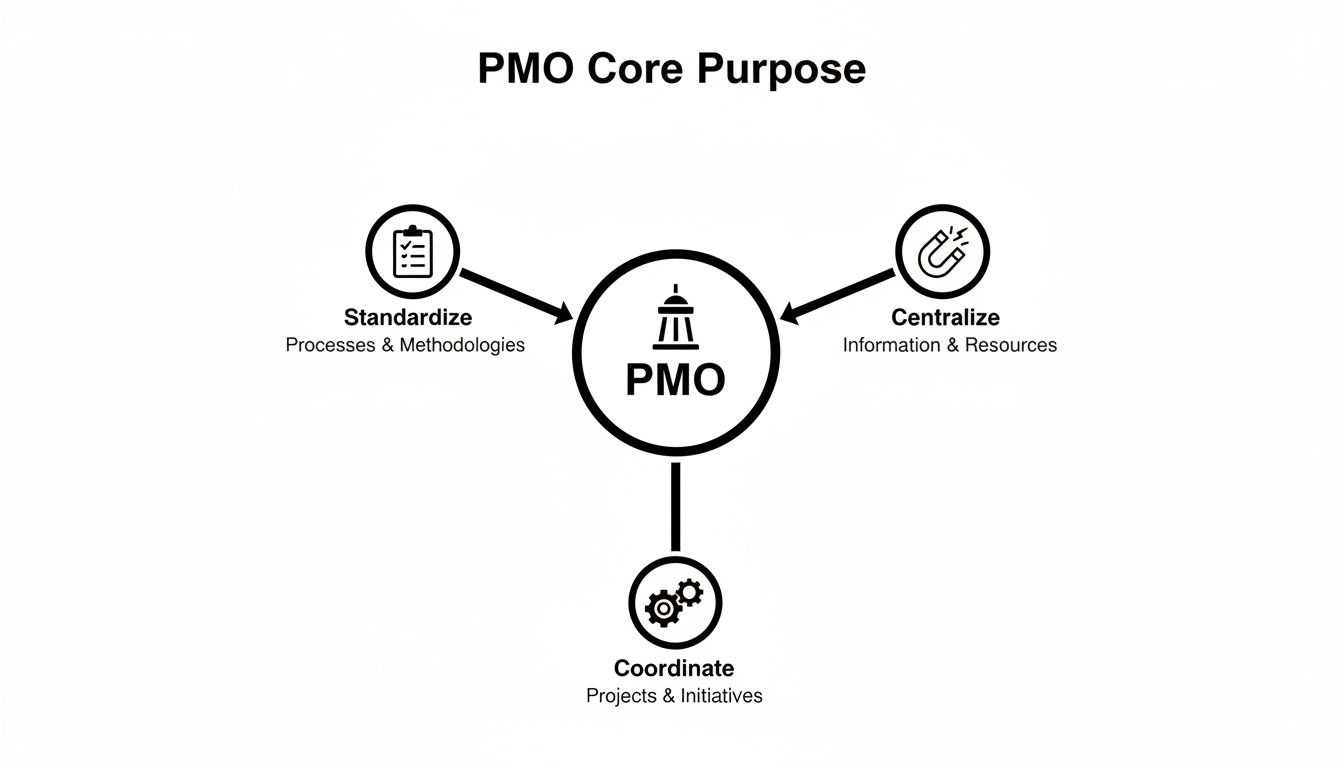
It acts as the central nervous system, connecting individual project efforts into a cohesive, efficient whole.
The Directive PMO: The Hands-On Director
At the top of the control spectrum sits the Directive PMO. This model doesn't just hand out the playbook—it calls the plays from the sideline and manages the team directly. In short, the Directive PMO takes full ownership of projects from kickoff to completion.
Project managers are assigned by the PMO and report directly back to it. This hands-on, high-control approach guarantees the greatest level of consistency. It's often found in organisations where projects are strategically critical or where internal project management skills are still being developed, ensuring every initiative is executed with precision.
When it comes to picking a PMO model, it’s not about finding the "best" one, but the one that’s the best fit. The final decision has to align with the company culture, the complexity of its projects, and its overarching strategic goals.
To help make these differences crystal clear, let's look at a side-by-side comparison.
Comparing the Three Types of Project Management Offices
This table breaks down each PMO model, highlighting its level of control, what it primarily does, and where it fits best.
| PMO Type | Level of Control | Primary Function | Best Suited For |
|---|---|---|---|
| Supportive | Low | Provides templates, best practices, and training. Acts as a consultant and knowledge hub. | Organisations with high project management maturity and experienced teams that thrive on autonomy. |
| Controlling | Medium | Enforces compliance with standards, methodologies, and governance frameworks through regular reviews. | Organisations that need a balance of centralised governance and project team flexibility. |
| Directive | High | Directly manages projects and provides project managers. Takes full ownership of project execution. | Organisations with low project management maturity or highly critical strategic initiatives requiring strict oversight. |
Ultimately, the choice of PMO model directly shapes the day-to-day responsibilities of the PMO Project Management Officer. It defines how they interact with project teams and stakeholders, setting the stage for how they will guide the organisation's projects toward success.
Core Responsibilities of a Modern PMO Officer
While the PMO model sets the stage, it’s the PMO Project Management Officer who brings it to life every single day. Their role isn't about ticking boxes on a checklist; it's about tackling the real, persistent challenges that can derail a business. Instead of a dry list of duties, let’s look at their core responsibilities as practical solutions that inject efficiency, clarity, and strategic alignment into an organisation.
Think of each function a PMO officer performs as a direct response to a potential point of failure. From setting the rules of the game to managing who does what, their work transforms disjointed efforts into a coordinated, powerful force for hitting business goals.
Establishing Robust Project Governance
Imagine trying to build a house where every crew uses a different unit of measurement—some in metres, others in feet. The result would be chaos. That's precisely what happens in companies without clear project governance. A PMO officer’s primary job is to make sure everyone is "speaking the same language."
They do this by establishing and overseeing a clear governance framework. This isn't about creating rigid bureaucracy; it's about crafting a consistent playbook that everyone understands and can follow.
- Standardising Methodologies: They select and roll out project management frameworks (like Agile or PRINCE2) that actually fit the company’s culture and needs, ensuring every project is approached with a consistent method.
- Creating Templates and Tools: They develop standard documents for things like project charters, status reports, and risk logs. This consistency makes it incredibly easy to compare the health and progress of different projects at a glance.
- Enforcing Compliance: Through regular audits and reviews, the PMO officer makes sure teams are sticking to the established standards, which maintains quality and massively reduces project risk.
By creating this shared foundation, the PMO officer cuts out the confusion and lets project teams get on with delivering, rather than constantly reinventing the wheel.
Overseeing Strategic Resource Management
One of the biggest headaches for any growing business is getting the right people on the most important tasks. Without a central view, it’s all too common for your best expert to be triple-booked on three "top-priority" projects, leading to burnout and delays. The PMO Project Management Officer acts as the strategic air traffic controller for resources.
Their job is to maintain a bird’s-eye view of all available resources—people, budgets, and equipment—and ensure they’re deployed effectively across the entire project portfolio.
The real magic of a PMO officer in resource management is their ability to balance competing priorities. They make sure the company’s most valuable assets are pointed at the projects that deliver the biggest strategic punch.
This involves a few key activities:
- Capacity Planning: Looking ahead at the project pipeline to forecast future resource needs. This helps spot potential bottlenecks long before they become a problem.
- Resource Allocation: Working with department heads and project managers to assign people based on skills, availability, and project priority.
- Conflict Resolution: Stepping in to mediate when multiple projects need the same limited resources, using data to make decisions that align with business goals.
This critical oversight prevents resource clashes, boosts productivity, and ensures that money and people are invested wisely.
Driving Performance Monitoring and Reporting
How does leadership get a clear, unbiased picture of how projects are really doing? They turn to the PMO. A crucial responsibility for a PMO officer is to be the single source of truth for all project data. They collect, analyse, and present information in a way that is clear, consistent, and actionable.
This goes way beyond just chasing project managers for status updates. The PMO officer designs and runs a reporting system that gives real-time insights into project health. This includes tracking key performance indicators (KPIs) like budget variance, schedule slippage, and milestone completion. For teams new to this, learning how to write a good user story format example can build a solid foundation for clear communication and tracking from the start.
Through dashboards and regular reports, they give stakeholders the transparency needed to make smart decisions, spot risks early, and celebrate wins. This function drives accountability and keeps everyone pulling in the same direction.
The Essential PMO Toolkit and Skills
To really shine as a PMO Project Management Officer, you need more than just a firm grip on governance and resource planning. The role demands a potent mix of people skills, technical know-how, and the right software. This blend is what elevates a PMO from a simple administrative hub into a true strategic powerhouse for the business.
Think of it like a master carpenter's workshop. You need finely honed skills to shape the raw materials, but you also need the right set of tools—from hammers to precision lathes—to bring your vision to life. For a PMO officer, projects are the raw material, and successful, strategic delivery is the vision.
Mastering Essential Soft Skills
While frameworks and software are the skeleton, the most effective PMO officers are masters of human dynamics. They’re the central node connecting multiple teams, departments, and leadership levels, a place where influence and clarity are everything.
These aren't just "nice-to-have" traits; they are the absolute bedrock of a PMO's ability to get things done.
- Stakeholder Diplomacy: A PMO has to navigate the often-competing interests of executives, project managers, and team members. This takes tact, empathy, and the skill to build consensus and manage expectations without having any direct authority.
- Persuasive Communication: Pumping out reports is one thing. A truly skilled PMO officer can translate complex data into a compelling story that actually drives action, whether that's flagging a critical risk to leadership or walking a project team through a new process.
- Sharp Analytical Thinking: It’s all about seeing the "forest for the trees." This means looking at project data not just for what it says, but for what it implies—spotting trends, predicting potential roadblocks, and identifying opportunities for improvement across the entire portfolio.
These soft skills are the grease in the gears of project execution. They ensure everything runs smoothly and everyone stays on the same page.
Key Project Management Frameworks
To bring some order and consistency to the chaos of an organisation's projects, a PMO officer leans on established methodologies. These frameworks provide a shared language and a structured approach, making sure everyone is following the same playbook. A great PMO doesn’t just pick one; it knows which one to use and when.
A project management framework is like a recipe. While a chef can improvise, having a solid recipe ensures that no matter who is in the kitchen, the result will be consistent, high-quality, and meet expectations.
The most common frameworks in a PMO's arsenal include:
- PMBOK (Project Management Body of Knowledge): This isn't a strict methodology so much as a comprehensive guide to best practices. It gives you a foundational vocabulary and a set of standard processes that can be tweaked to fit almost any project.
- PRINCE2 (Projects IN Controlled Environments): Hugely popular in the UK and Europe, PRINCE2 is a process-based method that’s laser-focused on justification, structure, and control. It carves projects into manageable stages, making it perfect for large, complex initiatives that need tight governance.
- Agile: More of a mindset than a single framework, Agile is all about iterative development and staying flexible. Methods like Scrum and Kanban fall under the Agile umbrella, championing collaboration and the ability to react quickly to change. A PMO often helps organisations blend these Agile practices with more traditional governance.
A proficient PMO Project Management Officer knows how to select, tailor, and implement these frameworks to match the company's culture and the types of projects it runs.
Essential Software and Digital Tools
In today's project world, tracking things manually on a spreadsheet just won't cut it. The modern PMO relies on a suite of software to centralise data, automate reporting, and provide a single source of truth for the entire project landscape.
This digital toolkit is what gives a PMO a clear, real-time view of everything that's happening. As part of this, embracing modern solutions can make a huge difference. For instance, considering new AI features that make project management effortless can seriously boost efficiency and effectiveness.
Common categories of tools include:
- Project and Portfolio Management (PPM) Software: Tools like Microsoft Project, Planview, and Wrike are built for high-level portfolio management. They help PMOs with resource planning, budget tracking, and making sure dozens of projects align with company strategy.
- Team Collaboration and Task Management Tools: Platforms such as Jira, Asana, and Trello are crucial for the day-to-day grind. PMOs use these to check in on task progress, keep team communication flowing, and ensure workflows are actually, well, flowing. For teams looking to graduate from basic boards, exploring a range of powerful Trello alternatives for project management can unlock more advanced capabilities.
- Reporting and Business Intelligence (BI) Tools: Software like Power BI or Tableau plugs into project data sources to create dynamic dashboards. This allows a PMO to visualise performance, track KPIs, and give stakeholders interactive reports that are actually easy to understand.
By mastering this blend of soft skills, frameworks, and digital tools, a PMO Project Management Officer becomes an indispensable driver of organisational success.
Building Your PMO Career Path
A career in the Project Management Office isn't a single job title; it's a real journey with distinct stages of growth. If you have a natural talent for organisation and a strategic mind, the path offers a rewarding climb from foundational support roles right up to influential leadership positions.
Getting a clear picture of this trajectory is the first step toward building a successful and lasting career in the world of project portfolio management.
Starting Your Journey in the PMO
Most people get their start in the PMO world through one of two key roles. Think of these as your training ground, where you learn the ropes from the ground up.
- Project Coordinator: This is a hands-on role that forms the administrative backbone of any project. You’ll be scheduling meetings, chasing up action items, and keeping all the project documents in order. It’s a fantastic way to get a ground-level view of how projects actually run.
- PMO Analyst: This role is a bit more data-focused. You’ll be gathering project data, putting together status reports, and analysing performance metrics. This builds a really strong foundation in the reporting and oversight function of a PMO.
These early steps are absolutely crucial for mastering the fundamentals of project lifecycles and governance. As you think about your career, setting clear development goals for work is a cornerstone for moving up the PMO ladder.
The PMO Project Management Officer Role
Once you’ve got some experience under your belt, the next logical step is the PMO Project Management Officer position. At this point, your responsibilities change quite a bit—you move from just supporting projects to actively governing them.
You’re now the one implementing the standards, sorting out resource conflicts, and making sure project teams are sticking to the established frameworks. This mid-level role is a mix of tactical, in-the-weeds execution and higher-level strategic oversight. It’s where you truly begin to influence project success and prove your value by driving consistency and efficiency across the board.
The leap to becoming a PMO Officer is about shifting from doing tasks to owning processes. You become a guardian of best practices and a key link between the project teams on the ground and senior leadership.
Advancing to PMO Leadership
With a track record of success as a PMO Officer, the path opens up to senior leadership roles where your focus becomes almost purely strategic.
- PMO Manager: As a manager, you’re now leading the PMO team itself. Your focus zooms out to optimising the entire PMO’s performance, refining methodologies, and managing the project portfolio to make sure it aligns with the big-picture business objectives.
- PMO Director: This is an executive role, all about shaping the organisation's ability to execute its strategy. A PMO Director often reports directly to the C-suite, providing high-level insights on the portfolio and advising on strategic investments.
The growth of PMO roles in the Netherlands reflects the country's drive toward efficient business innovation. Salary data shows just how valued these leadership positions are. For instance, Project Management Office (PMO) Managers in the Netherlands earn an average of €67,961. That figure climbs to €76,000 for professionals with 10-19 years of experience, showing a clear financial reward for career progression.
Career Accelerators and Certifications
Certifications can act as powerful accelerators for your career. They validate your skills and can open doors to opportunities you might not have had access to otherwise. For any aspiring PMO Project Management Officer, a couple of credentials are definite game-changers.
- Project Management Professional (PMP): This one is recognised all over the world and proves your expertise in leading and directing complex projects.
- PRINCE2 (Projects IN Controlled Environments): This is especially valued here in Europe and shows you’re proficient in a structured, process-based approach to project management.
As you map out your career, don’t forget that a compelling CV is just as important as your experience. You might find our tips on how to make your resume stand out useful for catching a recruiter’s attention.
How to Measure PMO Success with KPIs
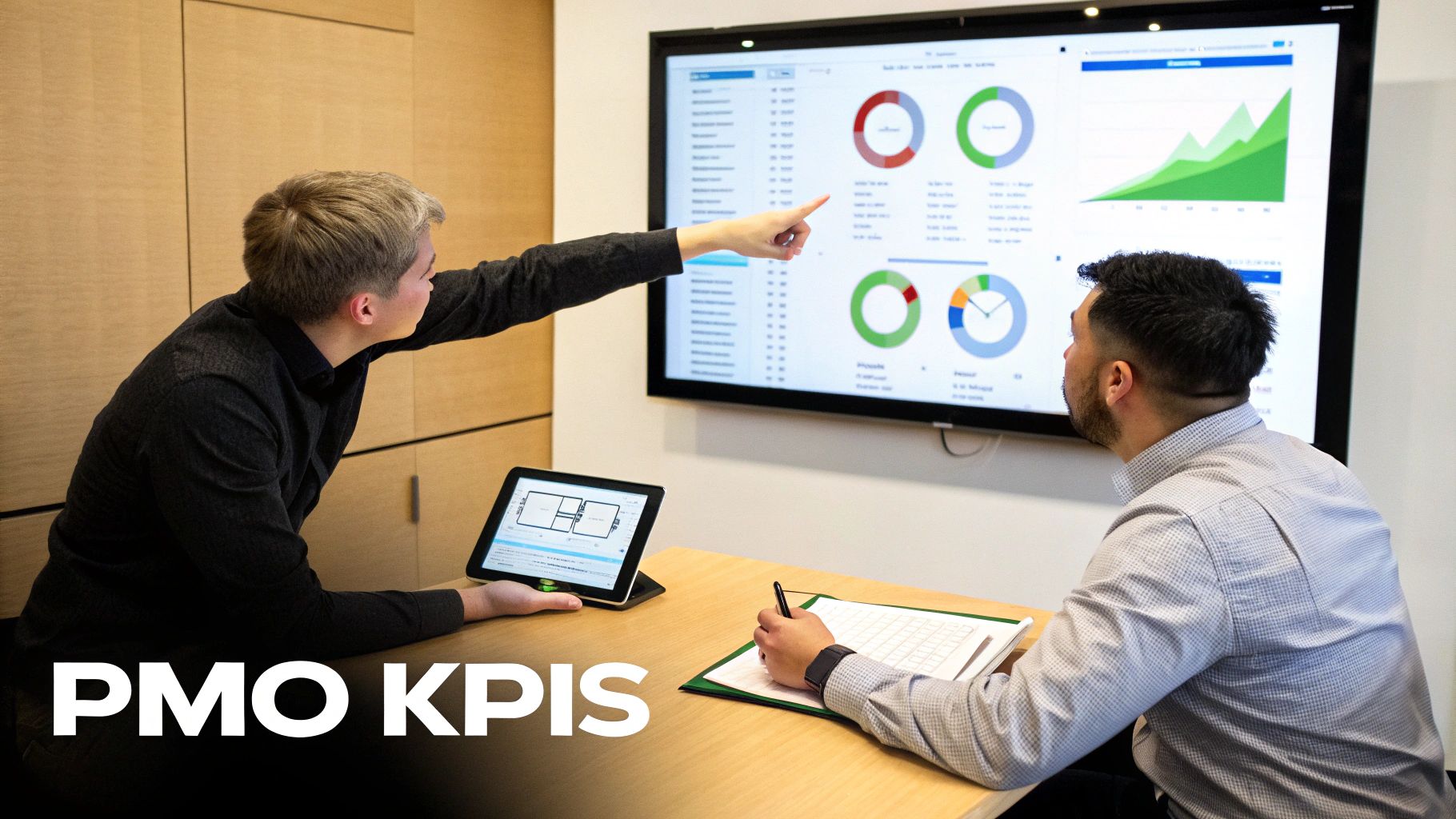
A Project Management Office can get processes in order and juggle resources, but how do you actually prove its worth? The real answer is in tracking the right Key Performance Indicators (KPIs). Without them, a PMO’s value feels vague to leadership, making it a tough sell when it comes time for budget and support.
Measuring success goes way beyond just ticking the boxes for on-time and on-budget projects—though that’s definitely part of it. A truly effective PMO shows its impact on the big picture: the organisation's strategic goals. This means looking past individual project wins to see how the entire portfolio is driving real business growth. A skilled pmo project management officer knows exactly how to pick and present KPIs that tell a convincing story of value.
Selecting the Right KPIs for Your PMO Model
The KPIs you choose must line up directly with your PMO’s main purpose. A Supportive PMO that exists to provide resources and templates is going to measure success very differently from a Directive PMO that runs projects from top to bottom. The trick is to align your metrics with your specific mandate and what the business actually cares about.
For instance, a Supportive PMO might track the adoption rate of its templates or the satisfaction scores from project teams it helped. A Controlling PMO, on the other hand, would be more focused on metrics like the percentage of projects that stick to its governance framework. A Directive PMO? It’s all about the hard results of the projects it manages, like ROI and overall project success rates.
The most powerful KPIs are the ones that draw a straight line from the PMO’s day-to-day work to the company’s bottom line. Think less about what the PMO is doing and more about the impact its actions are having on strategic goals.
Core Categories for PMO KPIs
To get a complete picture of performance, it helps to group your KPIs into strategic categories. This way, you avoid tunnel vision on just one area, like financial control, and instead capture the full spectrum of the PMO's contribution.
Here are a few key areas to focus on:
- Financial Performance: These KPIs are all about the money—how well the PMO manages project budgets and delivers financial value.
- Project Delivery Efficiency: This is about speed and quality. It measures the PMO’s ability to get projects done faster, better, and more successfully across the board.
- Strategic Alignment: These metrics connect the dots, showing how well the project portfolio is actually helping to achieve the company's biggest goals.
- Stakeholder Satisfaction: This tracks how key people, from executives to project teams, feel about the PMO’s value and support.
By keeping an eye on a mix of indicators from these categories, a PMO Project Management Officer can build a comprehensive performance dashboard. This data-first approach shifts the conversation from gut feelings to hard facts, making it much easier to prove the PMO’s essential role in the organisation.
To make this more concrete, here's a look at some sample KPIs broken down by strategic area.
Sample PMO Key Performance Indicators (KPIs)
A breakdown of effective KPIs for measuring PMO performance, categorised by strategic business area to help organisations track what truly matters.
| Category | KPI Example | What It Measures |
|---|---|---|
| Financial Performance | Portfolio Budget Variance | The average difference between planned and actual spending across all projects. |
| Project Delivery | Percentage of Projects Completed On Time | The ratio of projects hitting their original deadlines, signalling efficiency. |
| Strategic Alignment | Project ROI by Business Goal | The return on investment for projects, grouped by the strategic objective they support. |
| Stakeholder Satisfaction | Net Promoter Score (NPS) for PMO Services | The willingness of project managers and executives to recommend the PMO's support. |
Ultimately, these metrics aren't just for reporting—they're for improving. They give you the insights needed to adjust course, double down on what’s working, and continuously increase the value your PMO delivers.
We've covered a lot of ground in this guide, starting with the nuts and bolts of what a PMO is and moving all the way through to the skills and metrics that make it tick. By now, one thing should be crystal clear: the Project Management Office isn't just an administrative back-office chasing down reports and hoarding templates.
A mature, well-run PMO is a strategic powerhouse. It's the engine that drives an organisation's growth and makes it more resilient. The PMO Project Management Officer is the person right at the centre of that engine—the conductor making sure every project, big or small, plays in perfect harmony with the company’s bigger strategic goals. They’re the ones who turn a mishmash of separate projects into a unified, powerful portfolio that delivers real business value.
From Administration to Strategic Alignment
We started this journey by pulling back the curtain on the PMO, looking at the different flavours—Supportive, Controlling, and Directive—and figuring out how each one fits a specific company culture. From there, we dug into its core duties, seeing them not as a checklist of tasks but as solutions to real-world business headaches like resource conflicts and a frustrating lack of transparency. Then, we armed you with the essential toolkit of soft skills, frameworks, and digital tools you need to really get the job done.
Finally, we laid out a clear career path and showed how to measure success with KPIs that actually mean something, proving the PMO’s value with hard data, not just good feelings.
An effective PMO doesn’t just oversee projects; it elevates them. It’s the bridge connecting lofty strategic goals to the daily grind required to hit them, ensuring every single effort pushes the bottom line forward.
This whole journey, from the basics to the bigger picture, cements one crucial truth: in a world where business is driven by projects, a great PMO is non-negotiable. It provides the structure needed to be agile, the clarity required for smart decisions, and the alignment necessary for sustainable growth. By standardising processes, making the most of available resources, and keeping a bird’s-eye view of the entire project landscape, the PMO ensures the whole organisation moves forward, as one.
At People & Media B.V., we’re firm believers in the power of continuous learning to fuel both personal and professional growth. Our courses, articles, and events are crafted to give you the practical tools and multidisciplinary insights needed to excel in roles like the PMO Project Management Officer. Explore our platform to continue your journey from inspiration to implementation. Discover more at https://www.peopleandmedia.com.
Responses