NATO’s Identity Crisis: Is It Time to Dissolve the Alliance?


A recent US National Security Strategy has sent ripples through Europe, signaling a potential shift away from the post-Cold War era of global primacy and cooperation. This new approach, interpreted by many in Europe as a departure from established norms, has sparked considerable debate and even outrage. This article delves into the implications of this strategy, exploring the European perspective and the potential consequences for transatlantic relations.
Key Takeaways
- The US National Security Strategy marks a significant change, moving from global primacy to a more focused, tripolar world view.
- Europe’s reaction has been largely one of outrage, failing to grasp the subtler, more significant shifts outlined in the document.
- The US is re-evaluating its role, recognizing its de-industrialization has weakened its military power and ability to maintain global hegemony.
- Europe, particularly its leadership, appears stuck in an ideological "cult thinking," unable to adapt to changing geopolitical realities.
- NATO, as an institution, is seen as outdated, having lost its original purpose and struggling to find a new one, potentially leading to its dissolution.
A Shifting Global Landscape
Commodore Steve Jermy, a seasoned Royal Navy officer with experience in major conflicts and strategic planning, offers a unique perspective on the evolving international order. He notes that the new US strategy acknowledges a move from a unipolar world to a tripolar one, with the US on one side, and China and Russia increasingly aligned on the other. This shift is partly driven by the US’s own de-industrialization, which has reduced its military capacity and its ability to project power globally.
Jermy points out that the US strategy prioritizes regions differently than in the past. The Americas are now seen as a primary national interest, followed by Europe, the Middle East, and Africa. This recalibration suggests a move towards a more nuanced, less interventionist foreign policy, focusing only on areas where vital national security interests are clearly at stake. This contrasts sharply with the previous approach of global engagement.
Europe's Misinterpretation
Many European commentators, Jermy observes, have focused on the immediate outrage caused by the strategy, rather than understanding its deeper implications. He suggests that the European elite is caught in what he calls "cult thinking," an ideological bubble that prevents them from acknowledging the changing realities. This is particularly evident in their handling of the Russia-Ukraine war, where a political narrative seems to be driving decisions rather than a clear-eyed assessment of military strategy.
This ideological rigidity, Jermy argues, is a significant problem. While ideology can provide unity, it can also lead to inflexibility when circumstances change. The EU, in particular, seems to have convinced itself of a unique role in shaping a new liberal democratic world order. This self-perception makes it difficult for them to adjust their course, even when faced with evidence that contradicts their narrative.
The Case for Dissolving NATO
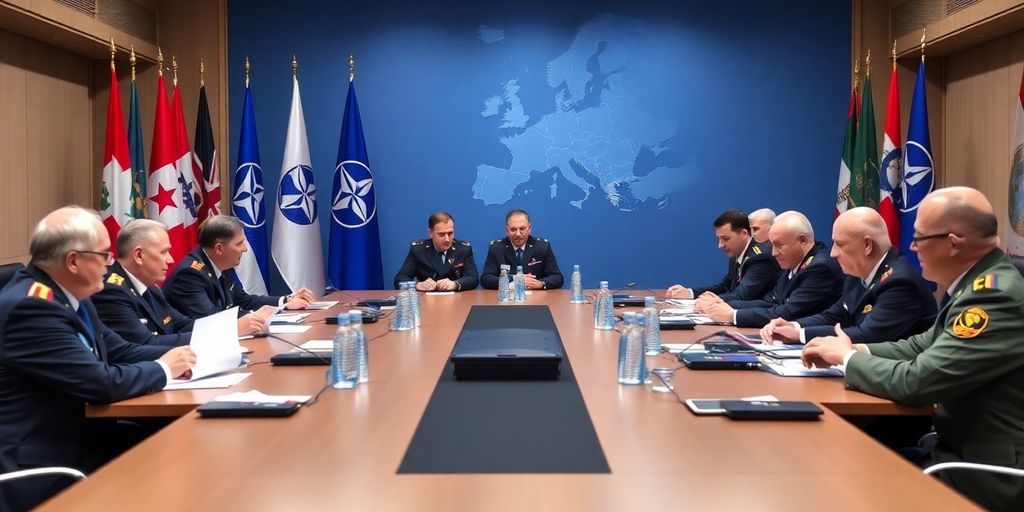
Jermy is critical of NATO’s continued existence, arguing that it has become an outdated institution. He recalls his own service, where NATO was functional and effective during the Cold War, largely due to American leadership and military might. However, after the fall of the Soviet Union, NATO struggled to find a new purpose, leading to expansionist policies that, he believes, directly contributed to the current conflict in Ukraine.
He highlights several issues with NATO:
- Lack of Strategy: NATO has shown an inability to develop and execute effective long-term strategies, as seen in Afghanistan.
- Bloated Bureaucracy: The organization is described as overmanned with senior officers and generally bloated.
- Weakened European Capabilities: In a hypothetical conflict with Russia, Jermy believes Europe would struggle significantly without substantial US involvement, which is becoming less certain.
- Confrontational Approach: NATO’s current strategy of confronting Russia at its borders is seen not as deterrence, but as direct confrontation, which has not worked.
Instead of confrontation, Jermy advocates for a shift towards cooperative security. He suggests that NATO should be dissolved, and Europe should look towards organizations like the OSCE, focusing on cooperation and potentially re-establishing a dialogue with Russia to build a "common European home."
The Future of Transatlantic Relations
The new US strategy also implies a potential conflict between the US and the EU. The US document criticizes transnational organizations, which could be interpreted as a jab at the EU itself. Jermy suggests that the US might actively support European political movements that align with American interests, potentially leading to a breakup of the EU.
He believes the EU is in deep trouble, partly due to self-imposed policies like sanctions on energy, which have backfired, harming Europe more than Russia. The economic strain, coupled with demographic challenges and a perceived inability to adapt, paints a grim picture for the EU’s future.
Ultimately, Jermy argues that Europe needs to redefine its relationship with the US, moving away from blind subordination. He calls for a pragmatic realism, focusing on national interests, both economic and security-related, and being willing to engage with powers like Russia and China. The current path, he warns, is unsustainable and risks further isolation and decline.


Responses