Trump’s Monroe Doctrine: A Distortion of History and a Path to Imperialism?

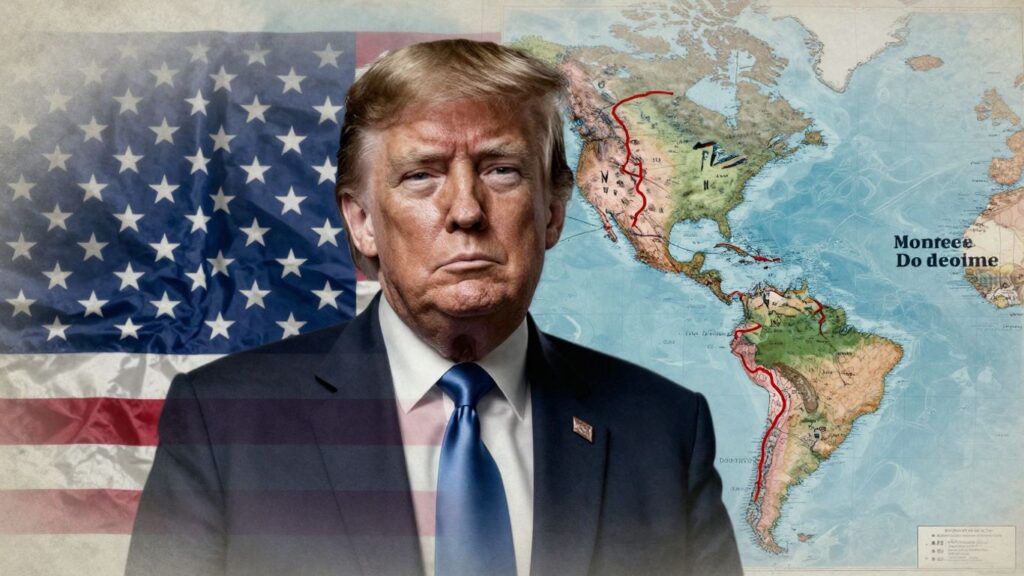
Professor Jeffrey Sachs recently joined Glenn Diesen to discuss the United States’ reassertion of the Monroe Doctrine, particularly in the context of the Trump administration’s foreign policy. Sachs argues that this isn’t a revival of the original doctrine but a significant distortion, potentially paving the way for U.S. imperialism.
Key Takeaways
- The original Monroe Doctrine (1823) aimed to prevent European colonialism and intervention in the Americas, while also pledging U.S. non-interference in Europe.
- The Trump administration’s interpretation twists this into a license for U.S. hegemony and unilateral action.
- Historical interpretations have evolved, notably with Theodore Roosevelt’s "corollary" asserting U.S. "police functions" in the hemisphere.
- Franklin D. Roosevelt’s "Good Neighbor Policy" marked a shift towards non-intervention, a stark contrast to current U.S. actions.
- A modern, anti-imperialist approach could involve "spheres of security" based on reciprocity and non-intervention, distinct from economic cooperation.
The Original Monroe Doctrine: A Stance Against Colonialism
The Monroe Doctrine, first articulated in 1823, was a statement to European powers. Its core principles were clear: the era of European colonialism in the Americas was over, and European nations should not interfere in the affairs of the newly independent American nations. Importantly, it also included a reciprocal pledge from the United States not to meddle in European affairs. This was a doctrine of mutual non-interference, a far cry from how it’s often interpreted today.
During the 19th century, the doctrine was invoked to prevent European powers from establishing new colonies or intervening in regional disputes. For instance, the U.S. opposed French attempts to install an emperor in Mexico.
The Evolution Towards U.S. Hegemony
The interpretation of the Monroe Doctrine began to shift as the United States grew in power. By the late 19th century, after consolidating its continental control, U.S. international ambitions grew. President Grover Cleveland used the doctrine to assert U.S. influence in disputes between Venezuela and British Guyana.
A significant transformation occurred with Theodore Roosevelt’s "corollary" in 1904. This added a new layer, stating that the U.S. would act as a "policeman" in the Western Hemisphere, intervening to maintain order and manage debts owed to European powers. This marked a move from preventing European intervention to asserting U.S. interventionism.
This led to numerous U.S. military interventions in the Caribbean and Central America. However, Franklin D. Roosevelt’s "Good Neighbor Policy" in 1934 aimed to reverse this trend, promising an end to U.S. military interventions in Latin America, partly in response to growing regional resentment.
The Trump Administration's "Correlary on Steroids"
Professor Sachs describes the Trump administration’s approach as the "Roosevelt corollary on steroids." It’s not just about being the policeman; it’s about asserting U.S. hegemony and dictating terms to other nations. This includes telling countries who they can do business with, demanding contracts with American companies, and excluding rivals like China from economic opportunities in the hemisphere.
This interpretation is a radical departure from the original 1823 doctrine. Instead of a message to Europe to stay out, it’s a claim of U.S. unilateral rights to dominate the Americas and exclude all other external influences, particularly economic ones.
Towards a "Civilized" Monroe Doctrine: Spheres of Security
Sachs proposes a modern framework based on two key principles from the original doctrine: anti-imperialism and reciprocity. He suggests a concept of "spheres of security" where major powers respect each other’s borderlands to avoid conflict, especially nuclear war. This means the U.S. would not intervene in Russia’s near abroad (like Ukraine), and Russia or China would not intervene in the Americas.
This would be paired with a "Good Neighbor Policy" approach, emphasizing non-intervention and respect for sovereignty. The goal is to prevent great powers from bullying their neighbors or engaging in destabilizing regime-change operations, which historically have led to chaos and conflict.
Economic Cooperation vs. Military Paranoia
Sachs also touches on the idea of a new economic grouping proposed by the Trump administration, potentially excluding countries like China, Russia, and India. He argues against conflating economic and military spheres, warning that a paranoid focus on "dual use" technology can break down international trade and investment. He believes in a multilateral economic order, citing organizations like the WTO and the G20, and criticizes Trump’s exclusionary approach, which leaves out large populations in Africa, Asia, and Latin America.
Ultimately, Sachs views the Trump administration’s reinterpretation of the Monroe Doctrine as delusional and hubristic, potentially devastating for the economies of the Americas and detrimental to U.S. security interests. He advocates for a return to principles of non-intervention, reciprocity, and collective prosperity.



Responses