The Empire’s Unraveling: Colonel Wilkerson on US Foreign Policy’s Collapse

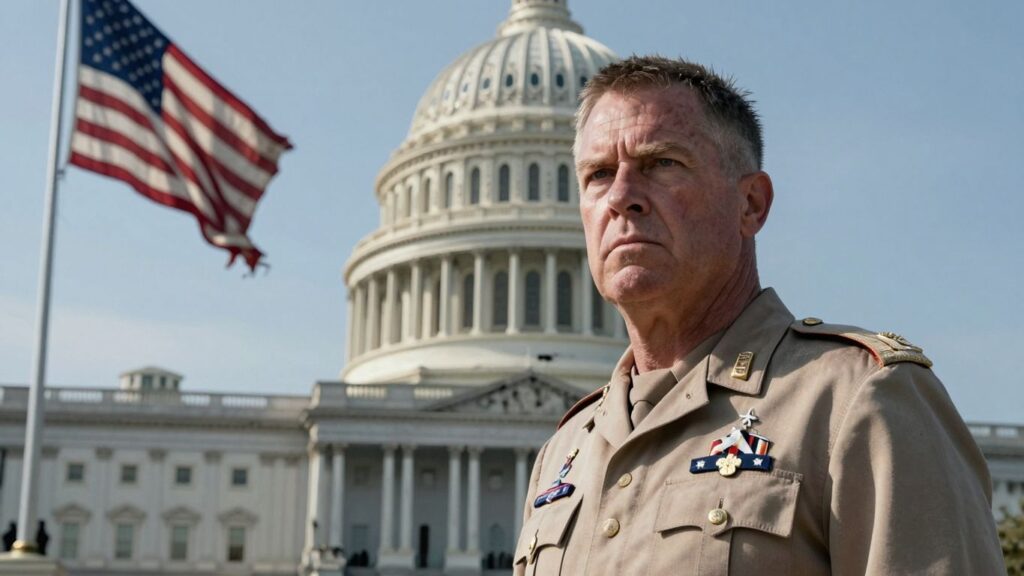
Colonel Lawrence Wilkerson, former Chief of Staff to the Secretary of State, sat down to discuss the current state of US foreign policy and its diminishing role in the world. He argues that the legitimacy of the American empire is crumbling due to a series of missteps and a lack of clear strategy, leading to a loss of global standing.
Key Takeaways
- The US is no longer a superpower, or is rapidly losing its status.
- Foreign policy is characterized by unpredictability and a lack of coherent strategy.
- There’s a focus on personal and familial financial gain over national interest.
- The US is losing ground politically, strategically, and economically, particularly to the East.
- Current leadership actions are seen as "coordinated stupidity" or even purposeful self-diminishment.
- The US is actively aiding the shift of global power eastward.
The Chaos in Washington
Wilkerson paints a picture of deep division and infighting within Washington, but notes that the lines aren’t as clear as they might seem. He criticizes the establishment’s slow realization of the issues, particularly those highlighted by figures associated with "America First." The core problem, he suggests, is unpredictability, which is disastrous for any superpower, let alone a nation in its current predicament.
He doesn’t mince words when describing the current leadership, calling the Secretary of Defense a "war criminal" and extending that label to others, including Donald Trump and Marco Rubio. This, combined with an "absolute lack of overall strategy," creates a dangerous environment. Wilkerson points to figures like Jared Kushner and Steve Bannon being hosted in Moscow, suggesting their primary interest is financial gain, not foreign policy or the war in Ukraine. The motivation, he states, is money, especially for the Trump family and their associates.
A Grand Strategy in Decline
The conversation then turns to the missing element of a grand strategy. Wilkerson questions whether the US aims to facilitate a multipolar world or resist it. He argues that the current ambiguity is "extremely dangerous." The situation with Venezuela is cited as an example of putting significant military power into a "ridiculous situation," especially when the US is no longer the superpower it once was. He questions why the US would actively push power eastward, suggesting it might be due to leadership that is either intellectually incapable or acting as an agent for other interests.
He describes the current administration’s approach as "coordinated stupidity," or perhaps even a purposeful effort to diminish the empire for personal gain. Alternatively, he suggests simply looking at what’s happening without interpretation: the US has elected leaders who are "killers" – of the empire, the economy, democracy, and people. The overarching strategy, if one can call it that, is to accelerate the shift of power to the East and make money in the process.
The Venezuela Conundrum and Global Power Shifts
The situation in Venezuela is used as a case study. While one might argue that reasserting dominance in the hemisphere is a logical move in a multipolar world, Wilkerson points out the irony: US actions are giving rivals like Russia an opportunity to negate decades of American policy. Russia’s presence in the hemisphere, he notes, effectively nullifies the Monroe Doctrine. He expresses concern about land powers challenging maritime powers in what was once considered US waters.
Wilkerson criticizes the overly aggressive posture towards Venezuela, which alienates allies and invites greater Russian involvement. He also expresses discomfort with great powers getting too close to each other, drawing a parallel to his unease with US involvement in Eastern Europe and Ukraine. The idea of the US needing a "card to play" by having Russia involved in Venezuela seems counterproductive.
Questioning Legitimacy and War Crimes
The discussion touches on the legitimacy of US actions, particularly in light of events in Gaza and the perceived dissonance in how drug lords are treated. Wilkerson highlights the New York Times’ use of the term "dissonance" to describe the release of a convicted drug lord from Honduras while pursuing Nicolás Maduro, whom US intelligence agencies reportedly do not classify as a drug trafficker. He questions the rationale, suggesting oil reserves might be a factor, but criticizes the lack of a strategic, rather than trumped-up, rationale.
He laments the current state of US governance, finding words like "insane" and "incompetent" insufficient. He points to the disdainful way officials treat congressional hearings and, more alarmingly, their disregard for the Constitution. Wilkerson brings up the concept of war crimes, citing instances where individuals in the water after a ship was torpedoed were killed, which he deems a violation of the rules of warfare and the Geneva Conventions. He sadly concludes that Americans have become jaded and may not care about these transgressions.
The Drug War and Misplaced Targets
Wilkerson draws a stark parallel between the justification for killing drug traffickers and a policeman shooting a young drug dealer on the street. He argues that labeling drugs a "national security threat" leads to flawed policies. Drawing on his military education, he explains that interdicting drugs at sea is not targeting the "center of gravity." The real target, he contends, should be the consumers of drugs, not the low-level carriers. Decades of this approach have proven it ineffective, corrupting Mexico and failing to stop the flow of drugs. He calls this approach "insanity" and "stupid."
The Ukraine War and European Instability
Regarding the Ukraine war, Wilkerson suggests that some of Trump’s instincts might have been correct, particularly his recognition that the war was lost. He proposes that Trump might have sought to hand the conflict over to Europeans and extract concessions from both Russia and Ukraine. However, he is skeptical about a genuine peace deal, believing Putin will not make substantial concessions. He sees figures like Kushner’s involvement as driven by money and a desire to restore relations with Russia for financial gain.
Wilkerson expresses concern about the potential for prolonged conflict, fueled by groups like the "Bandera followers," whom he describes as "dedicated killers." He believes Western intelligence agencies might continue to fuel instability. He also touches on the shift in European politics, predicting the downfall of current leaders and a potential return to a 1930s-style Europe, marked by German militarism and Russophobia. He questions how Germany transformed so rapidly from a cautious nation to one deeply antagonistic towards Russia.
A Missed Opportunity for Europe
Wilkerson argues that the European model, built on the EU and NATO, has eroded. He believes Europe is now insecure because the unipolar world is gone, and the idea of a US-Europe "liberal hegemony" has backfired. He suggests that many Europeans would prefer to revert to Cold War containment but notes that the world has changed, and Russia is no longer the Soviet Union. Russia’s focus is now on the East, and Europe lacks a clear vision for its role in a multipolar world. He predicts Europe may fragment, and its governments will face a legitimacy crisis.
He criticizes the idea of redividing the continent and the reliance on a "Russian boogeyman." Instead, he advocates for integrating Russia into a common Europe, a concept he believes was a missed opportunity after the Cold War. He argues that a "multinodal" approach, emphasizing cooperation, would have been far better than a multipolar system that can lead to conflict. He laments that this opportunity was squandered, leading to a situation where hatred of Russia is the only unifying factor for Europe.


Responses