Europe’s Strategy Mismatch: A Look at US Policy and the Ukraine War

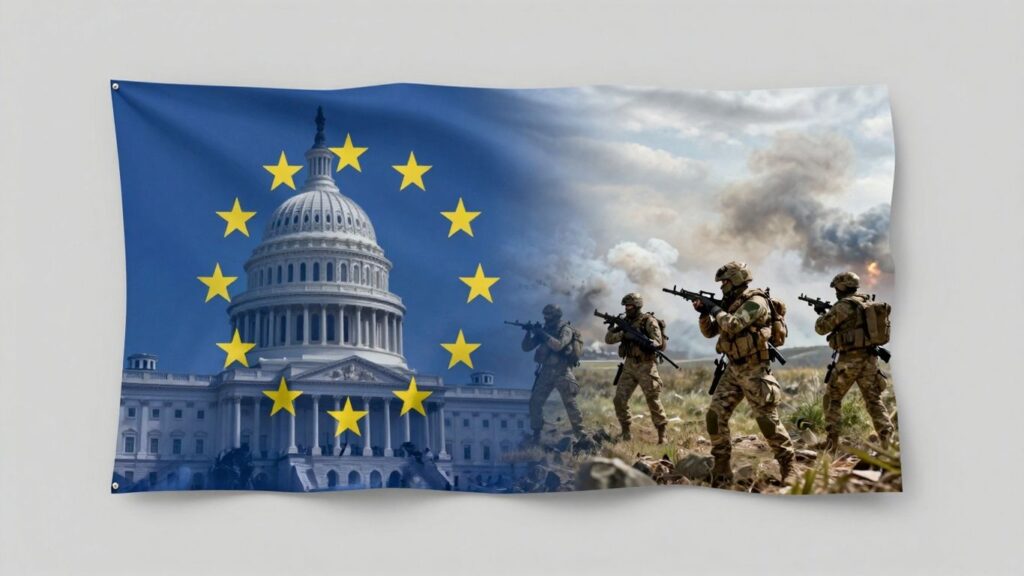
A recent discussion highlighted a potential disconnect between European and American strategic thinking, particularly concerning the ongoing conflict in Ukraine. The conversation explored the nuances of policy versus strategy, the evolving global power dynamics, and the implications for international relations.
Key Takeaways
- The US strategy document acknowledges a shift from a unipolar to a tripolar world, with the US, China, and Russia as the main powers.
- There’s a stated US interest in establishing a stable relationship with Russia, contrasting with a more cautious approach to China.
- Europe, specifically the UK, Germany, and France (the E3), appears to be acting in ways that counter stated US national security interests regarding the Ukraine war.
- A lack of strategic thinking and an overreliance on emotional responses are seen as significant issues within European leadership.
Understanding Policy vs. Strategy
The discussion began by clarifying the difference between policy and strategy. Policy is a broad statement of goals, while strategy is the practical plan for how to achieve those goals. A strategy answers the "how" question, detailing the actions needed to turn policy into reality. The document in question was seen more as a statement of American policy, with strategy being the servant of that policy.
A Shifting Global Landscape
One of the striking points was the recognition that the world is no longer unipolar. However, the speaker suggested it’s more accurately described as tripolar, with the United States, China, and Russia as the dominant powers. Russia’s actions in the Ukraine war have solidified its position, while China’s growing influence, particularly in economic spheres, presents a different kind of challenge. The document’s tone towards China was noted as more balanced, possibly reflecting a recognition of America’s current limitations in directly confronting China militarily due to a need for re-industrialization.
Europe's Stance on the Ukraine War
A significant point of contention was Europe’s approach to the Russia-Ukraine war. The US, as outlined in the strategy, appears keen to bring the conflict to a close, viewing it as being in its national security interest. However, the E3 (Britain, Germany, and France) seem to be acting in ways that contradict this US objective. This divergence is seen as unwise, potentially driven by a hope to draw the US back into a more involved role, though the chances of this are considered slim. There’s also a concern that European leaders might be acting against their own national interests, possibly due to internal political pressures and an unwillingness to accept the potential loss in Ukraine.
The Challenge of "Cult Thinking"
The conversation touched upon what was termed "cult thinking" as a reason for the disconnect. This refers to a rigid adherence to a particular narrative, even when faced with contradictory evidence. Examples included the belief that Russia is performing poorly in the war despite evidence of its industrial and energy infrastructure targeting, and the idea that Russia poses an existential threat to its neighbors who are now seeking NATO protection. This kind of thinking prevents rational debate and strategic analysis.
The Importance of Strategic Competence
A recurring theme was the lack of strategic competence, not just among politicians but also within senior military and intelligence circles. The speaker lamented that advice given to leaders is sometimes colored by politics or emotional responses rather than objective analysis. This can lead to decisions that are not in the best national interest. The analogy of Shopenhauer’s three stages of truth (ridicule, violent opposition, self-evident) was used to describe how the reality of the Ukraine war’s outcome is perceived differently by the US and Europe, with Europe still in the stage of violent opposition.
A Call for Rationality
The discussion concluded with a strong emphasis on the need for rational, evidence-based thinking, especially from military leaders. The advice given to politicians should be clear, objective, and free from political bias. The current situation, where strategic decisions may be influenced by emotion or adherence to a flawed narrative, is seen as detrimental to national interests and, in the case of Ukraine, to the people involved in the conflict.

Responses