Is Western Civilization Collapsing? A Look at History’s Patterns

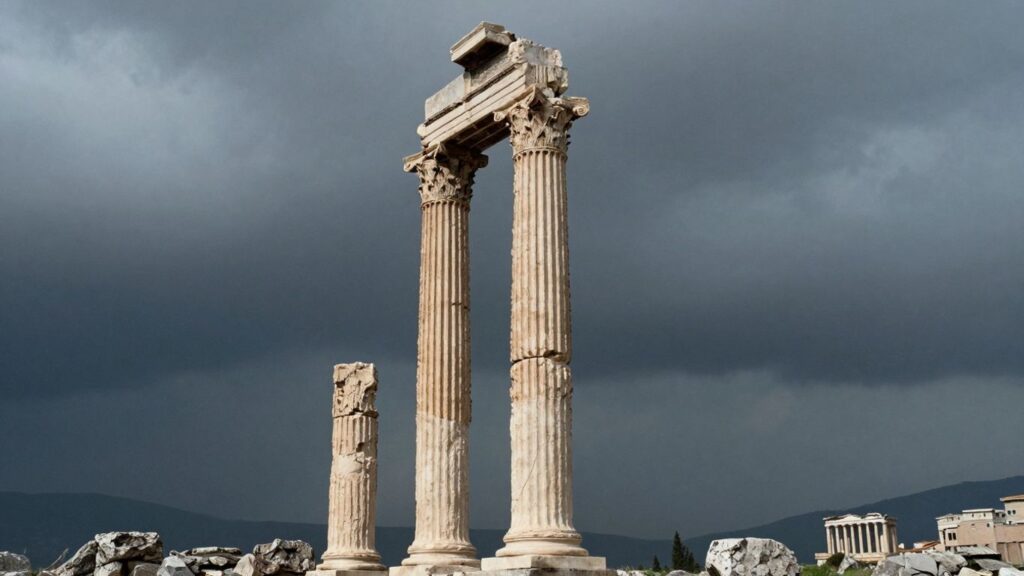
Professor Xueqin Jiang, known for his popular educational channel Predictive History, joined Glenn Diesen to discuss his models for predicting geopolitical developments. Jiang argues that by looking at historical patterns and game theory, we can get a clearer picture of the future. A common comparison today is the fall of the Roman Empire to current events in the West. Jiang breaks down the rise and fall of civilizations into three key factors: energy, openness, and cohesion.
Key Takeaways
- Energy: The drive and hunger of people to improve their standing and make their mark.
- Openness: The willingness to learn from others, reflect on mistakes, and adapt.
- Cohesion: The ability of a people to identify with each other and work together towards common goals.
Jiang points to historical examples like the Athenians, Persians, Romans, and even the British and Americans as civilizations that rose due to these factors. He also notes the emergence of Pax Judaea-Israel as a new power, citing energy, openness, and cohesion within Israeli society.
The Decline of the West
When applying this framework to the political West, particularly the Anglo-American sphere, Jiang sees a rapid decline. He notes a drop in energy, with younger generations aspiring to be social media influencers rather than engaging in traditional labor. The desire to work in manufacturing or other demanding fields seems to be waning, replaced by a preference for leisure activities.
Openness is also seen as declining, evidenced by crackdowns on free speech, particularly on university campuses and in response to certain political viewpoints. The COVID-19 lockdowns are cited as a period where free speech faced significant restrictions.
Finally, cohesion is a major issue, especially in the United States, where political polarization is extreme. Polls suggest that people are unwilling to even consider marrying someone from the opposing political party, indicating a deep societal divide. This lack of cohesion is also observed across the Western world, exacerbated by immigration.
Jiang suggests that historical signs point towards a rapid decline for the West over the next 5 to 10 years.
Theories on Societal Collapse
Several theories attempt to explain why societies decline and collapse. Peter Turchin’s concept of elite overproduction suggests that as societies become wealthier, more elites emerge, leading to intense competition for limited positions of power. This can create internal conflict, as seen in historical civil wars and revolutions. Jiang applies this to the current US, pointing to a potential conflict between different oligarchic groups.
Thomas Piketty’s work on capital in the 21st century highlights how capitalism can naturally lead to a "renter economy" where speculative investments yield higher returns than productive labor. This over-financialization can lead to instability and eventual collapse, as real wealth creation diminishes.
Oswald Spengler theorized that civilizations, like organic beings, have a natural life cycle of birth, rise, maturity, and death. This cyclical view suggests that decline and collapse are inevitable parts of this process.
These theories, when applied to the West, paint a concerning picture. Turchin suggests that elite overproduction can only be resolved through revolution or civil war. Piketty’s analysis points to capital monopolization and financialization, leading to economic fragility. Spengler’s organic theory implies an inevitable end.
The Echoes of 2008
The global financial crisis of 2008-2009 is seen as a turning point. Jiang argues that the response, characterized by more borrowing, spending, and asset inflation, was merely "kicking the can down the road." This crisis was a culmination of trends like the shift from manufacturing to financialization, deregulation of the financial industry, and the capture of political power by elites. The subsequent bailouts and quantitative easing, while intended to stabilize the economy, disproportionately benefited financial institutions and exacerbated wealth inequality, particularly impacting the working class.
From Democracy to Tyranny?
Historically, thinkers like Plato and Aristotle worried about democracy devolving into tyranny. They observed that prolonged periods of liberty could lead to the erosion of all external authorities, including familial and educational ones. While some hierarchies are benign and aim for mutual improvement (like a parent wanting their child to succeed), modern liberalism, in some interpretations, can lead to the rejection of all authority. This can pave the way for more extractive and exploitative hierarchies to rise.
Ancient Rome provides a cautionary tale. After the Punic Wars, Rome’s economy became reliant on warfare, leading to the displacement of peasants who lost their land due to debt incurred while serving in the military. This created a large, unstable urban population susceptible to populism. The Gracchi brothers attempted reforms to redistribute public land to these peasants, but the nobility, who treated public land as their own, violently suppressed these efforts. This resistance to reform, Jiang argues, allowed demagogues like Julius Caesar to rise by harnessing popular anger.
The Rise of Populism and Trump
Populism, though often demonized, can be seen as a natural reaction to elites becoming detached from the public. While populists may not always have perfect solutions, they often tap into the public’s sentiment. The election of Donald Trump in 2016, Jiang suggests, was a direct result of the public’s frustration with a system they felt ignored them. Many voters saw Trump as a way to disrupt the status quo and assert their agency, even if they didn’t fully endorse his policies. The subsequent election of Joe Biden in 2020, followed by worsening economic conditions for many, has led to a renewed interest in figures who promise change, even if that change brings chaos.
The War in Ukraine and Civilizational Outlook
Jiang views the war in Ukraine as effectively over, with Russian soldiers demonstrating energy, openness, and cohesion. He notes their adaptation to drone warfare and their belief in a "crusade" to save Russian civilization. In contrast, he describes Ukrainian soldiers as lacking morale, with high desertion rates, and the regime in Kyiv being politically unable to admit defeat.
He argues that NATO’s involvement, providing weaponry, targeting, and command, has made it deeply entrenched in the conflict, creating a "sunk cost fallacy." Jiang predicts a Russian advance to Odessa, marking the end of the war and a potential implosion of NATO.
The West's Strategic Blindness
A significant problem in the West, according to Jiang, is a lack of strategic foresight. The inability to objectively assess opponents, coupled with a mandated hatred of them, hinders sensible policy-making. He points to the West’s refusal to acknowledge its role in provoking Russia’s invasion of Ukraine and its lack of plans for potential Ukrainian defeat. This insularity and arrogance of the elite, he believes, is a major factor in the West’s decline.
China and the Shifting Global Order
Jiang offers a different perspective on the US-China rivalry, viewing China as a status quo power that has benefited from globalization and interdependence with the US. He believes a rapprochement between the two is likely, as they benefit more from cooperation than conflict. The US economy, he argues, cannot easily replicate China’s manufacturing capabilities.
However, he is less optimistic about the Russia-China relationship, citing historical and geographical tensions, particularly concerning Kazakhstan. He questions who would lead such a bloc and whose currency would prevail, suggesting that unresolved territorial disputes could hinder their unity.
The Rise of Pax Judaea
Jiang highlights the potential rise of "Pax Judaea" as a significant development in the next 5 to 10 years. He sees both Russia and China benefiting from Israel’s potential expansion and infrastructure development in the Middle East. This, he suggests, would be driven by transnational capital seeking growth opportunities in a region ripe for investment, rather than by the nation of Israel itself.
He distinguishes between the Zionist project of the nation of Israel and Pax Judaea, which he views as a project of global finance. With the US facing debt and internal division, wealthy investors might see Israel as a more stable and profitable place to invest, potentially shaping the future of the Middle East.



Responses