Is Trump Really in Charge? A Look at Foreign Policy Decisions

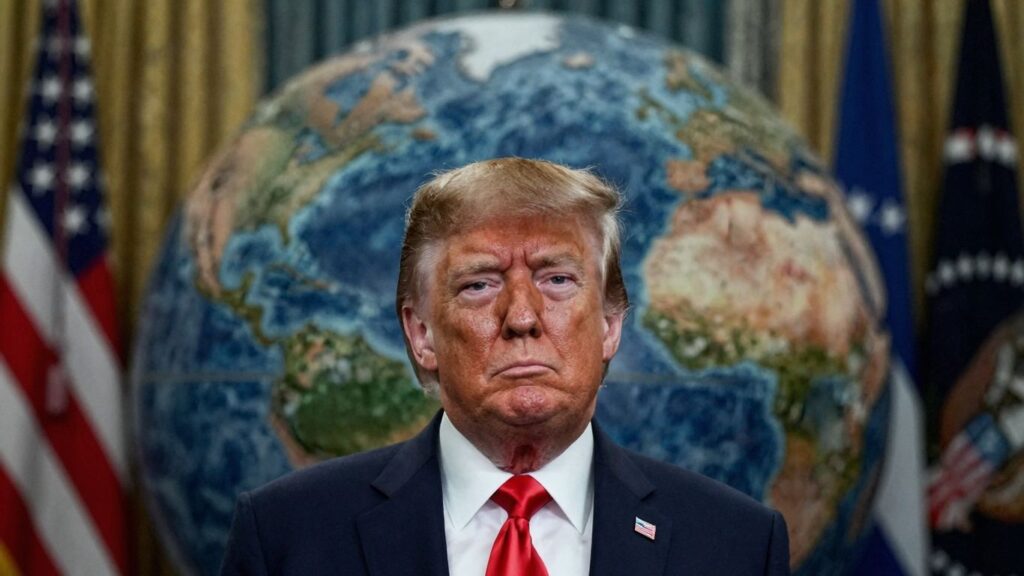
It’s getting harder to figure out what’s happening with U.S. foreign policy these days. The president’s direction in the Middle East, the ongoing conflicts in Ukraine and between Israel and Hamas – it’s all pretty confusing. Deadlines seem to shift, and the goals aren’t always clear. Thankfully, we have Colonel Douglas Macgregor to help us make sense of it all.
Key Takeaways
- Donald Trump appears to be following a script from those around him, rather than setting his own course.
- The idea that Russia is weak and that the U.S. is acting out of moral superiority is a flawed assumption.
- U.S. foreign policy often seems driven by financial interests and a desire to undermine other nations.
- There’s a concerning lack of understanding regarding the realities of international relations and military power.
- The current approach risks escalating conflicts with potentially devastating consequences.
Trump’s Shifting Deadlines and the ‘God Complex’
Colonel Macgregor suggests that Donald Trump is being fed a script by his advisors, which he then repeats. This is evident in Trump’s changing stance on deadlines for Russia regarding Ukraine. Initially, a 50-day deadline was mentioned, but this has since shifted to 10 or 12 days. Macgregor believes this is an attempt to "ratchet up the pressure," but questions the actual meaning or impact of these deadlines, especially when coupled with threats of providing more long-range strike capabilities. He even speculates that Trump might be developing a "god complex," believing his own pronouncements hold significant weight.
This idea of a "god complex" is concerning, as it can lead to poor decision-making. Trump’s own words, as heard in a clip, express confusion about why Russia continues the conflict, suggesting they "could be so rich" instead of spending on war. He also mentions a desire to "end this thing quickly," yet seems perplexed by the ongoing fighting.
Macgregor strongly disagrees with this perspective. He argues that the war in Ukraine wouldn’t have happened without U.S. involvement and decisions made back in 2014. He states that Russia is being "compelled to fight" to achieve its objectives, and that the U.S. has never truly listened to or cared about Russia’s legitimate security interests. Furthermore, he points out that it’s the U.S., not Russia, that is spending enormous amounts of money on foreign aid and intelligence operations, often to subvert other governments.
Misconceptions About Russia and U.S. Policy
There’s a common narrative that Russia is weak and that the U.S. represents liberal democracy. Macgregor challenges this, suggesting that Russia’s economy is actually in better shape than the U.S. economy. He highlights the U.S. action of seizing $600 billion of Russian national wealth, questioning what kind of cooperation could be expected after such a move. He calls the idea that Russia is dependent on oil sales a "preposterous" notion, comparing it to calling Russia "a gas station with nuclear weapons."
Macgregor believes Trump is out of touch with reality and risks facing serious consequences if he continues down this path. He emphasizes that Russia will not "roll over" and that pushing this "nonsense" could lead to significant problems for the United States.
The ‘Tumor’ Analogy and Geopolitical Strategy
Colonel Macgregor uses a stark analogy to explain Russia’s perspective on Ukraine: a "large cancerous tumor growing on the body of Russia." The decision, he explains, was made to "cut out the tumor," which involves annihilating the Ukrainian army that poses an existential threat. However, he adds that a good surgeon must also remove the "connective tissue" around the tumor to prevent its return. In this context, the "connective tissue" includes what he calls the "puppet regime" in Kyiv, as well as intelligence operations from the U.S., UK, and Israel. He asserts that Russia cannot accept any negotiated settlement that allows a Western-backed state to emerge on its border.
He criticizes Trump for his apparent ignorance or unwillingness to admit this reality. Macgregor states that if Trump desires a negotiated settlement, he must understand that these elements are "off the table" and that Russia will spend what is necessary to achieve its objectives. He believes the war began as an act of subversion by financial elites in London and New York, along with neocons in Washington, aiming to divide and exploit Russia. He feels Trump has failed to distance himself from this agenda and is now a "pawn" of the same forces.
The Role of Puppets and Uninformed Policy
Macgregor views both Zelensky and President Trump as "puppets in the same theater." He points to the people surrounding Trump, including campaign donors, as the ones driving policy, particularly in the Middle East and Europe, with the goal of destroying Russia. He notes that Russia is unlikely to be destroyed, but these individuals are unwilling to admit they might have miscalculated.
He describes Trump as being more comfortable with "threatening and bullying" than admitting mistakes or seeking a peaceful resolution. Zelensky, he argues, will continue his current course until he is "dead or removed," as any alternative would lead to his immediate replacement by another puppet. The financing, direction, and orchestration of these policies, Macgregor claims, come from Washington and London, driven by billionaire oligarchs who have influenced politicians.
He contrasts Trump’s current actions with his 2024 campaign rhetoric, which focused on ending conflicts, disengaging, and promoting peace. Macgregor laments that this has seemingly disappeared, replaced by policies that do not serve the interests of the American people.
Military Leadership and Questionable Narratives
The discussion touches on the actions of certain military figures, like General Donahghue, who is described as a co-architect of the Afghanistan withdrawal disaster and has now been promoted. His threats regarding Kaliningrad are seen as regrettable and an attempt to reverse historical outcomes. Macgregor dismisses the idea that such actions are wise, comparing it to the situation with Taiwan – a matter of historical fact that cannot be changed.
He also critiques the narrative presented by figures like Bill Browder, who advocates for severe sanctions on countries buying Russian oil. Macgregor argues that such sanctions won’t work against China and India and that Russia’s economy is far more robust than portrayed. He views Browder as having a personal agenda rooted in a desire to "rape" Russia and make himself rich, and advises against listening to him.
The Reality of Missile Defense and War Capabilities
A significant portion of the conversation focuses on the effectiveness of U.S. missile defense systems, particularly in light of the Iran-Israel conflict. Reports suggest that a large percentage of Iranian missiles penetrated Israeli air defenses, and that U.S. missile inventories are limited and manufacturing capacity is low. Macgregor contrasts this with Russia’s perceived higher quality and better-performing equipment, backed by China’s massive manufacturing base.
He expresses concern that the U.S. is operating with "uninformed thinking" and that this, combined with the current geopolitical strategies, could lead to a "hell of a collision." The idea that Russia is solely dependent on oil is dismissed, and the effectiveness of sanctions is questioned. The narrative that Putin is risking his presidency is also challenged, with Macgregor stating that Putin is firmly established and has significant support.
The Middle East: Starvation and Credibility
Shifting to the Middle East, the conversation addresses the dire humanitarian situation in Gaza, with accusations of starvation and the blocking of food supplies. Trump’s comments on the issue are presented, acknowledging the "terrible situation" but also suggesting that aid gets "taken by Hamas or somebody." Macgregor draws a parallel between the current situation in Gaza and historical events in Ukraine under Stalin, where millions were systematically starved or murdered.
He criticizes Israeli Prime Minister Netanyahu and Ambassador Huckabee for denying or downplaying the starvation, suggesting they are perpetuating lies. Macgregor believes Netanyahu is in charge, and that Trump is a "bystander" who is not truly in control of U.S. policy. Huckabee’s role, he suggests, is to "keep all these Christians on board" who support Israel.
Macgregor argues that the U.S. government and military are giving unconditional support to Netanyahu, which he finds deeply concerning. He compares the situation to Stalin’s regime, where individuals were sent to carry out actions without question. He also notes Trump’s repeated desire for the conflict to be "over with," which he interprets as a call for more violence.
Contrasting Administrations and a Dangerous Path
When asked about the differences between the Biden and Trump administrations regarding foreign policy, Macgregor states that Trump has been willing to be "much more aggressive" than Biden, particularly concerning Ukraine. He points out that Biden initially expressed concerns about providing certain weapons due to the risk of nuclear war, statements he hasn’t heard from Trump. Macgregor believes Trump is "pouring on the coal" and that the current U.S. approach is "completely disconnected from reality."
He concludes that there is a "complete failure to come to terms with reality in Washington," especially with Trump, who, despite his sincerity, "just doesn’t understand what he’s dealing with." This lack of understanding, he warns, is the real danger. The trends are not looking good, and the hope is that cooler heads will prevail to avoid the worst outcomes.

Responses