Netanyahu’s Pressure Tactics and the Ukraine Conflict: A Deep Dive

This discussion dives into the complex political situations surrounding Benjamin Netanyahu’s legal troubles in Israel and the ongoing conflict in Ukraine, exploring the strategies and pressures involved.
Key Takeaways
- Netanyahu is applying significant pressure on Israel’s President for a pardon, threatening to destabilize the political system.
- The conflict in Gaza is entering a new phase with controversial tactics and ongoing Israeli military actions.
- Negotiations between Russia and the US regarding Ukraine are stalled, with differing views on the path to a resolution.
- European nations are keen to prolong the Ukraine conflict, viewing it as a way to solidify their identity and alliance with the US.
Netanyahu’s Grip on Power
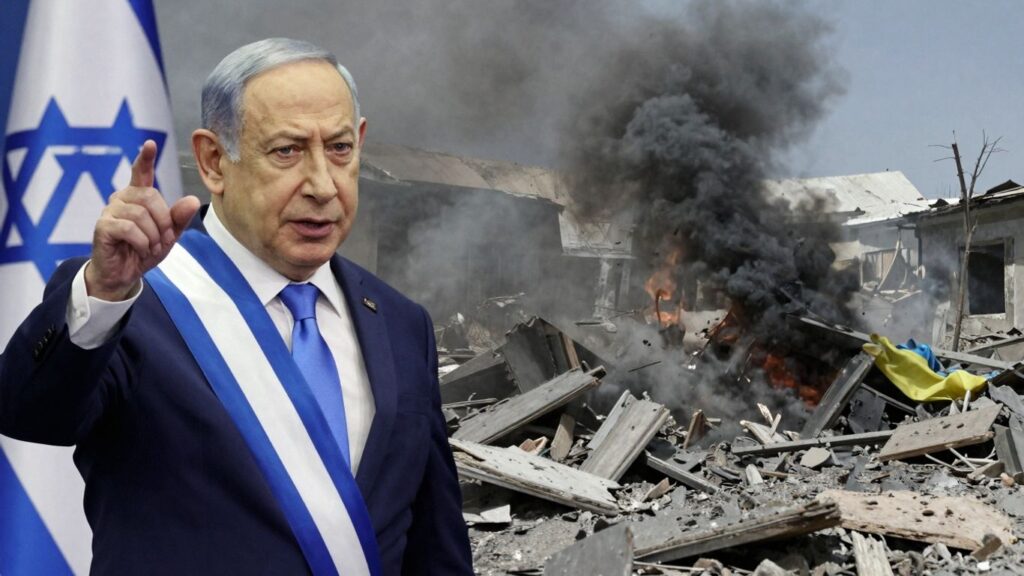
Prime Minister Benjamin Netanyahu has made a highly unusual request to Israeli President Herzog, seeking a pardon for his three criminal prosecutions. This move is seen as a direct threat to the Israeli political system. Netanyahu is reportedly telling the President that if he doesn’t get what he wants, he will "burn the system down." The system itself is described as fragile, with its main pillars – the Supreme Court, the judiciary, and the military – all under pressure from Netanyahu. The right-wing movement, often referred to as the "Israeli deep state," is seen as winning against these institutions. Even the military is on the defensive, with Netanyahu reportedly deflecting inquiries into his role before October 7th and instead focusing on firing mid-level generals.
Netanyahu is also signaling that he will not accept a plea bargain, will not leave office, and intends to fight the next election, even if he receives a pardon. This goes against the usual expectation that a pardon would lead to a departure from power.
The Gaza Conflict: Phase Two
The situation in Gaza is described as entering a second phase. Palestinians are reportedly being corralled into about 40% of the territory, hemmed in by an invisible "yellow line." Anyone approaching this line, including children, is shot. This line, allegedly discussed with figures like Kushner, marks the withdrawal of Israeli forces. Despite a ceasefire, Israel continues to conduct drone attacks and assassinations, even targeting entire families. While Hamas is reportedly strengthening its control in some areas, Israel occupies the rest. The proposed international security force for Gaza is facing disputes, with many Arab nations refusing to participate until Hamas is disarmed, and Israel opposing Turkey’s involvement.
Russia-Ukraine Negotiations at an Impasse
Discussions between Russian and American representatives regarding the Ukraine conflict appear to be stalled. While the negotiations are meant to be secret, reports suggest that Russia has detailed its position on a 28-point plan. However, the core issues remain a temporary ceasefire and the situation in the Donbas. Russia seems unlikely to agree to a resolution based solely on a temporary ceasefire. The Ukrainian army and its political structure are seen as disintegrating, and Russia is expected to continue taking territory.
There’s a peculiar dynamic where former President Trump claims Ukrainian President Zelensky hasn’t even read the proposal, while suggesting that both Russians and Ukrainians "love it." This highlights a disconnect, with Russia seeking a long-term, legally binding treaty, while Trump might be looking for a short-term, vague agreement to claim success. The lack of official mandates for negotiators like Kushner and Whitoff is also a point of concern, as only figures like Senator Marco Rubio are officially authorized to negotiate on behalf of the US government.
European Stance and Future Concerns
European nations are reportedly desperate to keep the war in Ukraine going. They see the conflict as a way to solidify their identity and their alliance with the US, framing it as a battle between light and darkness. This perspective, heavily influenced by the Biden administration’s rhetoric, leads them to push Ukraine to continue fighting, even in untenable situations. They fear the consequences of the war ending and are pushing for an outcome where Ukraine emerges as a sovereign power with the right to join NATO and the EU.
There’s a concern that European intelligence agencies might be providing information that fits a pre-determined policy, rather than objective reality, similar to past instances. The current strategy seems to be to pressure Trump to change his position by prolonging the conflict, hoping for a major incident that could draw the US deeper into the war. The approach by negotiators like Kushner and Whitoff, focusing on dividing potential reconstruction funds, is seen as unlikely to succeed with Putin, who is a lawyer and demands clear, legally binding agreements on security architecture and NATO expansion.
Putin has expressed that he was deceived by past agreements, like the Minsk accords, and is determined not to let it happen again. He emphasizes the need for official channels and mandates for negotiations, suggesting that figures like Lavrov and Rubio should be involved, not individuals without formal authority. The current talks are seen as not yet substantial enough for high-level engagement.

Responses