Frozen Russian Funds: A Peace Deal Sticking Point?

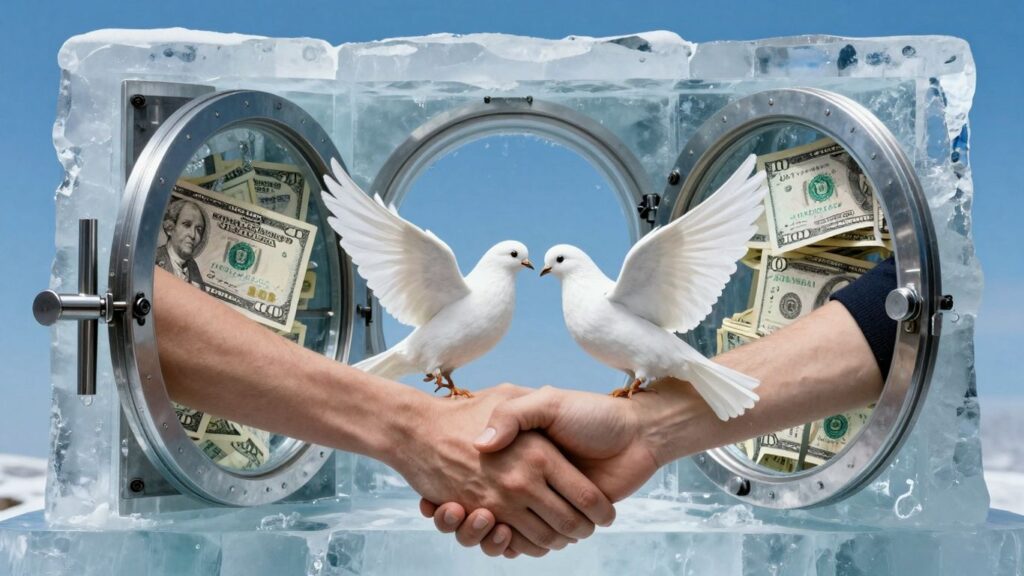
This discussion centers on a proposed peace agreement, particularly focusing on the controversial idea of using frozen Russian assets to fund Ukraine’s reconstruction. It questions whether Russia would ever agree to such terms, given that the assets belong to the Russian people, not the architects of the agreement. The conversation also touches on the responsibility of European nations in the conflict and how past decisions might influence current peace talks.
Key Takeaways
- Frozen Assets Dispute: Using frozen Russian assets for Ukraine’s reconstruction is a major point of contention, with Russia likely to refuse.
- European Responsibility: European countries played a role in derailing a potential peace deal in April 2022, and now face questions about their commitment to funding the conflict.
- Sanctions as Opportunity: Russia may view sanctions not as a deterrent, but as a catalyst for domestic industry growth, a strategy also seen in China.
- Shifting Alliances: Russia has strengthened economic ties with China and found new markets globally, reducing its reliance on Europe.
- European Hesitation: Some European leaders, like Belgium’s Prime Minister, express caution about using frozen assets, hinting at an understanding that Russia might ultimately win and reclaim them.
The Frozen Asset Dilemma
The idea of using frozen Russian assets to rebuild Ukraine is a significant point of discussion. The agreement reportedly states these funds would be for reconstruction. However, the speaker expresses doubt that Russia would accept this. Firstly, these assets belong to the Russian people, not those who drafted the agreement. Secondly, Russia might want European nations to take responsibility for their actions. When Europeans urged Zelensky to extend the conflict with promises of "support for as long as it takes," they took on a responsibility. The Russians believe this responsibility should fall on those who, in their view, created the problem.
It’s mentioned that in April 2022, a peace proposal from Zelensky was nearly accepted by the Russians. Had Zelensky stuck to that proposal, the current discussion might not be happening. Ukraine would likely have maintained its current borders, with ongoing talks about Donbas and Crimea. The country would have had sovereignty over most of its territory, remained neutral as per its previous constitution, and wouldn’t be an adversary to Russia or the Russian people living in Ukraine.
Because the Europeans pushed Zelensky to withdraw from that agreement, they took on a huge responsibility and committed to paying for it. The question then arises: why should Russia pay for what the Europeans have committed to funding?
Sanctions: A Double-Edged Sword?
Another aspect discussed is Russia’s reaction to sanctions. The speaker isn’t sure if Russia is particularly impressed by the idea of sanctions being lifted. While it’s a potential positive, Vladimir Putin himself has stated that Russia should not count on sanctions relief. He described sanctions as "systemic" and even suggested they could be an opportunity for Russia. This perspective is echoed in China, where a ban on US microchips has spurred domestic development, showing that sanctions can sometimes boost local industries.
Putin’s view from a year ago was that sanctions could be a way to stimulate certain aspects of the economy. Therefore, the speaker doubts Russia is overly impressed by the prospect of sanctions relief. They’ve learned to live with them, established new trade arrangements with the rest of the world instead of Europe, and have improved ties with China. Russia may not need Europe anymore, and by extension, Europe is paying the price for not improving economic relations with Russia. The German industry, for example, is already suffering.
European Hesitation and Shifting Dynamics
The sentiment from some European leaders, like Kaja Kallas, suggests they are not looking to improve relations with Russia. Even with an American-brokered agreement, Europeans might become harsher towards Russia. For Russia, sanctions might not be a strong incentive. They have found new markets and strengthened ties with China, making them less dependent on Europe. This situation could even be seen as a way for Russia to punish Europe for its stance.
The discussion also touches on the US role. While brokering an agreement, the US also seeks benefits, such as using frozen assets for developing its own industries. This is seen as logical, but it might not be a significant incentive for Russia, which can likely manage without it. The alternative for Russia might be to reject the current proposal and continue fighting, or to rework the agreement based on battlefield realities, potentially forcing the US to modify some clauses.
The Istanbul Agreement and Western Pressure
There’s a strong sense that Ukrainians would be unhappy with the current American approach. They reportedly had a good deal in March and April 2022 with the Istanbul agreement. However, the Americans and British, along with Europeans, convinced Zelensky to walk away from that deal. They promised Ukraine all the weapons it needed to win, pledged to fight alongside them, and aimed to make Zelensky a "new Churchill," guaranteeing victory with full NATO support.
Now, the US seems prepared to pressure Ukraine to accept a peace deal that is considered quite unfavorable compared to what could have been achieved in Istanbul. Regarding sanctions, while Russia might see them as an opportunity, Putin has pointed out that it was the US dollar and financial system that quit Russia, not the other way around. Given America’s concern about the rise of BRICS and a post-American financial order, integrating Russia back into a unipolar world might be a step too far.
Russian officials like Maria Zakharova and Dmitry Peskov have indicated that they haven’t received any official proposals from the Americans, relying on media reports. The thinking might be that even if concerns exist, there’s no need to raise them yet. If Ukraine rejects the deal outright, there’s no point in alienating Trump over minor details. It seems more strategic to let the Americans pressure Zelensky into compliance.
A Compromise on Reconstruction Funds?
There’s a difficulty in imagining Russia agreeing to hand over frozen funds to Ukraine. However, one could argue that since the US doesn’t recognize certain territories as Russian, these funds could be used for Ukraine’s reconstruction. Given that the conflict is happening on Russian-occupied territory, where most of the damage has occurred, it’s conceivable that Russia might agree to help rebuild these areas, with Europeans funding the other side of the new borders. This could be a natural compromise.
Meanwhile, Europeans are reportedly resisting the current proposal, working with Zelensky on a counter-proposal that would essentially be a Russian capitulation. The question is whether the Americans and Russians can get the Ukrainians on board and override European objections. Reports suggest that from the American side, Europe’s opinion might not be a primary concern.
Belgian Caution and Underlying Realities
Adding to the complexity, the Belgian Prime Minister, Alexander De Croo, expressed caution about using frozen assets for Ukraine. He noted that in war, the winner decides the fate of frozen assets, not the loser. This implies an understanding that Russia might ultimately win and reclaim its assets. Belgium, holding a significant portion of these frozen assets (around 180 billion euros in Euroclear), would be obligated to release them immediately if Russia demanded them back. This concern suggests that despite official rhetoric about Russian defeat, there’s an underlying belief that the conflict’s continuation will worsen the situation for Ukraine, necessitating a resolution.

Responses