Stop Overthinking: Alan Watts on the Power of Silence

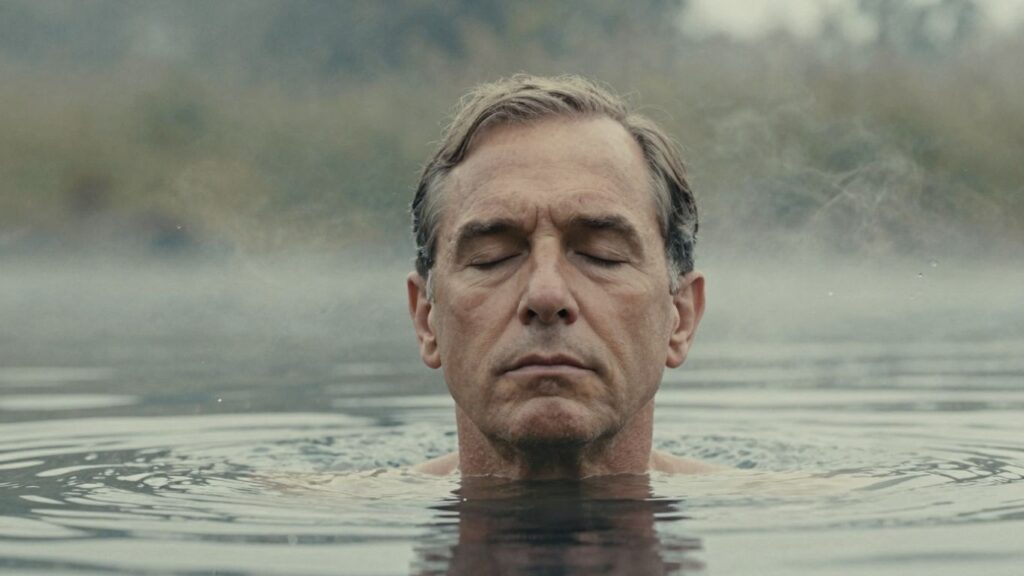
In a rare 1959 lecture, philosopher Alan Watts explored the profound wisdom found in silence and mindfulness. He discussed how our constant need to overthink and strain our senses disconnects us from reality, and how embracing stillness can lead to a more authentic connection with the world.
Key Takeaways
- Our senses don’t work by effort; straining to see or hear actually impedes clarity.
- Thinking is linear and abstract, unlike the holistic nature of seeing and experiencing.
- Living too much in the world of thought creates a gap between us and reality, leading to dissatisfaction.
- Meditation, or "quiet observation," isn’t about stopping thought but about making immediate contact with the real world.
- This practice can diminish the sense of a separate "ego" and lead to an experience of oneness with the universe.
The Problem with Constant Effort
Have you ever noticed how we’re always trying too hard to see and hear? It’s a strange habit, isn’t it? Our eyes don’t need effort to work; light just comes to them. Sound comes to our ears. Even touch happens without us having to press hard. Yet, we’ve learned to strain our senses, maybe from school, where teachers tell us to "pay attention" by staring intently. This constant effort, however, actually makes our senses less clear. Try staring hard at something, and it gets fuzzy. Try listening to a phone call with kids screaming, and you get angry. But if you just let the sounds come, you can hear fine.
Think about a heron watching for fish. It doesn’t strain or look around frantically. It just waits, and when it sees a ripple, it acts. This quiet observation is key.
Thinking vs. Experiencing
Besides straining our senses, we also try to make sense of the world by thinking. But thinking is different from experiencing. Our thoughts are linear, like words strung together one after another. Seeing, on the other hand, takes in a whole area, a volume. Nature is a volume, not a line.
Because thought is linear and slower than seeing, we have to make an effort to keep up. Also, thinking works by abstraction. Take the Chinese character for ‘man.’ It’s a simplified image, a skeleton of a figure, not the full, vital person. These abstractions help us grasp things, but they lack the full quality of real life. When we live too much in this world of abstract thought, we get removed from the real world, feeling unsatisfied and lacking vitality.
The Habit of Constant Thinking
This constant thinking becomes a habit, like always talking to yourself. While I talk on TV, I’m not always talking in real life. We need silence to hear others and to have something to think about. Talking to yourself constantly can be a sign of madness because it disconnects us from reality. It’s a buzz in our heads that goes on day and night.
That’s why in Eastern cultures, spending time in quiet observation, like the heron, is so important. It’s not that thinking is bad; it’s a valuable human ability. But it’s only useful if we can also practice non-thinking, letting our minds be silent and connect directly with the real world, not just abstractions.
What is Meditation?
This leads to meditation, a common practice in Asia. It’s not just an exercise; it’s a way of using your mind. You might sit in a specific posture, like the lotus position, to feel rooted. Your hands are placed in a certain way. You focus on letting your breath happen naturally, perhaps emphasizing the outward breath, like a sigh of relief.
Your eyes aren’t closed to shut out the world. The goal is to let your mind be still, to experience without trying to grab onto those experiences with thoughts. It’s about letting the world come to you without interfering. You’re not trying to analyze or label; you’re just being present.
The Experience of Oneness
When you practice this, you start to notice a change. The gap between your experience and yourself begins to shrink. Normally, we have a sense of an "I," an ego, that is aware of everything. This constant effort to think and make sense of things creates this feeling of a separate self. It’s like a psychological block that divides us from the world.
But when the interval between experience and self diminishes, we start to feel our world as ourselves. There’s no separation between the knower and the known. It’s like when you’re completely absorbed in music; you don’t feel separate from it. Your mind responds instantly to what your senses bring, and it feels like your mind and what it experiences are one.
Think about it: does a tree falling in a forest make a noise if no one is there to hear it? The vibrations are there, but they only become noise when they hit an eardrum. Light only becomes light when it hits an eye. Hardness is only perceived in relation to our soft skin. The external world, with all its characteristics, only appears to us because we have sensory organs and a mind to perceive it.
Our mind and the external world are like the two sides of a coin; they are inseparable. When our consciousness responds instantly, without stopping to think, we realize this true relationship between ourselves and our environment. This is the experience of oneness or unity with the universe, which is the purpose of meditation.
The Value of Stillness
Living entirely in a world of thought can make our pursuits feel empty. We chase symbols like money or success, but these are abstractions. You can’t eat prestige or drive six houses at once. They represent things, but they aren’t the real thing.
To overcome this, non-thinking is a vital partner to thinking. Being able to stop the chatter in your head, to let the self-talk cease and come to stillness, is important. You don’t need a special posture; you can do it while walking, sitting, or lying down. Just let your mind be, and stop trying to make sense of everything. This allows for a profound peace, like the serenity seen in the faces of Buddha statues.


Responses