Why You Must Put Yourself First — Machiavelli’s 10 Secret Power Laws

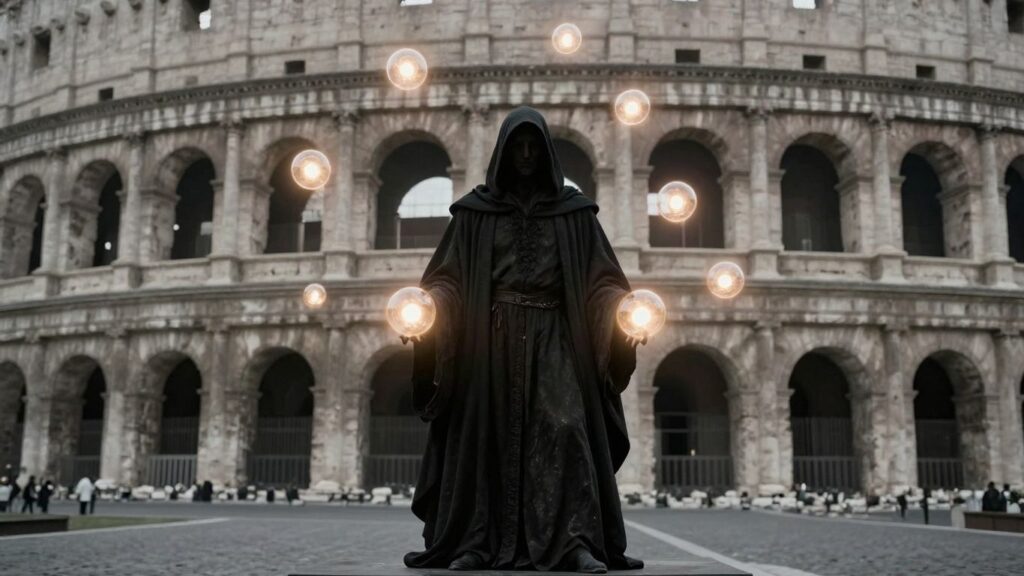
History remembers Machiavelli as a master of strategy and survival. But his most dangerous insight is one most men ignore: you must put yourself first, or be consumed by others. This isn’t self-help fluff; it’s war strategy for modern life.
Key Takeaways
- You are a state, and your first duty is survival.
- Mercy without strength is bait.
- Controlled coldness and strategic detachment are key.
- Use reputation as armor.
- Understand the psychology of boundaries and resource control.
- Asymmetric moves let you win without wasting energy.
- The mask and the mirror shape power and perception.
- Maintain an untouchable standard: crown inward, steel outward.
You Are The State: The First Law
They tell you sacrifice is noble, that bending for others is the highest virtue. They want you tired, drained, and predictable. The world doesn’t admire your generosity; it exploits it. Machiavelli knew this. He wrote for rulers, not servants. Power begins when you crown yourself before anyone else. You can’t defend a kingdom if you can’t defend yourself. Every time you neglect your own strength, you sharpen someone else’s blade.
Putting yourself first isn’t selfish; it’s strategic. You preserve your time, energy, and will. You build yourself into a fortress and then decide who may enter. This is power. This is survival. In a world of wolves, it’s the only way forward.
From this moment, stop apologizing for it. You are the state, a sovereign entity. The first law of any state is survival. Nations collapse not from giving too little, but from bleeding themselves dry for others. If you are weak, drained, and exhausted, your kingdom—your body, mind, and legacy—will crumble. Machiavelli understood power begins at the center. If the throne falls, the kingdom rots.
Most men have become servants in their own houses, obeying demands, surrendering time, burning out for approval that never comes. They are not sovereign; they are slaves masquerading as saints. To put yourself first is to reclaim your authority. Your time, energy, and will are yours. Others may benefit from your strength, but only when you decree it. A king doesn’t apologize for sitting on the throne; he defends it.
Your health, focus, and growth are non-negotiable. You are the engine that fuels everything else. The world won’t thank you for sacrificing yourself; they’ll step over your corpse. Strategic selfishness is survival. Self-prioritization is duty—the duty of every ruler to preserve the crown. Rule yourself first, govern yourself first, protect yourself first. Only then do you have something real to give.
Mercy Without Teeth Is Bait
Mercy is a luxury reserved for those with sharp teeth. Without power, your kindness is not virtue; it’s bait, signaling weakness and inviting predators. Machiavelli understood that generosity without strength is a performance for exploiters. The world measures whether your spine can hold the weight of your words.
The man who bends for everyone, forgives without boundaries, and gives without reserve becomes a stepping stone. His mercy is consumed, not respected. But the man who carries visible steel, sets limits, and enforces them calmly. When he shows mercy, it’s valued, even feared, because it’s a choice, not a default.
Kindness is leverage, powerful only when it costs you nothing vital and comes from a surplus of strength. Until you have teeth, you owe no one softness. Build leverage first—skills, wealth, dominance, reputation. Then, when you extend mercy, it carries the gravity of a ruler granting clemency, not a servant begging approval. Don’t confuse warmth with weakness. Your mercy must be a choice, like a lion resting in the sun because he knows he can hunt at will.
If you give too easily, you train the world to treat you like prey. Withhold when necessary, punish when required, and show restraint only when it reinforces your command. Benevolence without enforcement is camouflage for fear. People sense it, exploit it, and discard you. Forge your kindness on the anvil of power. Until then, guard it closely. Let your silence remind others that your favor is not free.
Controlled Coldness, Strategic Detachment
Detachment is not weakness; it’s weaponry. The man who cannot detach is chained by every whim, every demand. The world manipulates him because he responds to every emotional tug. You will learn the discipline of cold distance. Controlled coldness is not numbness; it’s precision. You don’t chase; you choose. You don’t cling; you command. Strategic detachment makes you unpredictable, and unpredictability makes you dangerous.
Most men broadcast need, begging for approval, flooding others with attention, investing in draining connections. Their desperation attracts predators. But the man who withholds, observes, and lets silence hang heavy forces others to lean in. Attention is currency; stop giving it away for free. When you ration your focus, the world recognizes its value. People chase what they can’t easily have; they respect what they must earn.
Scarcity breeds desire. Become scarce not by absence, but by control. Speak less, reveal less, reward selectively. Every gesture measured, deliberate. Strategic detachment keeps your judgment clear. Emotions cloud strategy; attachment breeds error. When you stay cold, you see moves others miss. You calculate while they drown in impulse. Write this in your mind: "I move first, I win." This is the creed of the untouchable.
You are not denying yourself feeling; you are governing it. You choose when to feel, when to reveal, when to invest. That choice makes you sovereign. Don’t confuse coldness with cruelty; cruelty wastes energy, coldness saves it. This isn’t about shutting the world out; it’s about forcing the world to qualify for entry. The man who is everywhere is valued nowhere. The man who is selective becomes legend.
Reputation: The Armor You Wear Before War
Reputation is not decoration; it’s armor. It walks into the room before you, shaping how enemies approach you before you lift a finger. In Machiavelli’s world, reputation was often worth more than armies. Armies must be fed, but reputation feeds itself through fear, respect, and rumor.
Men are judged not by their intentions but by what others believe. Truth matters less than perception, and perception is malleable. If you allow others to define you, they’ll cast you as weak and treat you accordingly. But if you seize the narrative, projecting strength, control, and boundaries, your reputation becomes a shield. It dissuades challenges and bends opportunities toward you.
Most men squander their image craving to be liked, revealing too much, chasing validation. That’s suicide. Power is built on controlled perception, not approval. Reputation is the story others tell about you when you’re not there. Write that story deliberately. Speak less, act strategically, and let silence do your branding. Never brag; let results speak. Never beg; let absence build curiosity. Never overexplain; let mystery weigh heavier than words.
Build your reputation like armor. Show reliability in strength, not sacrifice. Deliver on promises, but promise little. Make victories visible enough for credibility, yet never predictable. People must always wonder how deep your power goes; that wonder is protection. Reputation is not simply what they think; it’s what they fear might be true. Use that fear. Guard your image like a fortress.
Boundaries: Walls With Gates, Not Moats With Holes
Boundaries are not suggestions; they are fortifications. Most men build moats—leaky defenses filled with excuses and apologies. A true sovereign builds walls, high and solid. Walls with gates, not moats with holes. Your boundaries must be visible, firm, and enforced without hesitation.
When someone crosses the line, you don’t negotiate; you correct quietly, firmly, decisively. Machiavelli taught that a prince must inspire fear and respect, and boundaries are where those forces merge. Respect is born when people know where you stand. Fear is born when they realize you won’t move. Weak men confuse flexibility with virtue, thinking "yes" makes them loved. But endless "yes" makes you invisible.
Boundaries make you scarce, and scarcity makes you valuable. When you enforce them, you train the world to respect your time, energy, and attention. People test boundaries not because they need what you guard, but to measure your strength. When you fail to enforce them, you reveal your weakness, and soon no one treats you seriously. But when you enforce without drama, you signal iron.
Your boundaries are not prison bars; they are fortress walls protecting your sovereignty. Within them, you decide who enters and under what conditions. You control the gate. Every "no" you speak is not rejection; it’s preservation of your empire. The stronger your boundaries, the more valuable your "yes" becomes. People will treasure it because it’s rare and must be earned. Build your walls high. Keep your gates few. Guard your kingdom without apology.
Resource Monopolies: Guard Your Time, Energy, Focus
Your resources are not money or possessions; they are time, energy, and focus—the currencies that shape empires. Most men give theirs away like beggars tossing coins. They answer every call, attend every demand, scatter their energy across trivialities, and wonder why their lives are ruled by exhaustion.
Machiavelli understood that control of resources is control of power. If you want to dominate your world, monopolize what sustains it. Your calendar is a battlefield; guard it like a fortress. Every "yes" is a conscription of your soldiers—your minutes, strength, and attention—into someone else’s war, and most of those wars don’t deserve you.
Learn the cold art of saying no, not with excuses or guilt, but with sovereign finality. Kings don’t justify why their gates remain closed; they simply keep them closed. Time wasted is power surrendered. Energy spent on the unworthy is an attack imposed by parasites. Focus divided is a blade dulled to uselessness. Your monopoly must be ruthless.
Invest only in campaigns that multiply your reach, alliances that add strength, and endeavors that elevate your throne. Everything else burns away in silence. Guard your sleep, your attention, and your energy. Become untouchable in this. Let no one claim your hours without proving their worth. Let no one siphon your energy without bringing you strength in return. Let no one hijack your focus with petty noise. This is not selfishness; it is sovereignty.
Asymmetric Moves: Win Without Wrestling
Power is not earned by grinding in the mud; it’s claimed through asymmetric moves. You don’t wrestle with pigs; you position yourself so they wrestle among themselves while you take the throne. Machiavelli taught that direct confrontation is costly and unpredictable. The smarter ruler finds leverage—the angle no one sees, the move that topples giants without lifting a sword.
Stop thinking like a worker and start thinking like a strategist. Most men waste their lives in symmetrical battles, arguing point for point, fighting blow for blow, trading hours for scraps. That is slavery dressed as effort. You will not fight on their terms; you will change the game. Asymmetry is using intelligence against force, patience against haste, silence against noise.
It’s letting others exhaust themselves in battles you’ve already outflanked. Great rulers rarely won through sheer force; they arranged conditions so the enemy collapsed without realizing why. That is your model. Never meet resistance head-on when you can tilt the ground beneath their feet. Learn to see what others ignore. Where they rush, you wait. Where they flaunt, you conceal. Where they chase, you lure.
Asymmetry is psychological warfare—outmaneuvering, not overpowering. When someone tries to drag you into petty conflict, refuse. They expect you to defend yourself. Instead, rise above, shift the narrative, or let silence burn them. Nothing destroys an enemy like being denied the fight they crave. Strike where they least expect, at the moment they are weakest, with the tool they never considered.
The Mask and The Mirror: Power and Perception
Power is not only what you have; it’s what others believe you have, and that belief is sculpted through masks and mirrors. The mask is the face you wear to the world, the crafted persona that controls perception. The mirror is your ability to see reality without distortion—to see others and yourself as you truly are.
Machiavelli understood that rulers don’t survive by being transparent; they survive by being unreadable, by showing one thing while holding another. To move through this world untouchable, master both. The mask is your projection of strength, control, and mystery. People are attracted to narrative, symbols, and illusions, not raw truth. If you strip yourself bare, they’ll see flaws and use them.
But if you mask yourself in calculated signals—discipline in posture, certainty in words, restraint in reactions—you broadcast a power greater than any internal chaos. The mask doesn’t lie; it selects, creating an aura that compels obedience or respect. Weak men scoff at masks, worshipping authenticity as if it were holy. But authenticity is often just uncontrolled exposure. You must wear the mask of command.
Yet the mask without the mirror is dangerous. Men who live only in their costume begin to believe their own performance, losing the ability to see themselves honestly and miscalculating. The mirror is your discipline of self-scrutiny, your ruthless clarity about your weaknesses, patterns, and motives. Study yourself in cold detail.
Without the mirror, your mask becomes brittle. But with the mirror, you refine the mask until it becomes armor. The mirror also applies outward. Learn to see others without illusion. Most men project what they wish to see. You will polish the mirror until you see others as they are: predators, allies, pawns, obstacles. This clarity grants dominance.
Loyalty By Design, Not Demand
Loyalty is not given; it is engineered. Weak men beg for it, plead for it, demand it, and then wonder why betrayal stabs them. Machiavelli made it clear: people are not loyal by nature. They are loyal when structure binds them, incentives lock them, and fear of loss outweighs temptation.
You must build your world so that loyalty is not a choice but the natural consequence of alignment. Stop expecting devotion for your kindness or commitment for your words. Loyalty must be forged like iron. You must design it, not request it. Kingdoms held together by fear of punishment, flow of rewards, and belief in the ruler’s strength endured.
You cannot rely on oaths; you must rely on architecture. Structure your relationships so that betrayal costs more than loyalty. If someone stands beside you, they must gain from your rise and suffer from your fall. Their self-interest welds them to your cause. This is survival.
Machiavelli wrote it’s safer to be feared than loved because fear anchors loyalty when love fades. But the highest level is to combine both: structure your influence so people both respect your power and benefit from your success. Never confuse loyalty with love; love shifts. Loyalty built on structure endures.
You must control the levers. Reward loyalty decisively. Punish betrayal without hesitation. Never expose yourself to betrayal that can destroy you. Divide power. Trust people with responsibilities they can carry, but never with keys to the throne. People must always know that your strength is independent of their support.
Cultivate a reputation for memory. Remember loyalty forever and reward it visibly. Remember betrayal forever and punish it visibly. People act according to precedent. Your loyalty must also be scarce. Give it sparingly, tie it to performance. Let others work to earn it. Scarcity breeds value.
The Untouchable Standard: Crown Inward, Steel Outward
Power is not an accessory; it’s the standard by which you must live, breathe, and govern yourself. The untouchable man doesn’t stumble into greatness; he forges it with fire inside and armor outside: crown inward, steel outward. This is the law of sovereignty.
The crown inward means you rule your inner world as a monarch rules his throne room: discipline, order, and clarity of command. No indulgence governs you. No weakness owns you. No impulse drags you off course. You become the authority inside your mind. Thoughts that weaken you are silenced. Emotions that distract you are redirected. Habits that corrode you are executed without pity.
This crown is forged from routine, suffering, and relentless refusal to let the lower self control the higher self. Every day you wake, the crown waits. If you do not place it firmly upon your head, you walk into the world as a servant. Most men let the winds of fear, envy, lust, or comfort rule them. You will seize the helm every dawn, enforce your own law, and declare what will and will not govern you.
But power hidden inside is incomplete without projection: steel outward. Steel outward is the visible force, the aura, the posture that makes others adjust themselves to you before you ever speak. It’s the steel in your eyes, the calm in your tone, the immovability in your decisions. It’s not theatrical aggression; it’s quiet inevitability.
Appearance is as crucial as essence. The crowd doesn’t see your crown; they only feel your steel. They don’t care about your discipline; they care about the power you project. So you must craft both. Crown inward creates the substance. Steel outward creates the perception. Together they form sovereignty that cannot be pierced.
Most men try to fake steel without earning the crown. They posture, they boast, while their inner world rots. Such men always fall. You will align inner command with outward projection until the world sees no difference between what you are and what you appear to be. That alignment is the untouchable standard.
Your health, time, and word are standards. You will not break them for convenience, temptation, or approval. Every time you break your own standard, your crown falls and your steel rusts. Weak men are inconsistent; you must be granite—predictable in discipline, unpredictable in strategy. That paradox makes you untouchable.
The world must know that inside you sits a sovereign no one can sway, and outside you project a wall no one can breach. When you become this, you no longer chase. Respect chases you. Loyalty seeks you. Opportunities orbit you. Gravity always pulls toward the solid, never toward the brittle.
Silence will be your proclamation. Results will be your testimony. Structure will engineer loyalty. This is what happens when crown inward and steel outward align: they create inevitability. People bend not because you force them, but because your standard leaves them no alternative. That is the pinnacle of Machiavellian psychology.
Rule yourself, and you rule everything around you. Abandon yourself, and you become food for rulers sharper than you. Crown inward, steel outward, guard the throne, project the force, live the law. This is war strategy for the man who refuses to be consumed.


Responses