Peter Baars Analyzes the World: A Deep Dive with Ab Gietelink

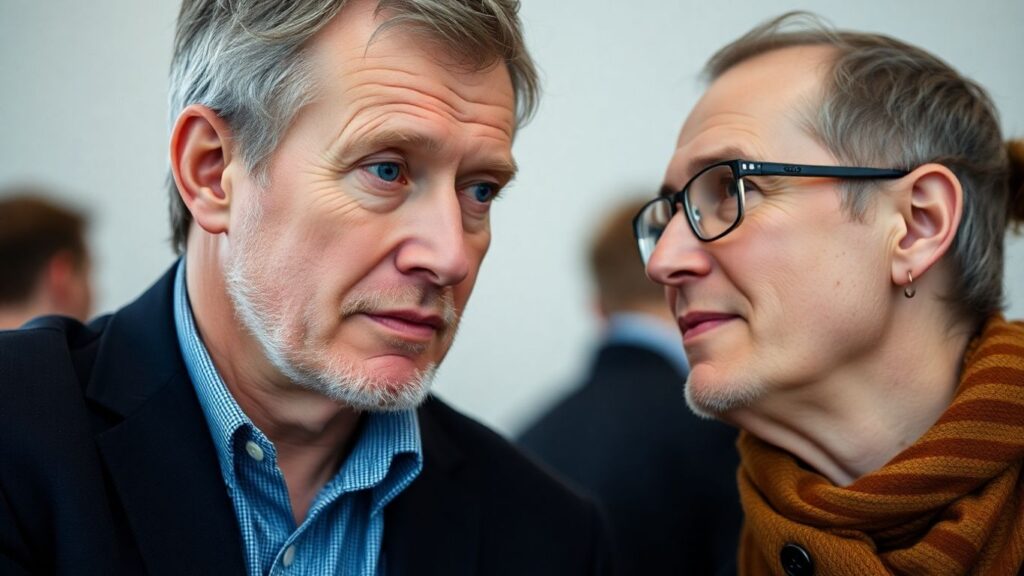
In this insightful conversation, Peter Baars, host of the podcast ‘De Gulden Middenweg,’ shares his candid opinions on a wide range of current events and political issues. Baars, a retired tax advisor, transitioned to podcasting after selling his firm, finding himself with an intellectual void that he filled with comparative theology studies. This led him to question historical narratives and inspired him to create his podcast, where he connects seemingly disparate events to reveal underlying patterns.
Key Takeaways
- Political System Critique: Baars expresses disillusionment with the Dutch political system, citing its divisiveness and the inability of politicians to distinguish between major and minor issues. He questions the integrity of public project tenders, pointing to the Binnenhof renovation’s cost overruns as a potential sign of corruption or incompetence.
- Electoral System Reform: He advocates for a referendum system, similar to Switzerland’s, to give citizens more direct say in political matters and hold politicians accountable.
- Environmental Norms: Baars highlights the discrepancy in nitrogen emission standards between the Netherlands and neighboring countries like Germany and Denmark, suggesting that Dutch norms are set unrealistically low, leading to widespread restrictions.
- Wolf Reintroduction: He views the reintroduction of wolves into the Dutch landscape as a form of fear-mongering, arguing that wolves belong in wilder, more natural environments, not in a cultivated country like the Netherlands.
- Militarization of the Royal Family: Baars is critical of the perceived militarization of the Dutch royal family, seeing it as a form of feudalism and a poor advertisement for defense, especially in the context of modern warfare.
- Global Economic Concerns: He discusses the potential collapse of the Euro, the role of the World Economic Forum (WEF), and the dangers of central bank digital currencies (CBDCs), which he believes could lead to a loss of financial freedom.
- Geopolitical Analysis: Baars touches upon the complex origins of the Jewish people, the ongoing conflict in Venezuela, and the strategic importance of rare earth minerals, linking them to global power dynamics and the Green Deal.
- Russian Resilience: He posits that the harsh Russian climate and historical experiences, particularly World War II, have forged a resilient and determined populace, making them formidable in any conflict.
The Dutch Political Landscape
Baars begins by discussing the Dutch political scene, specifically the Binnenhof renovation, which ballooned from an estimated €600 million to over €3 billion. He questions how such a massive overspend is possible with taxpayer money and suggests it points to corruption or incompetence. He also expresses his personal decision to stop voting, feeling the Dutch political system is too fragmented and ineffective. He criticizes the electoral system, noting how parties can see dramatic shifts in seat numbers, and suggests that many politicians are aligned with the World Economic Forum, often acting contrary to their campaign promises.
Environmental and Social Issues
He then shifts to the nitrogen problem, pointing out that Dutch standards are significantly stricter than those in Germany and Denmark. Baars believes this is a manufactured crisis that paralyzes construction and development. The reintroduction of wolves is also discussed, with Baars viewing it as a tool for instilling fear in the population, rather than a genuine ecological necessity in the Netherlands’ cultivated landscape. He also touches on the militarization of the royal family, seeing it as a concerning trend that promotes defense spending.
Global Finance and Geopolitics
The conversation moves to broader global issues. Baars expresses concern about the stability of the Euro, citing France’s high debt-to-GDP ratio. He critiques the World Economic Forum and its agenda, particularly the concept of "Build Back Better" and the push for 15-minute cities, which he sees as a form of control. He also discusses the role of central bank digital currencies (CBDCs) and the potential for a loss of financial freedom. Baars delves into the origins of the Jewish people, distinguishing between Ashkenazi and Sephardic Jews and questioning the historical narrative of the Ashkenazi lineage.
The Future of the Euro and International Relations
Baars is skeptical about the Euro’s future, suggesting it might collapse before the US dollar. He advocates for a return to national currencies or a reformed European Free Trade Association (EFTA) model. He criticizes the EU’s expansionist policies, particularly towards Ukraine, and its adversarial stance towards Russia, which he believes has been a strategic misstep. He also touches on the importance of rare earth minerals for the Green Deal and Europe’s dependence on other nations for these resources. Baars shares a theory about the resilience of the Russian people, attributing it to their harsh climate and historical experiences, and expresses doubt about NATO’s ability to win a conflict against Russia.
Concluding Thoughts
Finally, Baars discusses the situation in Venezuela, viewing US actions as financially motivated and aimed at securing oil resources. He criticizes the Nobel Peace Prize awarded to María Corina Machado, seeing it as a tool to legitimize US intervention. The conversation concludes with a reflection on the nature of modern warfare, the corrupting influence of finance, and the importance of resisting what he perceives as unjust global agendas.


Responses