The Best Places in Thailand for Digital Nomads in 2025


Thailand has been the default setting for digital nomads for well over a decade, and it is not hard to understand why. The cost of living is a fraction of what you would spend in Europe or North America. Internet infrastructure in the major cities is genuinely fast and reliable. The food is exceptional. The climate is warm. And the country has invested deliberately in attracting remote workers, building out both the legal framework (visa options) and the physical infrastructure (coworking spaces, serviced apartments) to support a permanent population of location-independent professionals. The question for most nomads is not whether to go to Thailand, but where.
- → Thailand’s combination of low cost, fast internet, and strong nomad communities makes it the world’s most established remote work destination
- → Chiang Mai is the nomad capital for community and affordability; Bangkok for infrastructure and career networking; Phuket for lifestyle and beach access
- → The Long-Term Resident (LTR) visa offers up to 10 years of legal stay for qualifying remote workers with proof of income above $80,000/year
- → A comfortable nomad budget in Chiang Mai runs $1,200–1,800/month; Bangkok $1,500–2,500/month; Phuket $1,800–3,000/month
- → Coworking infrastructure is mature across all three cities — you will not struggle to find fast, reliable workspace at any budget level
Bangkok: Infrastructure, Energy, and Career Connectivity
Bangkok is Thailand’s largest city and one of Southeast Asia’s major business hubs. For nomads who need proximity to clients, frequent regional travel, or the kind of urban stimulation that only a true metropolis provides, it is the obvious base. Suvarnabhumi Airport connects directly to most of Asia and much of the world, making Bangkok a practical headquarters for anyone whose remote work involves occasional in-person commitments.
The city’s infrastructure is genuinely impressive. Fibre internet in most apartments runs at 200–500 Mbps. The BTS Skytrain and MRT metro system make commuting across the city fast and predictable. Healthcare is world-class — Bangkok is a medical tourism destination for much of the region, which means private hospitals with English-speaking staff are plentiful and affordable by Western standards.
The trade-off is cost and pace. Bangkok is more expensive than Chiang Mai, and the city’s energy — traffic, noise, scale — is not for everyone. Neighbourhoods like Ari, Thonglor, and On Nut have established themselves as nomad-friendly enclaves with good cafes, coworking spaces, and a more manageable urban pace without losing access to the city’s advantages.
Top Bangkok coworking spaces include The Hive (creative atmosphere, rooftop garden), JustCo (multiple locations, corporate-grade amenities), and WeWork (professional environment with strong networking events). Day passes typically run ฿350–600 ($10–17); monthly memberships ฿3,500–7,000 ($100–200).
Chiang Mai: The Nomad Capital
Chiang Mai has been the world’s most recognised digital nomad destination for the better part of a decade, and the title is earned. The city in Thailand’s north combines genuinely low cost of living with a large, established nomad community, excellent coworking infrastructure, and a quality of life that Bangkok cannot match at the same price point. You get a comfortable apartment, fast internet, daily fresh food, and regular access to mountains, temples, and nature — for around $1,200–1,500 a month.
The community effect is real and significant. Chiang Mai has a critical mass of remote workers that generates its own social infrastructure: nomad-specific Facebook groups, regular meetups, accountability groups, and events. The Nomad Summit, held annually in Chiang Mai, draws hundreds of location-independent professionals from around the world. For someone arriving solo, getting integrated is easier here than almost anywhere else on the planet.
Living in Thailand as a digital nomad is more than just working remotely — it is about embracing a lifestyle that integrates work with genuine cultural depth. The temples, the food markets, the mountains, the coast: they are not tourist attractions to visit on weekends. They become part of the rhythm of daily life in a way that changes how you think about what work is for.
The city’s coworking scene is dense. Punspace (multiple locations, favourite for its community focus), Hub53 (events and workshops), and Yellow CoWorking (modern facilities, central location) are among the most established. Many operate on flexible terms — daily, weekly, monthly — which suits nomads who move on irregular schedules.
The main limitation is connectivity for frequent travellers. Chiang Mai’s airport connects well within Thailand and to a handful of regional destinations, but international connections are limited compared to Bangkok. For nomads who need to fly frequently, this matters.
Phuket: Island Life With Professional Infrastructure
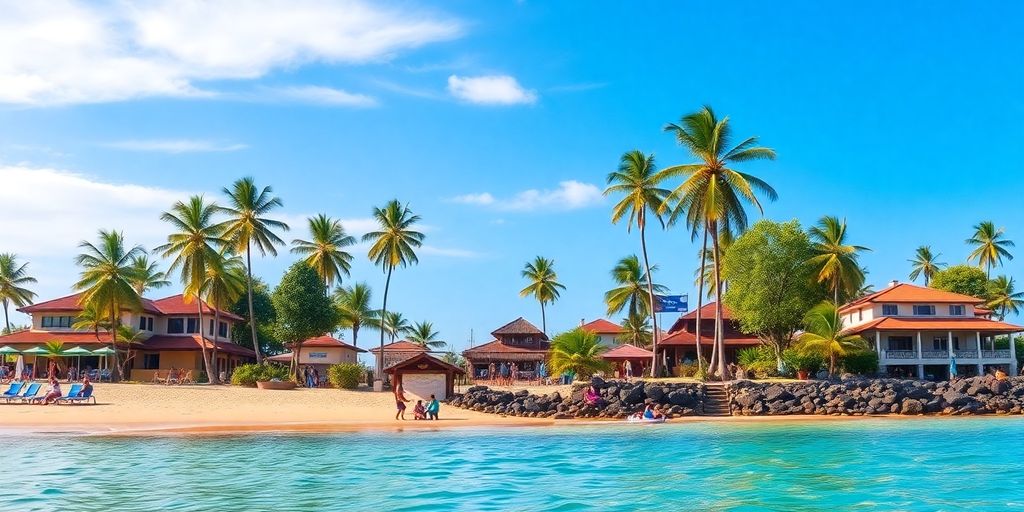
Phuket is the right choice for nomads who prioritise lifestyle and are willing to pay slightly more for it. The island offers what few places on earth can match: world-class beaches within 20 minutes of a functional city, a mature tourism infrastructure that means reliable services and English-speaking businesses everywhere, and a year-round warm climate that makes outdoor living genuinely pleasant.
The coworking scene has matured significantly in recent years. Garage Society near Patong offers a lively, well-equipped workspace. HATCH in Rawai caters to nomads who want focus and quiet alongside their beach proximity. Most digital nomads on the island settle into a hybrid pattern — working from a combination of coworking spaces, beach cafes, and home offices depending on the day’s demands.
For nomads who want even smaller-scale island living, Koh Lanta is worth considering. KoHub, on Koh Lanta’s west coast, is one of Southeast Asia’s most celebrated dedicated nomad spaces — beachfront coworking with strong community programming. It is slower and more isolated than Phuket, but that is precisely the appeal for many.
Visa Options: What You Actually Need to Know
Thailand’s visa landscape for remote workers has evolved substantially. The days of the perpetual tourist visa run are largely behind serious long-term nomads, replaced by legal pathways that offer genuine stability.
Tourist Visa. The default entry point. Allows 30–60 days with a single 30-day extension available. Straightforward to obtain and suitable for first visits or short stays, but not designed for long-term remote work. Repeated tourist visa entries are increasingly scrutinised at immigration.
SMART Visa. Designed for skilled professionals, entrepreneurs, and startup founders in targeted industries. Allows up to four years and includes work privileges. Qualifying requires meeting sector-specific criteria — it is not universally available to remote workers, but worth investigating for those in tech, biotech, or high-value business services.
Long-Term Resident (LTR) Visa. Launched in 2022, this is Thailand’s most significant visa development for serious nomads. Valid for five years, renewable for another five. The “Work From Thailand Professional” category requires proof of employment with a foreign company and minimum personal income of $80,000/year over the past two years. Benefits include a 17% flat income tax rate on Thai-sourced income, fast-track airport services, and permission to work remotely from Thailand legally. For qualifying nomads, it represents genuine long-term stability.
Cost of Living: Realistic Budgets
The following figures represent comfortable, not spartan, living — good apartment, regular restaurant meals, coworking membership, occasional travel within Thailand.
| Expense | Chiang Mai | Bangkok | Phuket |
|---|---|---|---|
| Accommodation (1BR, good area) | $350–550 | $500–900 | $600–1,000 |
| Food (mix local + restaurant) | $200–300 | $250–400 | $300–450 |
| Coworking (monthly) | $80–150 | $100–200 | $100–180 |
| Transport | $50–80 | $60–100 | $80–150 |
| Total (comfortable) | $1,200–1,800 | $1,500–2,500 | $1,800–3,000 |
Staying Productive: Practical Tips
Establish a routine early. Thailand’s abundance of things to do is both the appeal and the risk. The nomads who thrive here are the ones who set a work schedule and hold it — ideally anchored to a regular coworking space where the social environment reinforces focus. Those who drift into pure exploration mode typically find their productivity and income following suit.
Get a local SIM on arrival. AIS and True Move both offer data-heavy prepaid plans at very low cost. Having a local number simplifies logistics, gives you a reliable mobile data backup for your broadband, and is practical for ordering from local services. The airport SIM counters are legitimate — you do not need to wait for a shopping mall.
Open a Bangkok Bank account if staying long-term. Having a local bank account simplifies rent payments, bill payments, and reduces international transfer fees. Bangkok Bank has the most accessible process for foreigners with a valid visa. This becomes particularly relevant for LTR visa holders and anyone staying more than three months.
Thailand works for digital nomads not because of any single advantage but because of how the advantages compound. The low cost gives you financial margin. The infrastructure removes friction from daily work. The community means you are not working in isolation. The culture provides depth and stimulation that makes extended stays rewarding rather than monotonous. Choose Chiang Mai if community and affordability are your priorities. Choose Bangkok if you need maximum infrastructure and connectivity. Choose Phuket if lifestyle is the primary variable. All three are genuinely good choices — the right one depends on what you are optimising for.



Responses