Hollywood North: The Essential Guide to Film Locations in British Columbia

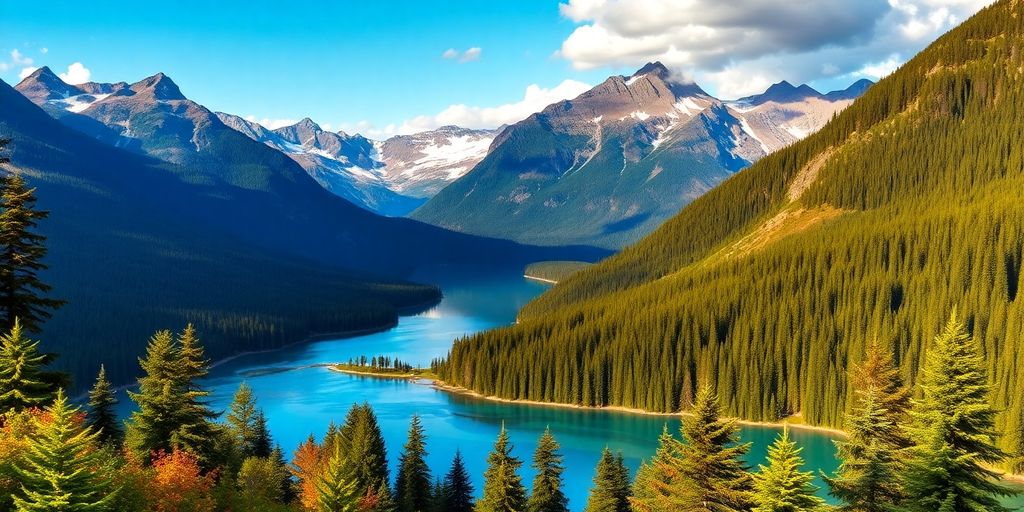
British Columbia generates more film and television production revenue per capita than almost anywhere else on earth outside of California — and the locations explain why. Vancouver and its surrounding region have served as a stand-in for New York, Chicago, Seattle, and dozens of fictional cities, while simultaneously providing wilderness backdrops, coastal landscapes, and period-accurate streetscapes that cannot be replicated on a studio lot. The province produced over C$4 billion in film and TV spending in recent years, earned the nickname Hollywood North, and built an infrastructure of studios, crews, and tax incentives that has made it the default production base for much of North American screen entertainment. For travellers who want to experience these locations in person, British Columbia offers something genuinely unusual: the chance to walk through places that exist simultaneously in reality and on screen.
- → British Columbia generates over C$4 billion annually in film and TV production — one of the highest concentrations of screen production outside California
- → Vancouver’s combination of urban versatility, natural landscapes, and tax incentives makes it the default North American alternative to Los Angeles for major productions
- → Gastown, Stanley Park, and the downtown core are the most frequently used urban locations — recognisable across hundreds of productions
- → Vancouver Island, the Sea to Sky corridor, and the Fraser Valley provide wilderness and coastal backdrops that are almost impossible to source elsewhere at this scale
- → Film tourism in BC is a structured industry — guided tours, self-directed location maps, and studio visits are all available and increasingly popular
Vancouver: The Architecture of Hollywood North
Vancouver’s dominance as a production hub is not accidental. The city’s tax credit structure — offering eligible productions up to 35% of qualifying British Columbia labour costs — combined with a skilled local crew base built over three decades of continuous production creates an economic environment that consistently undercuts Los Angeles at scale. The practical consequence for travellers is that Vancouver’s streets, buildings, and public spaces appear in an extraordinary volume of screen content, often depicting somewhere else entirely.
Gastown is the most cinematically versatile neighbourhood in the city. Its Victorian-era brick buildings, cobblestone streets, and preserved steam clock create a period-neutral aesthetic that works for settings ranging from early 20th-century New York to present-day Seattle. Productions that have used Gastown extensively include Deadpool, The X-Files, and Supernatural — all of which relied on its ability to convincingly double for American settings while remaining a functional neighbourhood with full urban infrastructure.
Walking through Vancouver as a film tourist requires a specific adjustment of perception: you are not looking for what is there, but for what was placed there by a production. The same corner of Gastown has been Hong Kong, New York, and Seattle in the same year. The city exists in perpetual double exposure.
Downtown Vancouver contributes a different register: modern corporate architecture, SkyTrain infrastructure, and the iconic Vancouver Public Library — its Colosseum-inspired circular design unmistakable across dozens of productions. The Library has appeared in everything from action sequences to dramatic confrontations, its distinctive exterior providing a visual anchor that production designers regularly exploit.
Stanley Park: Forest, Coast, and Cinema
Stanley Park is 400 hectares of temperate rainforest, beaches, and urban park space on a peninsula immediately adjacent to downtown Vancouver — a combination that is nearly impossible to replicate in a major North American city. Its Seawall offers continuous coastal views; its interior trails provide dense forest canopy that reads as wilderness on screen despite being minutes from the city centre. The park’s Totem Poles, First Nations cultural markers and a frequent establishing shot in Vancouver-set productions, have become one of the most recognisable visual signatures of Hollywood North location work.
For film tourists, Stanley Park is one of the most immediately rewarding destinations in the city: distinctive enough to be recognisable across multiple productions, beautiful enough to visit independently of any screen connection, and accessible without advance planning. The Seawall loop (approximately 9 km) passes most of the park’s principal filming locations in a single circuit.
Vancouver Island offers filmmakers what the mainland city cannot: genuine rural and wilderness settings at scale, combined with an accessible capital (Victoria) that provides period architecture and a distinct Pacific Northwest character. Tofino’s old-growth rainforest and Pacific coast have been used for wilderness sequences across multiple productions. Victoria’s Inner Harbour and 19th-century legislative buildings provide a colonial-era visual vocabulary unavailable in Vancouver’s more modern skyline. The island is increasingly the location of choice for productions requiring authentic small-town or wilderness environments rather than city doubles.
The Studios: Where the Industry Lives
Vancouver Film Studios, the largest studio complex in the city, has hosted productions across virtually every major screen genre — its sound stages configured for everything from intimate drama to large-scale practical effects work. The facility’s scale and technical infrastructure have made it a preferred base for streaming-era productions that require sustained long-form production environments rather than the shorter shooting schedules of earlier network television.
Bridge Studios in Burnaby has a specific historical significance: it is where much of The X-Files was produced during the show’s formative years, cementing Vancouver’s reputation for science fiction and genre television. The studio’s largest stage — among the biggest special effects stages in North America — has been used for productions requiring large-scale practical build environments that cannot be accommodated on location.
North Shore Studios, set against the mountains of North Vancouver, provides a distinctive production environment combining studio infrastructure with immediate access to natural landscapes. Its proximity to the North Shore mountains means productions can move from controlled studio interiors to dramatic mountain backdrops within minutes — a logistical advantage that has attracted numerous action and adventure productions.
Beyond Vancouver: The Sea to Sky and Fraser Valley
The Sea to Sky corridor — the route connecting Vancouver to Whistler along Howe Sound — provides one of the most dramatic natural film environments in North America. The combination of fjord coastline, mountain faces, and old-growth forest within 90 minutes of a major production infrastructure hub is genuinely rare. Productions requiring wilderness sequences that cannot be convincingly staged on studio lots regularly use this corridor, as do those needing aerial cinematography of dramatic landscape at accessible cost.
The Fraser Valley to the east of Vancouver provides a different register: agricultural land, small towns, and river valley landscapes that read as American Midwest or generic North American rural on screen. Shows like Virgin River — ostensibly set in a fictional small Northern California town — were filmed extensively in the Fraser Valley communities of Harrison Mills and Mission, their production generating C$44 million in local economic activity for a single season.
Organised film tours of Vancouver operate through multiple providers, with the Vancouver International Film Festival’s year-round programming providing the highest-quality curated access. Self-directed tours are well supported: the City of Vancouver and Creative BC both maintain publicly available location databases and walking tour routes. For studio access, Vancouver Film Studios offers structured tours on a scheduled basis. The most efficient approach for serious film tourists is to identify the specific productions they want to trace, use publicly available production databases to map the locations, and build an itinerary accordingly — many of Vancouver’s key filming locations cluster within walkable distance of one another in the downtown core and Gastown.
British Columbia’s film landscape rewards the curious traveller in ways that most cultural tourism destinations do not. The locations are not cordoned off museum pieces — they are functioning streets, parks, and neighbourhoods that happen to be embedded in the visual memory of anyone who watches North American screen entertainment. For visitors who bring the right reference points, the province operates as a kind of living set: familiar and strange simultaneously, the real place and its screen version occupying the same coordinates. The practical infrastructure for accessing this — tours, studio visits, location databases — is more developed here than anywhere outside Los Angeles, making British Columbia the most navigable film tourism destination in the world for travellers who know what they are looking for.



Responses