Exploring The History of Switzerland: A Journey Through Time

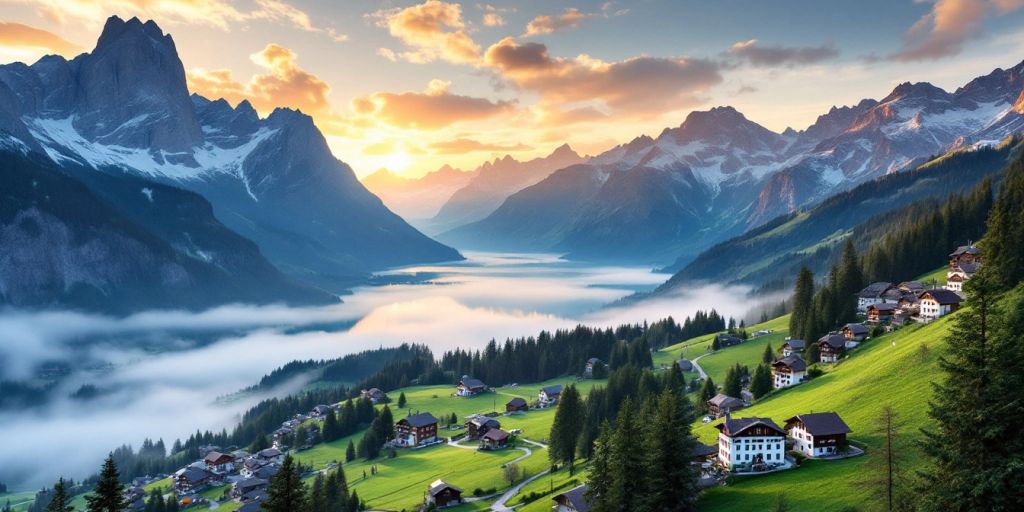
Switzerland is a captivating country with a rich history that stretches back thousands of years. From its ancient beginnings to its modern achievements, the story of Switzerland is filled with fascinating events and remarkable people. This article takes you on a journey through time, exploring the key moments that shaped the Switzerland we know today.
The Ancient Roots of Switzerland
Prehistoric Settlements and Discoveries
Switzerland’s history stretches back thousands of years. The earliest evidence of human life in the region dates to the Paleolithic era, around 15,000 years ago. During the Neolithic period, beginning around 5000 BCE, farming communities began to form. Archaeological findings confirm that these early settlers built homes and cultivated crops, laying the groundwork for future societies.
The Influence of the Celts
By the 6th century BCE, the Helvetii — a Celtic tribe — became the dominant group in Switzerland. They established settlements and developed a rich culture known for metalwork and long-distance trade, connecting them with Celtic tribes across Europe. Their influence persists in various place names and cultural practices in Switzerland to this day.
Roman Conquest and Integration
In the 1st century BCE, the Romans conquered the region and integrated it into the Roman Empire. This period brought the construction of roads, cities, and extensive trade networks. The Roman province of Raetia became a vital area for commerce and military strategy, leaving a lasting legacy visible in Switzerland’s architecture and urban planning to this day.
| Period | Key Developments |
|---|---|
| Paleolithic | Earliest human settlements (15,000 BCE) |
| Neolithic | Farming communities (5000 BCE) |
| Celtic Era | Helvetii tribe dominance (6th century BCE) |
| Roman Era | Integration into the Roman Empire (1st century BCE) |
Medieval Switzerland and the Rise of the Confederacy
Formation of the Old Swiss Confederacy
In 1291, three cantons — Uri, Schwyz, and Unterwalden — came together to form a defensive alliance. This alliance marked the beginning of what would grow into the Swiss Confederacy. Over time, more cantons joined, creating a strong network of mutual support and defence against outside threats, most notably the Habsburgs.
Key Battles and Alliances
The Confederacy faced many challenges, but achieved significant military victories that cemented its independence:
- Battle of Morgarten (1315): A decisive victory against the Habsburgs.
- Battle of Sempach (1386): Another crucial win that solidified Swiss independence.
- Battle of Marignano (1515): A major engagement that tested and ultimately refined Swiss military doctrine.
The Role of Religion in Medieval Society
Religion played a vital role in shaping medieval Switzerland. The Catholic Church was dominant, but the rise of Protestantism during the Reformation transformed the landscape. Key dynamics included the spread of Protestant ideas in Zurich and Geneva, open conflicts between Catholic and Protestant cantons, and the eventual resolution that helped unify the country under a model of religious coexistence.
“Switzerland’s ancient roots reveal a complex tapestry of cultures and influences — Celtic, Roman, Germanic, and Burgundian — that together created one of history’s most durable political experiments.”
The Reformation and Its Impact

The Spread of Protestantism
The Reformation was a seismic movement that changed the course of Christianity from the early 16th century onward. Switzerland became one of its most important theatres, with Zurich and Geneva emerging as global centres of Protestant thought under the influence of key reformers.
Influential Figures of the Swiss Reformation
- Huldrych Zwingli: The leading reformer in Zurich who promoted a scripturally grounded church free from Catholic ceremony.
- John Calvin: Established Geneva as the intellectual heart of Reformed Protestantism, with influence extending across France, the Netherlands, Scotland, and beyond.
- Heinrich Bullinger: Zwingli’s successor who helped systematise and spread Reformation ideas across the wider Reformed world.
Religious Conflicts and Resolutions
As Protestantism spread, it generated serious conflict between cantons. Open confrontations were eventually resolved through negotiation, establishing a precedent for Swiss federalism’s tolerance of internal diversity — a principle that would define the nation’s character for centuries.
Switzerland During the Napoleonic Era
The Helvetic Republic Experiment
In 1798, Napoleon’s forces invaded Switzerland and established the Helvetic Republic, replacing centuries of cantonal autonomy with a centralised government. The experiment faced fierce resistance from local leaders, regional economic disruptions, and deep cultural hostility to French-style centralisation.
Napoleon’s Influence on Swiss Politics
Napoleon introduced significant reforms aimed at modernising Swiss governance — centralised administration, legal codification based on the Code Napoléon, and upgraded infrastructure and education. Despite these changes, many Swiss people experienced the period as a loss of traditional freedoms rather than a liberation.
The Congress of Vienna (1815) formally recognised Switzerland’s perpetual neutrality under international law — a status that has never been revoked. This legal guarantee became the cornerstone of Switzerland’s unique role as a global diplomatic hub and humanitarian capital.
Industrialization and Modernization in the 19th Century
Economic Transformation and Growth
The 19th century brought rapid economic transformation to Switzerland. The country transitioned from a largely agricultural society to an industrial powerhouse, driven by the textile industry in Zurich and Basel, the expansion of a national railway network, and the emergence of banking and finance that positioned Switzerland as a global centre for capital.
Social Changes and Urbanization
As industries grew, rural-to-urban migration accelerated. The result was increased population density in cities, the emergence of an industrial working class, and gradual improvements in living standards — though overcrowding and difficult working conditions also characterised the early decades of industrialisation.
The Development of Swiss Infrastructure
Government investment in roads, railways, telegraph systems, and public services — particularly education and healthcare — laid the foundations for the modern Swiss state and its famous institutional quality.
Switzerland in the World Wars
Neutrality and Its Challenges
Switzerland maintained strict neutrality during both World Wars, navigating complex political pressures from all sides while securing its borders against potential incursion. This neutrality was not a passive stance but an active diplomatic posture requiring constant vigilance and negotiation.
Economic and Humanitarian Efforts
During World War I, Switzerland faced severe economic disruption while accepting nearly 300,000 refugees, including military internees from multiple nations. This humanitarian commitment under difficult circumstances reinforced Switzerland’s self-image as a nation of peace and refuge.
The Aftermath and Reconstruction
Emerging from both wars largely unscathed compared to neighbours, Switzerland channelled its stability into rapid economic development in finance, precision manufacturing, and pharmaceuticals — sectors that remain dominant pillars of the Swiss economy today.
Contemporary Switzerland: A Model of Stability

Switzerland is widely regarded as a model of stability in today’s world. Its unique political system, robust economy, and deep institutional trust combine to produce one of the highest qualities of life on earth.
Political Structure and Governance
Switzerland’s system of direct democracy allows citizens to participate actively in governance through regular referendums on major policy questions. Power is shared between cantonal and federal governments, and a tradition of consensus politics means parties of different ideological persuasions routinely govern together.
Cultural Diversity and Integration
Switzerland is home to four official languages — German, French, Italian, and Romansh — and has developed sophisticated frameworks for cultural integration. National festivals, bilingual institutions, and interregional education programmes foster unity across its diverse communities.
Switzerland’s Role in Global Affairs
Geneva hosts the United Nations European headquarters and the International Committee of the Red Cross, making it arguably the world’s most important city for multilateral diplomacy and humanitarian law. Switzerland’s economic partnerships and its tradition of quiet mediation in international conflicts continue to give it influence well beyond its size.
Switzerland’s history is not simply the story of a small Alpine nation — it is a masterclass in how diverse peoples, languages, and religions can be governed together through strong institutions, genuine federalism, and a culture of compromise. From the three forest cantons who swore an oath in 1291 to the global diplomatic powerhouse that hosts the UN and the Red Cross today, Switzerland has consistently found ways to turn fragmentation into strength and neutrality into influence. Its model remains one of the most studied — and envied — in the world.
Frequently Asked Questions
What is the history of Switzerland?
Switzerland has a long history stretching back over 8,000 years, from prehistoric farming communities through Celtic and Roman rule to the founding of the Swiss Confederacy in 1291 and the modern federal state established in 1848.
Why is Switzerland known for neutrality?
Switzerland has not participated in any wars since 1815, a status formally recognised by international law at the Congress of Vienna. This neutrality has allowed it to act as a mediator in international conflicts and host many global organisations.
What are some famous Swiss products?
Switzerland is renowned for its high-quality chocolate, cheese (fondue, raclette, Gruyère), precision watches, and pharmaceutical and financial services — products that reflect centuries of craftsmanship and innovation.
How did Switzerland become a democracy?
Switzerland developed its direct democratic institutions over the 19th century, culminating in the federal constitution of 1848. Citizens can vote directly on legislation and constitutional amendments, making it one of the world’s most participatory democracies.
What role did Switzerland play in the World Wars?
During both World Wars, Switzerland remained neutral, provided humanitarian aid, accepted large numbers of refugees, and served as a diplomatic channel between belligerent powers.
What makes Switzerland a popular tourist destination?
Switzerland attracts visitors with its dramatic Alpine landscapes, charming cities like Zürich, Geneva, Bern, and Lucerne, world-class skiing and hiking, and a rich cultural and historical heritage.


Responses