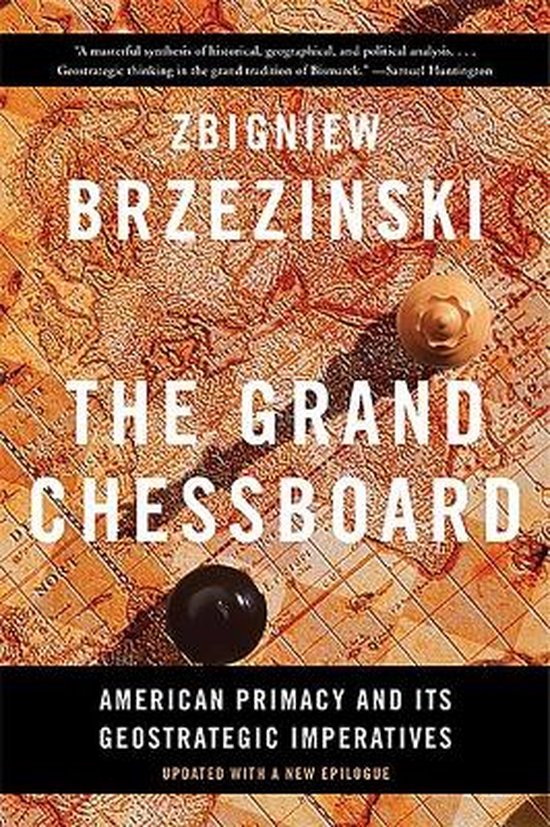
The Grand Chessboard
€12.95
What the internet says
Aggregated insights from reviews and discussions across the web.
Overall reception: Mostly positive
The Grand Chessboard by Zbigniew Brzezinski is widely regarded as a seminal work in geopolitical analysis, particularly concerning American foreign policy in the post-Cold War era. Readers across Goodreads, Amazon, and political forums consistently praise the book's prescient analysis of Eurasia's strategic importance and its framework for understanding U.S. global dominance. The book maintains strong ratings (averaging 4.0-4.2 stars on major platforms) and is frequently cited in academic and policy discussions. However, reception is notably polarized along ideological lines, with critics viewing it as either a blueprint for American imperialism or an overly realist perspective that underestimates moral considerations in foreign policy.
Discussions on Reddit and political forums reveal that the book has gained renewed attention in light of recent geopolitical events, particularly regarding Russia, China, and Central Asia. Many readers note Brzezinski's accurate predictions about the importance of Ukraine and the risks of Russian revanchism. The book is frequently recommended in international relations reading lists and is considered essential reading for understanding contemporary great power competition. Critics, however, point to its unapologetically American-centric worldview and what some perceive as a cold, calculating approach to international relations that prioritizes power over ethics.
What readers loved
- Remarkably prescient analysis of post-Soviet geopolitics, particularly regarding Russia, Ukraine, and Central Asian dynamics
- Clear and accessible framework for understanding Eurasia's strategic importance to global power
- Comprehensive historical context that connects past imperial strategies to contemporary geopolitics
- Honest and transparent about American strategic interests without diplomatic euphemisms
- Valuable insights into the thinking of U.S. foreign policy establishment and realist school of international relations
- Well-structured arguments supported by geographic, economic, and historical analysis
- Remains highly relevant decades after publication, with predictions that have largely held true
Common critiques
- Unapologetically American-centric perspective that some readers find imperialistic or morally troubling
- Limited consideration of ethical dimensions or humanitarian concerns in foreign policy
- Underestimates the role of non-state actors, ideology, and cultural factors in geopolitics
- Writing style can be dry and academic, making it less accessible to general readers
- Some predictions about European unity and Chinese development have not fully materialized as described
Based on reviews from
- Goodreads
- Amazon




Reviews
There are no reviews yet.